

REVIEW: Periphery - A Pale White Dot
this time it's concise

47:38 // May 15th, 2026 // 3DOT Recordings
From its conception, Periphery has been a dork’s band, an accolade their longstanding trio of fretsmiths have intermittently downplayed and relished: founding member Misha “Bulb” Mansoor irreversibly imbued the project’s chunky chugging with a campy, interwebz-addled sense of humor, Haunted Shores recruit Mark Holcomb and his beautiful, unorthodox chord voicings widened its emotional palette, and Jake “John Petrucci’s nephew” Bowen complements the pair’s compositional quirks like a chameleon. Despite all directions pointing toward hubris, every Periphery album has been defined by this trio’s humility and teamwork, each riff-writer helming a few tracks and leaving ample space for their bandmates to not only prove their mettle as the popularizers of progressive metal they are, but also get mischievous within their own respective pursuits of happiness.
For better or worse, as early as 2012’s Periphery II: This Time It’s Personal, that synergy made itself known on profoundly divisive terms: their songs and projects were defined by excess, a showmanship as impressive as the band was deliberately self-effacing (very), and an unapologetic desire to not solely abide by grim, metal posturing. If the songs happened to be bitter, blaring, and/or inspired by M-rated video games, so be it, but there wasn’t any fun in feigning glum spirits 24/7. Their mileage with audiences inevitably varied—I was the right age at the time to find the range to their approach a thrill, and that nostalgia has lent me an abundance of patience easy to extend to efforts that hindsight now considers inconsistent grab bags. Of note, 2023’s Periphery V: Djent is Not a Genre contains a few hits, but it also felt unnaturally burdened by the shadow of albums past, notably the band’s immediate predecessor and most refined representation of their traits to date, Periphery IV: Hail Stan. The same proficiency, influence, and at times juvenile demeanor remained intact, but gratuitous jazz interludes, orchestral swells, and labyrinthine arrangements indicated some belabored, behind-the-scenes burnout was afoot.
The proof they’ve addressed it is first visible in A Pale White Dot’s metadata: this is Periphery’s first non-self-titled release since their 2015 double album Juggernaut, whose two discs, Alpha and Omega, vaguely gestured toward a narrative of occult vengeance. Count that diptych as one package, and this new LP is also the band’s shortest by a considerable margin. Even more striking, only two of the album’s twelve tracks push past the five-minute mark, both of them barely, a far cry from the multi-suite behemoths on albums of yore. From their own mouths, none of this is coincidental—dreading autopiloting their way into long-winded old habits, the band instead devised a theme, title, and tonal outline for A Pale White Dot from the outset, quickly dismissing fall-back material from their demo junkyard and any new ideas that didn’t feel integral to the inner workings of each song or aligned with the album’s core theme of loneliness.
In turn, the tunes on A Pale White Dot display Periphery as their most uniform, earnest, and truncated selves—no linear story ties one track to another, songs rarely digress from intuitive structures, and when they end, they end—no multi-minute ambient interstices tacked onto their tails. The quintet’s usual hamminess is rarer, too; smile-and-a-wink barnstormers like “Subhuman” or objectionable flop lines (“if the beast is gonna knock / bang bang” from “Unlocking” sticks out) come fewer and further between than before, replaced with a blanketing sobriety stemming from personal struggles with health, grief, and fear—maturation from previously unrepentant rascals pushing age 40.
Prog nerds, fear not: technical riffs remain! Bowen’s arpeggios in “Heaven on High” and Mansoor’s precise patterns in “Talk” have been held aloft as two of the hardest things to play in the band’s discography, and “Mr. God” and “Unlocking” contain some gnarly rhythmic downstroking, but A Pale White Dot by and large positions the once-central guitar as a syncopation driver and a textural tool, rarely the melodic focal point of any song. Sometimes this method dazzles: first single “Mr. God” conjures an incendiary parable about how power insulates and corrupts—perfect for the age of techbros building wasteful supercomputers plagiarism apparatuses and not understanding why they’re loathed by the masses. Even where the guitars take the backseat, like on OCD-inspired opener “Obsession,” pivoting between ominous, sultry synth-pop and furious black metal slamdowns is more than enough to make the band sound in full control at the wheel (Sleep Token, take notes).
As for the elephant in the room, Periphery’s vocalist Spencer Sotelo, a polarizing frontman in his own right due to how hard he leans into the band’s pomp (and possesses the range to get away with it) revels in the spotlight to a nearly uncompromising prevalence on A Pale White Dot. Whether he’s growling so brutally it almost renders Will Ramos’ feature on “Subhuman” inconspicuous or belting soaring, balladeer hooks on “Heaven on High,” “Carry On,” and “Everyone Dies Alone,” the guy takes these sessions’ melancholy and sinks his teeth in, assisted by the quality control of drummer-turned-co-lyricist and session supervisor Matt Halpern.
While the guitarists comparatively step back from the limelight, Sotelo and Halpern, already inextricable from Periphery’s across-the-board talent and temperament, thrust themselves forward in their place to a degree not gleaned since the equitably-penned Clear EP. Sotelo’s lower register occupies a significant portion of his melodic phrasing to mixed returns, and his digitally-affected cleans, while nowhere near as grating as on Periphery V’s “Silhouette,” more regularly indulge pop sensibilities than metal purists (and even some former apologists) may deem welcome. Halpern fares a bit better: his kick work feels especially prominent here, incorporating blast beats and other nutty foot patterns largely uncharacteristic of his ghost note-heavy grooving—but he and Sotelo’s long-since established dexterity prevents A Pale White Dot from feeling like as large a leap of faith as the context might otherwise suggest.
A few interesting conundrums then arise: with the band’s overall zaniness stripped back, the production’s prioritization of mood over clarity (mostly via sludgier low ends and prominent synths), and the vocal performances pushed to the forefront of both the lighter-wavers and the pit-ready ragers, little now separates this once-inimitable group from sounding uncannily similar to the litany of acts (Spiritbox, ERRA, Johnny Booth, etc.) occupying the metalcore-adjacent side of the progressive metal spectrum. If you at any point gravitated to Periphery for their one-of-a-kind neck wizardry or their ability to entertain through meticulous gusto, A Pale White Dot’s streamlined, sanded down sentiments might ring a little hollow. However, anyone who’s been captivated by Periphery’s evolution can attest that it does represent an abandonment of their prior methodology without wiping the canvas clean entirely; any parallels to contemporaneous artists aren’t cynically done with the bottom line in mind, but from a largely successful desire to minimize their own bloat.
The other key problem, one far more damning to the evaluation of this album as an album is that despite its coordinated lyrical themes, the tonal ebb and flow of the sequencing gets increasingly rickety. Sandwiching the ferocity of “Subhuman” between the tripwire rhythms and saccharine crooning of “Unlocking” and the sparse, galactic expanse of “Blackwall” derails the middle of the record right before a stretch of tunes that, while serviceable, pale in comparison to A Pale White Dot’s heavy-hitting opening run. “Carry On,” much like “Heaven on High,” operates on the jarring contrast between its triumphant hook and smoldering breakdowns, but its arrangement feels haphazard, counterintuitive, and too abridged to not feel stilted. “Neon Valley” feels atypically safe for a Periphery song, and penultimate track “Everyone Dies Alone” almost rings true as a tearjerker of the highest caliber, only to end so abruptly that the title track, an otherwise gorgeous acoustic instrumental coda, can’t help but feel like an underwhelming payoff. Individually, each part of this closing run—and the eight tracks immediately preceding it—can more or less support its own weight, but strung together in this particular order, they gradually fray at the album’s initially spotless cohesion.
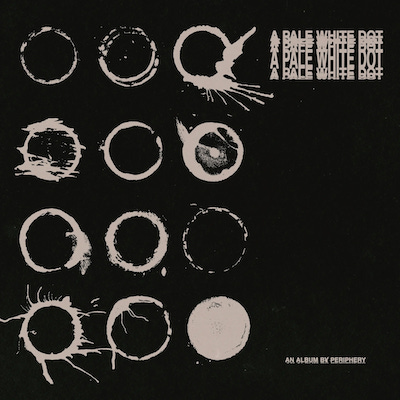
I suppose it’s fitting then that A Pale White Dot’s cover art, the first in Periphery’s discography to not feature their capital P or three-dot logo, instead features a series of partially-eclipsed outlines. Mansoor has stated in interviews that each circle is meant to represent a constituent song, invoking the paradox of isolation: those who feel the loneliest are often rarely far from others who know that very same pain. Combining the light they’re still able to emit can yield a body illuminating and strong, it’s true—just look at how these oddballs have rewritten the prog metal playbook for a decade and a half. The irony, of course, is that A Pale White Dot is the opposite: an LP of pieces more impressive than their collective sum and ultimately closer to a lateral shimmy than a determined, firm-footed trek towards horizons truly unseen.
7.5/10
As a longtime hater, I found this album pretty underwhelming (aka undisasterous but unimpressive): few carcrash songwriting decisions ("Carry On" woof, as noted), a few token fits of unlistenable junz ("Unlocking"), but that and janky sequencing aside it feels an emphatically safe record without much overall thrust.
Funny that they close with an acoustic number like they're writing a bloody epilogue chapter. Motherfucker, you have not told a coherent or halfway memorable story with this album.
Great rev ofc
Great rev! This was a decent album, just not a good Periphery album for me. A lot of the songs kinda felt like they stopped right as they were starting to pick up steam on my first listen. Spencer’s voice has improved so much though, even this late into his time with the band