


Welcome, or welcome back, to PERMANENT WAVES, a chronological journey through the power pop (and beyond!) of the year 1980.
We’ve got a smaller batch this week, only seven albums, BUT it may just be the most power pop-rich batch yet— and what’s more, not one but two of these albums feature a song about a relationship with a model that goes sour! And that’s just the ones I could be bothered to notice! Are these two facts related? Is any of this of any significance? You already know it, baby. Let’s mindset.
The Suburbs - In Combo
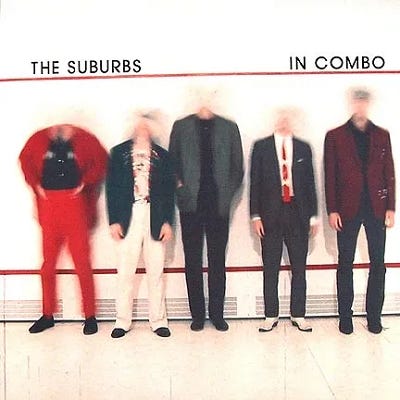
This album comes highly recommended for fans of new wave at its very twitchiest and scratchiest. The Suburbs play fast, stuttering, quirked-up keys-n-guitar riffage adorned with VERY snappy drumming courtesy of MVP Hugo Klaers. Unfortunately, they don’t seem terribly interested in hooks: the vocals are as liable to mutter or whine as anything else, and they’re pushed wayyy back in the mix too, like they were the last thing the band thought of and they didn’t want anyone paying too much attention to them. Shame, too, since what little I can make out of opener “Hobnobbin’ with the Executives” is at least witty enough to be charming (the Suburbs are gonna rock your ATTACHE!!!). It’s pleasant enough going if you temper your expectations a bit, and there’s no shortage of instrumental pizazz on offer, but the album nonetheless runs together more than I want an album of this style to.
VERDICT: FINE
Plastics - Welcome Plastics
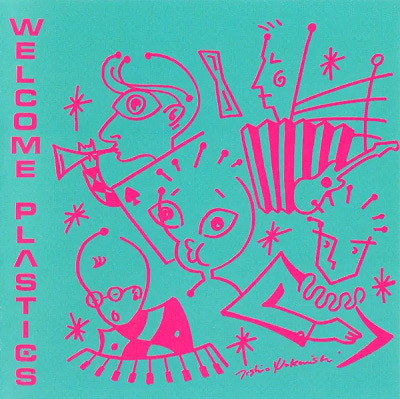
No big zamn-tier winners this week, but this small winner is no less of a blast for it! One listen to Welcome Plastics should make it obvious why David Byrne was so keen to introduce these Japanese new wavers to an American audience. Their affinity for herky-jerky synth earworms and sardonic send-ups of modern advertising make Devo an obvious point of reference, but Plastics’ take on the sound is decidedly less apocalyptic and more cheerful. Takemi Shima’s “rhythm box” drum machine produces hilariously dinky, tap-tapping hold music beats, and Toshio Nakanishi and Chica Sato split vocal duties to one-up Mark Mothersbaugh’s lobotomized monologues with equally-lobotomized dialogues (for a prime example, check “Robot”: IBM. IBM? IBM! IBM.) The paucity of vocal melodies might be a dealbreaker for some, but personally I find Nakanishi and Sato’s performances to be so chock-full of personality and fun that it hardly matters how well they can sing. Plastics’ power pop mindset is not to be underestimated, either: dig that quick “Drive My Car” interpolation in “Can I Help Me?”, or their wonderfully zippy rendition of the Monkees’ classic single “Last Train to Clarksville”.
VERDICT: NICE
The Blasters - American Music
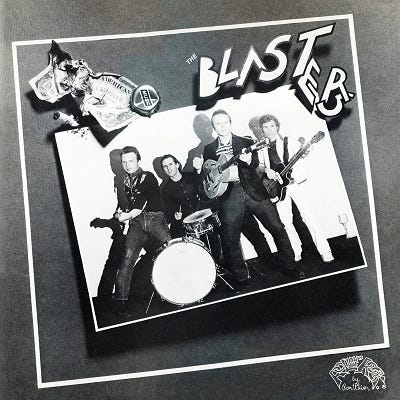
I’m generally pretty down on rockabilly, so the fact I tolerate this album as well as I do is probably evidence that it’s doing something right. Compare the good ol’ red-blooded Blasters to hacks like the Stray Cats, and the difference is plain to see. One artist uses a backwards-looking mindset to, to, well, look backwards, to fully inhabit a bygone musical idiom and see what it has to offer the discerning listener of today; the other uses it as thin cover for creative bankruptcy. If you’re looking to revive the sounds of Sun Records, you had better go ALL-IN without sanding down the provincial rough edges, and the countrified blues-boogies of American Music do just that, replete with honky-tonk harmonica (“Barefoot Rock”) and even honest-to-goodness yodeling (“Never No More Blues”). It’s still a tough album for me to get personally excited about, because power pop mindset is internationalist, dangit! American music? P’shaw, everyone knows music ought to be an unending ouroboros of Europeans imitating Americans imitating Europeans! Don’t let me scare you off, though: This whole rock ‘n’ roll thing did, in fact, start with Hank Williams and T-Bone Walker and all their ilk, and as far as loving venerations of those artists go, you could do a heck of a lot worse than this.
VERDICT: FINE
The Babys - Union Jacks
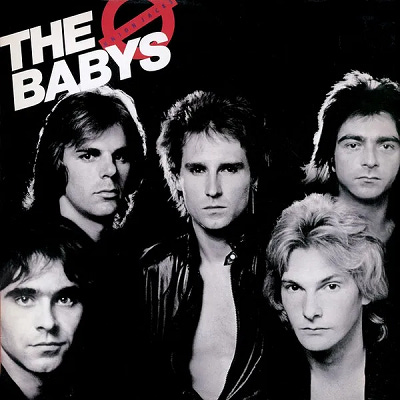
To an extent, The Babys’ core appeal is the same as the Raspberries: uberpolished, bubblegummy guitar-pop confectionary. Just like the Raspberries, their debut was mostly rather vapid and mawkish, and just like the Raspberries, they got quite a bit better after that by proving they took their power pop roots seriously. UNlike the Raspberries, whose sound never quite escaped the juke joint, The Babys take to the stadium like a corporate fish to corporate water; their fourth album Union Jacks could easily hang with Boston, Cheap Trick or Pat Benatar (though it’s still too featherweight to hang with Van Halen or AC/DC). There’s an appealing heart-on-sleeve-ness here that gets the band past a lot of my punk-snob defenses. Their guitar distortion tries to disavow it, but they’re good at being a teen band— just look at John Waite, what a dreamboat! Triumphant opener “Back on My Feet Again” sets my fists a-pumping, “Jesus Are You There” is rather daringly agnostic, and on “True Love True Confession”, a Playboy bunny dumps Waite after a quick shag and then goes blabbing to the tabloids about it— ouch! Then keyboardist Jonathan Cain takes the mic for “Turn Around In Tokyo”, and the illusion is broken, and I feel a bit sheepish for getting so thoroughly rooked by these fuckin’ himbos. Kudos, I suppose, for some convincing facades of introspection and/or conviction and/or heartache! Put that mindset in your pipe ‘n’ smoke it.
VERDICT: NICE
The Roll Ups - Low Dives for Highballs
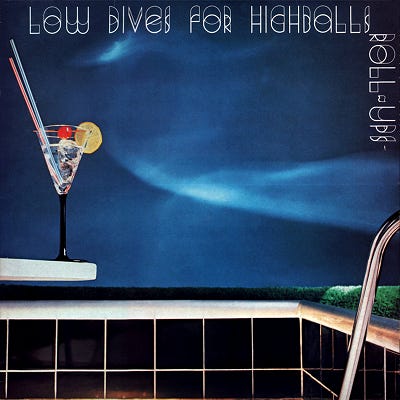
These London power poppers essentially sound like the missing link between early-70s glam rock and late-70s pub rock, and maybe I’m just a huge nerd for this kind of thing, but it’s such an intuitive fusion of familiar sounds that I’d probably call Side A the most well-balanced listen of this week: instantly catchy and likeable, consummately professional without losing a sense of fun, a sterling advertisement for a live show. It loses quite a bit of steam on the B-side, though: “Cover Girl” and “Sammy” both have a bit of an awkward meter to them, not satisfying enough for a proper singalong, and the former is too thinly-sketched to back up the jilted bitterness on display— I dunno, something about being so upset that a model chose her modeling career over you, that “Don’t try to give it away” hits an off note for me, and the album honestly never totally recovers from there (Though “Somebody Stole the Girl That Stole My Heart” gets mighty close!). Still, the early going is more than enough to save it in my books. A Cockney accent and a bit of hard-driving piano will take you far indeed. Mindset of the week: My face is on the television, I don’t think it’s funny / Where’s the money?
VERDICT: NICE
Walter Egan - The Last Stroll
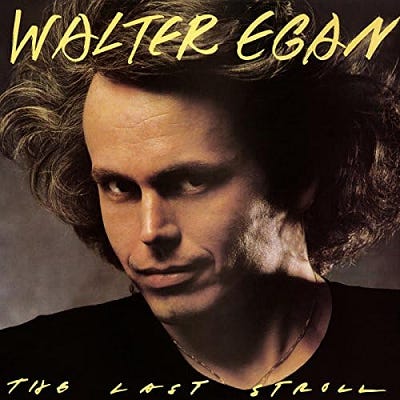
Walter Egan spent the second half of the 70s as a boogie-inclined soft rocker of little distinction, but hey, it turns out the dude wears keyboards well: his new wave-inflected fourth album The Last Stroll has a fair bit more fire in its belly than his last couple, and a few of the more toe-tapping numbers are airtight enough to have some staying power. Namely, album-opening anthem “Baby Let’s Runaway”, celebrity crush anthem “Tuesday Weld”, and one-night-stand anthem “First Date Last Date” are a guaranteed rockin’ good time one and all. Shit, the hopped-up love song “Chaminade” could easily win the heart of any Heartbreakers or Attractions fan! Most of the rest slips back towards pleasant and indistinct, especially when he tries to slow it down a bit. C’est la vie— play pub rock games, win pub rock prizes?
VERDICT: FINE
Steve Walsh - Schemer-Dreamer
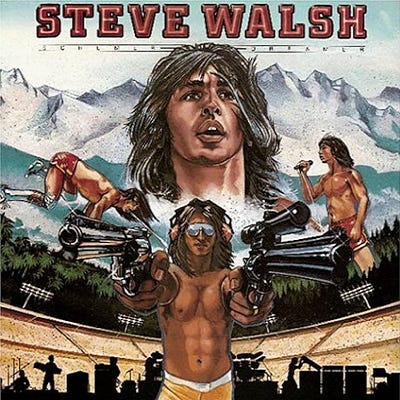
Power pop as a whole has clearly cast its lot with the punks, and I can’t say I blame them, but let’s get one thing straight right now: I am no prog hater! I recognize Pink Floyd as one of the greatest to ever do it, I love Genesis and Yes, and I even enjoy some King Crimson and Gentle Giant every now and then. All that said: I’ve never been too keen on the more radio-friendly American strain of the genre represented by Styx and Kansas, and this solo debut from the latter band’s lead singer moves my needle exactly zero on that front. Schemer-Dreamer streamlines the arena-sized ambitions of Leftoverture into sensible mainstream rock with a bit of extra pomp and circumstance. It gets off to a good start, with a title track that morphs into rock standard “That’s All Right”, but the rest is just that crucial bit too meatheaded and obvious— the literal arena on the SUPER BADASS album cover says it all. For how middle-of-the-road the style is, it’s a wearying listen; almost every track is twice as long as it needed to be. If Walsh wants to make cock-rock, perhaps he’d do well to listen to less Meat Loaf and more Ramones. Don’t bore us, get to the damn chorus.
VERDICT: SKIP
VERDICT: Wavey af