

Permanent Waves #22
I don't know how to stop!

Welcome, or welcome back, to Permanent Waves, a weekly-ish expedition into the power pop (and beyond!) of the year 1980.
Still on the up and up: seven albums and they’re mostly pretty darn good! A bit light on proper power pop though, hopefully weeks to come will remedy this? Knock on wod, let’s mindset!
Spinners - Love Trippin’
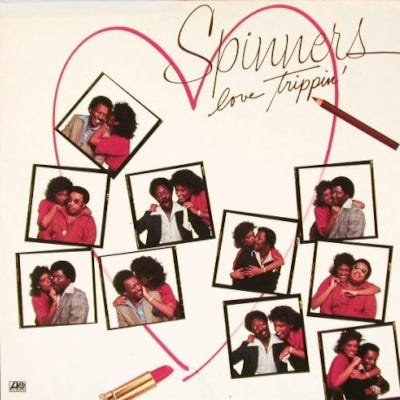
Love Trippin’, the dozenth album from veteran middleweight croon gang The Spinners, strives to avoid a post-disco hangover by receding into the group’s comfortable pre-disco sound. They only donned leisure suits in the first place to bring back the hits after the departure of lead tenor Philippe Wynne kicked off a dry spell of several years, though, and with Wynne still replaced by the decidedly more anonymous John Edwards (and stalwart producer Thom Bell still replaced by outright hack Michael Zager), the pop pleasures on offer here are generally pretty mild and fleeting. “Cupid”, which still has a tinge of disco to it, has enough leftover Sam Cooke sauce to be a hit; “I Just Want to Fall in Love” and “Split Decision”, which both have more than a tinge, do not. And my favorite of the slow ones are naturally the most flower-powery: “Heavy on the Sunshine” and album closer “Pipedream”. Much as their best days are clearly behind them, the group’s sugary harmonies are intact, I just wish they got something a little more toothsome to do with them
VERDICT: FINE
Foghat - Tight Shoes
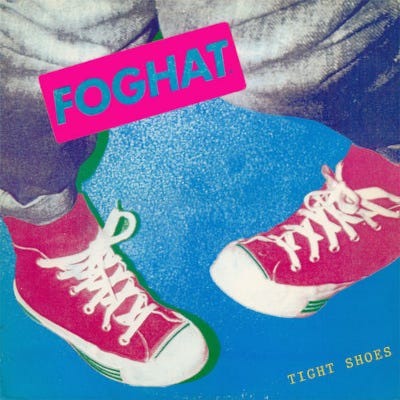
Here’s a little something risible for the classic rock heads: The opener here is a considerably less disastrous rock fling with slap-bass than Foghat’s signature megahit “Slow Ride”, which is not merely a bad song but one of the very worst songs of the entire 1970s. Tight Shoes is billed as a pivot towards new wave, and I’m somewhat of two minds here. On the one hand, it’s a case study for what miracles new wave can work for musicians as undistinguished as these: the drumming is tight, the guitar has proper bite to it, and the overall package I daresay sounds fresher and more toe-tappable on its face than, say, The Up Escalator. On the other hand, in stripping away Foghat’s dreadful listless boogieing and stodgy white blues influences, one is forced to wonder what’s underneath it all that they can truly call their own. Their lyricism is still dim at best, and well, it certainly doesn’t say anything I’m overeager to hear about power pop mindset that bands like this now have such a ready-made formula for keeping up with the joneses (the joneses being The Knack, or Cheap Trick if we’re lucky, I guess). If they had at least learned to keep every track under five minutes I could probably be talked into a lenient FINE, but the closer clocks in at 6:15.
VERDICT: SKIP
Joan Armatrading - Me Myself I
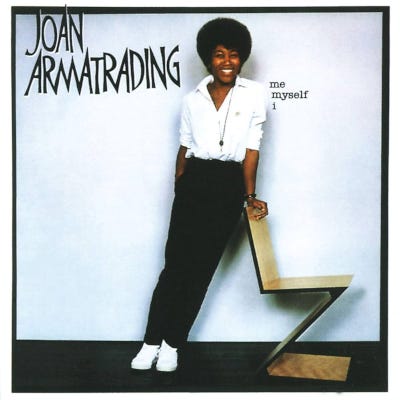
Joan Armatrading is a folkie by origin and a rocker by spirit, which makes her a good fit for Richard Gottehrer, an old-school Brill Building bubblegummer who took a shine to punks like Richard Hell and the Go-Go’s. Me Myself I brightens Armatrading’s earnest seriousness with the propulsive electric guitar stylings of Chris Spedding and the snappy drumming of Anton Fig, both welcome improvements whenever the tempo is up. The forceful title track and “When You Kisses Me” in particular should be required listening for Suzanne Fellini types who want Debbie Harry’s swag but are still too sensible to go full junkie. When the tempo is down, however, none of the backing musicians can do all that much to enhance the earnest seriousness of it all. “Turn Out The Light” is a respectable attempt at a power ballad, but she’s too sensible for that sort of melodrama.
VERDICT: NICE
Peter Gabriel - Peter Gabriel
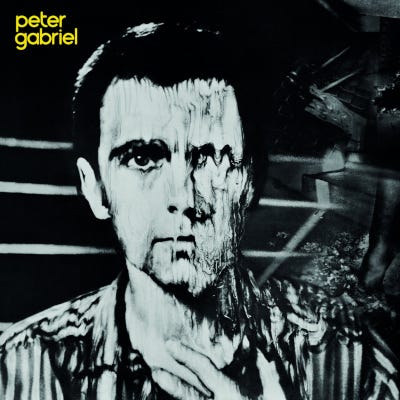
Peter Gabriel’s third self-titled solo album is thankfully more pop-minded than its predecessors— Steve Lilywhite’s ear for interesting singalongs really helps Gabriel keep his eye on the ball, more so than Robert Fripp’s ear for interesting textures or Bob Ezrin’s ear for interesting loudness did. I initially found “Biko” cloying despite its good intentions, but repeated listens won me over as Gabriel’s compassion shone through; I loved paranoid avant-pop creeper “Games Without Frontiers” and especially power-pop stadium anthem “And Through The Wire” right off the bat. And even though I have slight reservations about “No Self Control” (too weird-chorus’ed) and “I Don’t Remember” (too bombastic and white-boy funky), I can still hum both off the dome. Mindset of the week: Driving ‘round the city rings / Staring at the shape of things / I talk in pictures, not in words / Overloaded with everything we said / Be careful where you tread, watch the wire
VERDICT: NICE
Suicide - Alan Vega•Martin Rev
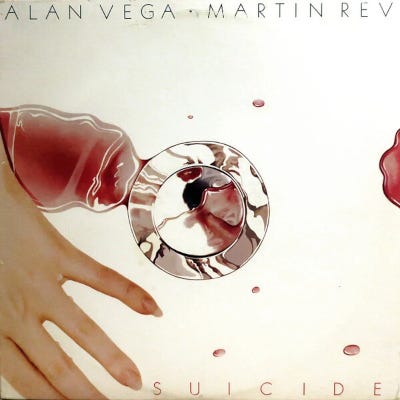
Suicide’s self-titled debut is that rare record that sounds like absolutely nothing else, even in 1980 and especially in ‘77 when it came out, a sweaty grotty nightmare of pounding drum machines and buzzing electronics and howling shuddering panic attacks. People who really love that album (I quite like it myself) are highly liable to find Alan Vega•Martin Rev a wholly disappointing normalization of one of punk’s most terrifyingly out-there sounds. I couldn’t disagree more, though: tarted up with the shiny synthtones of Ric Ocasek though they may now be, Mr. Vega and Mr. Rev have retained every ounce of their sick, sinister grip on the decaying urban-American imagination. In fact, this album displays a wonderful newfound ability to mine fear and intrigue from the contrast between expensive electronics and cheap thrills. Where Vega once shrieked bloody murder across the dismal “Frankie Teardrop”, he now gurgles and growls through “Mr. Ray” and croons hedonistically on “Touch Me”, and where Rev’s drum machines once hammered through a full half-hour at a nearly uniform breathless clip, now he slows down to a menacing strut and speeds up to an impossibly frantic hummingbird flutter (“Harlem” sounds like the damn thing is malfunctioning in the coolest way possible). Now, they sound cool and drugged-up enough for me to actually see some appeal in their depravity. God help us all.
VERDICT: ZAMN
Trust - Répression
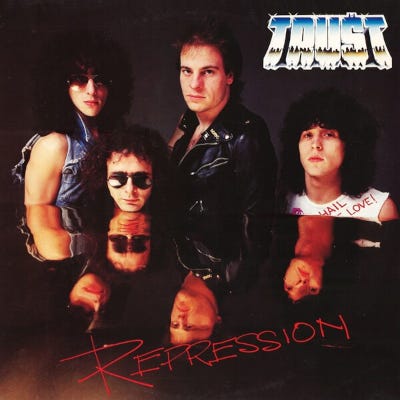
These Parisian metallers are as convinced of hard rock’s revolutionary potential as Shakin’ Street is, but they’re a damn sight angrier, for better and for worse. Their second album, helpfully translated into English by Sham 69’s Jimmy Pursey, is dedicated to the late Bon Scott, and despite their tough, shreddy sound owing a lot to Highway to Hell (and perhaps even more to Van Halen), the album is marked by a bitter and disillusioned lack of booze and good times, with frontman Bernie Bonvoisin’s lyrics exclusively addressing social ills such as political corruption, the carceral state, and religious violence. Bonvoisin certainly has the right sort of snarling voice for the job, and when the band is really speeding along it’s some of the most righteous headbanging I’ve done all year (see: “Les Sectes”, “Antisocial”, the sax-enhanced “Fatalité”). The lyrics overall leave me a bit wanting though: The English translations can be inelegant, especially in Bonvoisin’s heavily-accented English, and the musical palette is upbeat enough to warrant a bit more humor than I’m able to find— it’d have to be gallows humour, certainly, but even so!
VERDICT: NICE
Masayoshi Takanaka - T-Wave
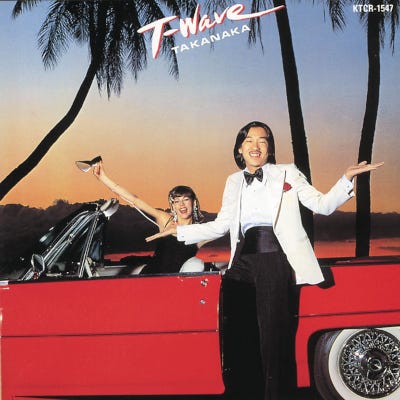
Less indulgent and unfocused than Splendido Hotel, but no less sterile or nouveau-riche. Disclaimer as always that I barely know proper jazz from a hole in the ground, but it would be a cop-out to say that Takanaka’s just never been on my wavelength, because T-Wave sparks markedly less joy than what I’ve heard of Seychelles. I take no pleasure in coming down so hard on an album that only wants for to brighten my mood for a bit, but his irrepressibly perky samba shuffles are all that’s really standing between him and the lukewarm embrace of the “smooth jazz” label at this point. It’s a lucky thing he still knows his funk: there’s a fuckin’ slide whistle on this thing.
VERDICT: FINE