

Permanent Waves #14/#15 (+ Q1 ZAMN list!)
All I need is a TV show, that and the radio!

Welcome, or welcome back, to Permanent Waves, a weekly expedition into the power pop (and beyond!) of the year 1980.
We’re getting back on-schedule in style this week: TWO UPDATES IN ONE, and to put a little pep in my step, this edition of Permanent Waves comes with an extra-special BONUS revisitation of my favorite music of the first three months of 1980! It’s been a wild ride so far, and I almost can’t believe it’s a quarter of the way over. Let’s mindset!
THE ZAMN LIST: Q1 1980
Ray Barretto - Rican/Struction
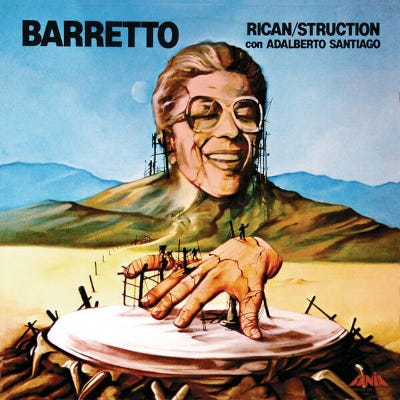
There may be no album from this project I’ve returned to more frequently or eagerly than Rican/Struction. As a total novice to the world of salsa, Ray Barretto and his band (special MVP shoutouts to pianist Oscar Hernandez and bassist Sal Cuevas) have taken me tenderly by the hand and whisked me off through a playful, passionate tour across a whole rainbow of Afro-Carribean jazz and cha-cha rhythms. I’m not too proud to admit I often struggle mightily to emotionally connect with music sung in languages besides my own native tongue of English, but this is the kind of record to reaffirm that old canard that music (and dance by extension) is a truly universal language. I double-dog dare you to queue up “Algo Nuevo” and “Tumbao Africano” back-to-back and sit perfectly still for both songs’ full duration. It can’t be done!
Japan - Quiet Life
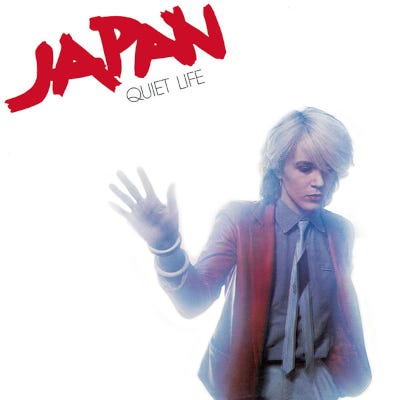
The glib answer for why I put this album head and shoulders above the dozen-odd other synthesizer-pop records I’ve heard so far this year is that Japan’s take on the genre draws heavily on the vocabulary of glam rock, in a way that makes it a much more gratifying listen to a rock fan such as myself than the avant-garde kosmische roots of, say, Tangerine Dream do. I really think it goes a biiiit deeper, though: Quiet Life feels uniquely like a new frontier in electronic music for the way it shifts those tones into a pop context while retaining a strict focus on the ghost in the machine, the ineffable humanness of the ways technology shapes our world (authentic interest in the tech itself is, for the time being, a given in this genre). Keyboardist Richard Barbieri is less a star player here and more the glue that binds the whole thing together, lending each song a glassy, digital veneer so’s the rest of the band seems almost trapped within some vast metaphysical screen. David Sylvian’s languid, detached singing, Mick Karn’s sinuous, busy basslines, are the quiet life, suspended in plastic, out of space and time. The future, folks: ain’t it a thing?
N’Draman Blintch - Cosmic Sounds
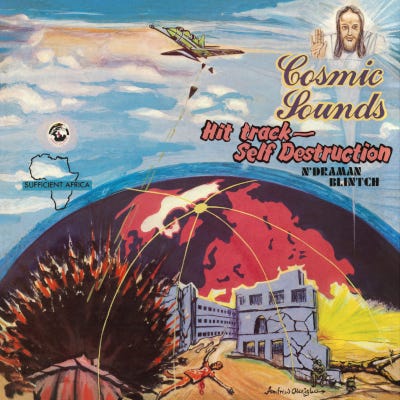
Cosmic Sounds stands tall as my favorite record of 1980 to this point; if it had come out in ‘79, only my beloved Remote Control would stand a chance of dethroning it as the best record of that year. It’s everything moving and enduring and inspiring about disco, about funk, about dance music in general. “Self-Destruction” in particular is a towering achievement of rhythm and minimalist lyricism. Fuck anyone who tries to tell you that music this purely pleasurable somehow makes for weaker polemic than whichever scratchy-throated Euro-American rock style is in vogue this week: N’Draman Blintch and his crack coterie of funkster all-stars (percussionist Gapar Lawal played with Funkadelic in the early 70s) bring satire, outrage, and enough raw excitement to topple an empire and then some. Power pop mindset ignores this one at its own peril.
Elvis Costello & the Attractions - Get Happy!!
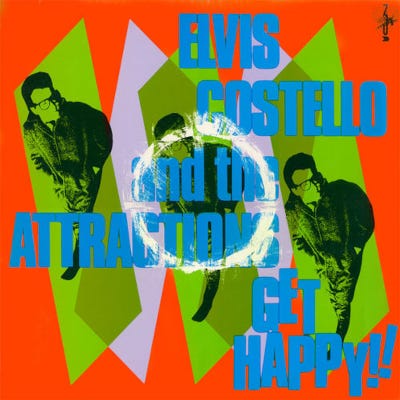
I mentioned already that this album has grown on me a lot, but for the non-initiated, it’s probably worth explaining why it had to grow in the first place. On 1978’s This Year’s Model, Elvis Costello was punk rock’s resident smart-aleck, the kind of guy who could take musical cues from the Beatles and still rail eloquently against the evils of corporate radio. On 1979’s Armed Forces, he brought in more new-wave keyboards, bigger hooks, more layered production— it’s a great album, but it was also a step away from the punk aggression that made Costello such a compelling figure to begin with. Get Happy!!, for a long time, felt like another step away, like the moment Costello’s songwriting ambitions fully diverged from punk, leaving the genre a little less witty forevermore. Get Happy?? No, dammit, you’re supposed to be angry! But, with time, song after song revealed itself to be more tightly-plotted and hookful than it seemed at first blush, first the ‘nergetic stuff like “High Fidelity”, then the slower burns like “New Amsterdam” and “Riot Act”, the latter of which finally gives Costello an album closer that couldn’t be justifiably supplanted by a single for the American release.
Wreckless Eric - Big Smash!
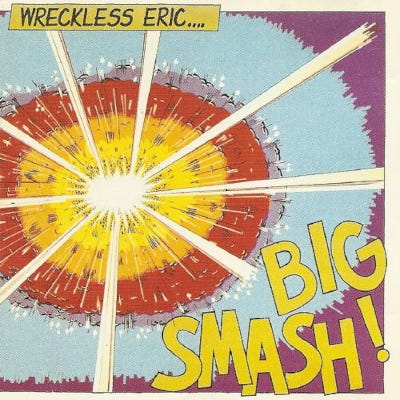
The best thing I can say for Big Smash! is that it lives up to the title, exclamation point and all. Eric has such a wonderful knack for playing up his clumsy, gangly squawk of a voice, and his best songs (many of which show up here) play pissant-as-tragic-antihero. He’s no everyman, but rather an everyfreak, embodying the universal human condition from the perspective of every ratty-looking kid who’s ever looked at Mick Jagger and thought “Hell, if a guy that ugly can be a sex symbol…” For my money, the Stones themselves could learn a thing or two from “Break My Mind”, likely the best country tune to come out of the UK since “Rocky Raccoon”.
Robert Fripp - God Save the Queen / Under Heavy Manners
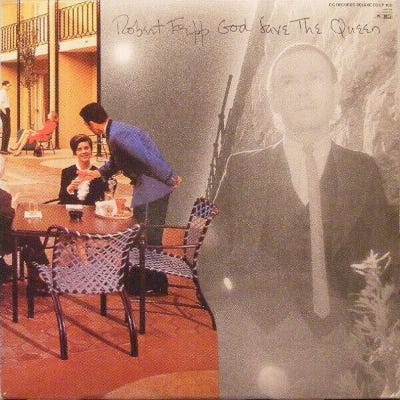
In the wake of PoseidonBrian Eno disappointing me with the somewhat grating Fourth World Vol. 1: Possible Musics (more on that in a bit), this was a particularly welcome revisit. God Save The Queen is dark and uncertain in many of the ways that Fourth World strove for, without compromising in the slightest on ambient music’s unique ability to slip into the background and lull you into a reverie before you’ve even realized what’s happening. Under Heavy Manners is a wholly different beast but no less enthralling for it, taking the same loop-based compositional method and slapping it on top of a strident disco thump, allowing for a broader palette that balances the hypnotic atmospherics of God Save the Queen against the punishing fretboard workouts more familiar to King Crimson fans. Taken as a whole, it’s perhaps a more approachable gateway into furniture music than even Music for Airports, showing just how much possibility the genre holds.
Stiff Little Fingers - Nobody’s Heroes
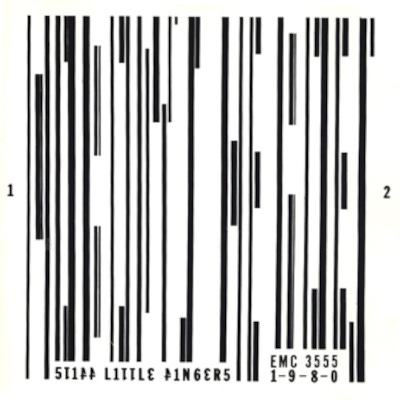
Nobody’s Heroes can only be considered a disappointing follow-up to one of the most righteous punk-rock records of ‘79 if you expect Stiff Little Fingers to be more than the imperfect, pissed-off humans they’ve always been. “Fly The Flag” rips into the foul hypocrisies of nationalism, “At the Edge” voices youthful angst at its most restless and indignant, and the title track is a sobering wake-up call from the ever-seductive myth that punk bands will be the ones to lead us into a glorious revolution (don’t let heroes get your kicks for you / It’s up to you and no-one else). Sure, that relentless iconoclasm exists in perpetual tension with the band’s fist-pumping power pop sensibilities, and sure, the dub and ska on the B-side is, while certainly less embarrassing than many similar attempts by similar bands, ultimately much less flattering of Jake Burns’ ragged voice. But it’s all still unmistakably the band that created “Suspect Device”, and that’s enough for me, and if it’s not enough for you, well, take another look at the title, buddy.
Shakin’ Street - Shakin’ Street
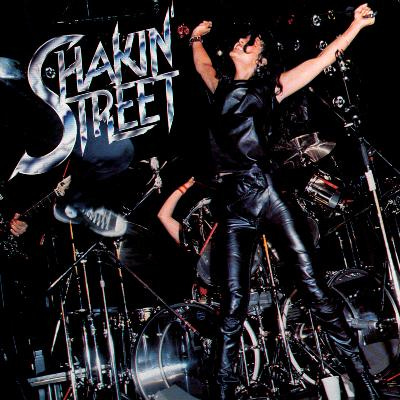
A few weeks back I praised this album as “everything vital and important about rock and roll.” Can I back that up with cold, hard facts? No, because facts have fuck all to do with great rock and roll! As important and true as the message of a song like “Nobody’s Hero” is, Shakin’ Street makes the kind of music that does the crucial work of shakin’ young people out of complacency until their hearts cry out for a better world— All you kids, wake up! No time to loose! Here, Fabienne Shine and co. pull off a flawless balance of kickass, headbanging energy and simple songwriting that makes you itch to get out there and try your own hand at it. That, my friends, is power pop mindset at its finest.
Van Halen - Women & Children First
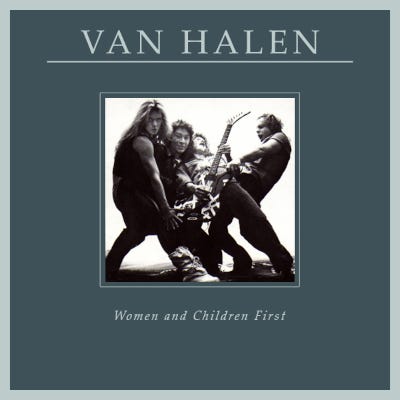
It’s not really that Eddie shreds that much harder than anyone else currently shredding (though he does), it’s more that Diamond Dave is shameless enough to make the whole thing more than camp, more than technical or genre exercises, more than macho posturing. Their warp-speed boogies go harder than ever (“Romeo Delight”, “Loss of Control”), their sense of humor is still sharper than about any other stadium act I can think of (“Fools”, “Could This Be Love?”), and their command of the blues is so complete that it makes it even more hysterical for their frontman to be the Al Jolson fanboy he is. You simply have got to hand it to them: heavy metal has never been this much fun before.
Ten great songs on non-ZAMN albums
Numbers - “Sideways Elevator”
The Buggles - “Clean, Clean”
Hilly Michaels - “Calling All Girls”
The Psychedelic Furs - “Imitation of Christ”
Squeeze - “Another Nail in My Heart”
The Brothers Johnson - “Stomp!”
Gyllene Tider - “Fån Telefon”
The Fools - “Sold Out”
Linda Ronstadt - “Can’t Let Go”
Sue Saad and the Next - “Your Lips-Hands-Kiss-Love”
…And without further ado, let’s catch-up!
WEEK 14
Genesis - Duke
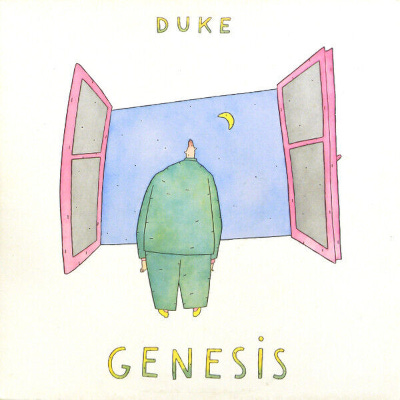
The 70s sure took a toll on these cult artsy-pop heroes: most bands would be irreparably shattered by the departure of a frontman as singular and magnetic as Peter Gabriel, but Genesis managed to soldier on, with their first album helmed by singer/drummer Phil Collins, 1976’s A Trick of the Tail, trimming away the excesses of 1974’s double-disc rock opera The Lamb Lies Down on Broadway for their most accessible and focused album to date. But, lead guitarist Steve Hackett would also depart before long, and by the time the pallid …And Then There Were Three… came along in ‘78, Genesis was palpably lacking their usual heady, mystical je ne sais quoi. Duke is a more accomplished pop record than Three, but it also throws the dilemma of latter-day Genesis into sharper relief: Collins and co. can still write a catchy, musically-interesting tune, but the big ideas that used to bolster those tunes, used to make their albums feel like worlds more than tracklists, just aren’t there anymore. I like the backing vocal bit on “Misunderstanding”, and “Duchess” and “Turn it On Again” are both smartly-written radio singles, but the performances lack vigor and personality.
VERDICT: FINE
Scorpions - Animal Magnetism
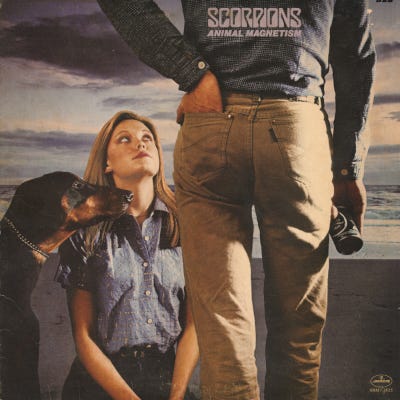
Feeling pretty broadly neutral on this latest studio set from Germany’s finest purveyors of hairy-chested biker jams. Animal Magnetism feels like more of a play for mainstream radio acceptance, and frankly, the Scorpions just aren’t as interesting when they can’t call their album something as edgy as Virgin Killer. Luckily, they’re talented enough players to pass forty minutes pleasantly enough; this isn’t too samey (check out that “Lady Starlight” ballad! Not too shabby!) or too meatheaded (check out those stabs at social commentary on “Twentieth Century Man”!), it’s just a little bit too safe and predictable for anybody who’s heard more than a few hard rock albums (check out the plentiful songs about gettin’ it on with a chick!).
VERDICT: FINE
Saxon - Wheels of Steel
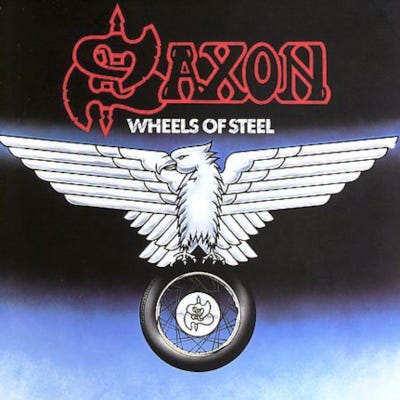
I have used up about all the goodwill I generally have for this style on the generous presumptions that that fucking album cover only bears a coincidental resemblance to famous Nazi iconography, and isn’t reflective of any deeper beliefs held by England’s sixth-or-seventh finest purveyors of hairy-chested biker jams, so I won’t mince words: This shit is just not cool at all to me. Any metal act that needs to literally open an album with a song called “Motorcycle Man” is just insisting upon itself wayyy too much, even if the song itself is solid mindless fun. Motörhead sounds raw and dirty enough for their grease monkey appeal to at least be understandable to me, but this is just bog-standard ‘eavy rock featuring some wailing operatic guy who thinks he’s Ronnie James Dio. It would be FINE if so many bands hadn’t already taken their exact sound in an actually interesting direction, but alas. Alas.
VERDICT: SKIP
Vasco Rossi - Colpa d’Alfredo
The third studio album from this Italian singer-songwriter is too scattershot to make it over the language barrier, but there’s still a bit of fun to be had along the way. Most of the songs on this album start with a likeable bit of guitar jangle, most have a cogent chorus, and for a stateside audience I’d go as far as to say most you’ve never heard anything quite like. You’ve probably heard loads of stuff that sounds a bit like all of it, though. Whenever it seems like it’s about to give me a reason to reach for it instead of literally any pop rock I can actually sing along to, Rossi’s strangely rough voice stops it just short. The biggest exception is the punkish album closer, “Asilo ‘Republic’”— those quotation marks around ‘Republic’ speak louder than any actual songwriting decision made here. Italians, have at it; the rest of you, this one’s safe to…
VERDICT: SKIP
Brian Eno & Jon Hassell - Fourth World Vol. 1: Possible Musics
I’ve got all the patience in the world for Eno at his most avant-garde, but this collaboration with Memphis jazz saxophonist Jon Hassell tests me nonetheless, treading dangerously close to the kind of pretentious, aimless artistic tourism that’s mired an entire genre of “world music” records in racially-suspect pseudo-prestige. I mean, chrissakes, the number of times I’ve already seen people describe this record as sounding either “primitive” or “ethnic” is enough to make me want to slap a SKIP on it just to wash the taste of overpriced kombucha out of my mouth. I can’t bring myself to disrespect ambient daddy like that, though: Fourth World Vol. 1 is not at all soothing or tranquil like Music for Airports is, but the creepy atmospheres of drifting synth pads, congas, and ghatam, along with Hassell’s wailing, effects-mangled trumpet, make it one of the most unique musical experiences I’ve had in recent weeks, even if it isn’t exactly “enjoyable”.
VERDICT: FINE
Tommy Tutone - Tommy Tutone
Finally, some actual fucking power pop! San Franciscan guitar-slinger Tommy Heath is clearly modeling himself off of pub-rockers like Graham Parker and John Hiatt, but he’s somehow even more of a schlub than either. I’m not proud to say that this is my favorite album of the week, but I do mean it earnestly and full-throatedly: Walking through downtown Spokane as the sun set on one of the first hot days of the year, listening to “Sounds of a Summer Night”, I got it. The predictable chicks-n-beer songwriting was pure comfort food, the everymannish singing perfectly could-be-you. Chicken soup for the soul, for power poppers instead of Christians. Mindset of the week: Latest hits, you know they’ll be playin’ / If you put your head to the wind and you listen, so hard /To the sounds of a summer night / Baby, you will hear them
VERDICT: NICE
WEEK 15
Bad Manners - Ska ‘n’ B
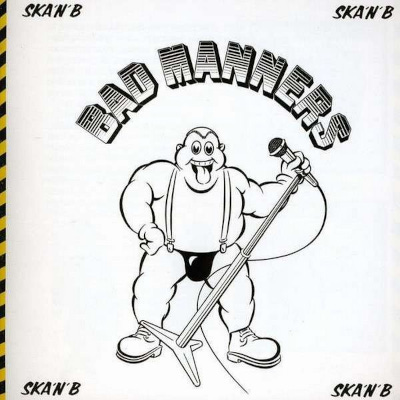
So lighthearted it’s nearly a novelty record, and high-spirited enough to be a damn great novelty record. This London 2-tone ska outfit clearly takes partying seriously, and a party is exactly what their debut album feels like. They cover “Wooly Bully” and “The Monster Mash”, frontman Buster Bloodvessel repeatedly calls himself a fatty, the band takes breaks from skankin’ for a wildly entertaining jump-blues jam called “Caledonia” and a sardonic nursery rhyme called “Scruffy the Huffy Chuffy Tug Boat”. The modest ambitions make it hard for me to feel too intensely for it as an artistic statement, but the jocular band chemistry leaves a firmly pleasant impression— it certainly begs to be experienced live onstage more convincingly than that last J. Geils Band record!
VERDICT: NICE
Phil Lynott - Solo in Soho
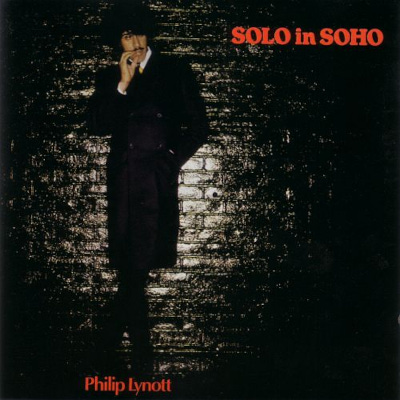
On his first solo set, Thin Lizzy frontman Philip Lynott is less focused without his band, but no less the charming vagabond. “Tattoo” is disco, the title track is reggae, “Girls” and “Yellow Pearl” are new wave, and “Talk in ‘79” is, uh, spoken word? I think? Lynott’s brand of hot swashbuckling romance and boozy gutter heartbreak is universal enough to slot comfortably enough into any number of pastiches, but the handful of tougher cuts throw all the seams into stark relief: at the end of the day, Lynott is a rocker, and a roller too, baby. Best tracks: The Mark Knopfler-assisted Elvis tribute “King’s Call”, and “Ode to a Black Man”, which hilariously disses Stevie Wonder for singing about plants instead of civil rights. Get his ass, Phil!
VERDICT: FINE
The Knack - …But the Little Girls Understand
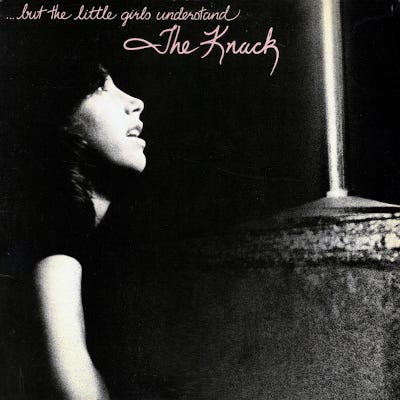
The ostensible goal of Permanent Waves is to discern why 1980 is a year of peak power popTM, so here’s a theory for you: It’s because of Get The Knack. I’m reluctant to leave it there, because I am not a fan of The Knack, but the fact of the matter is that the biggest hit song of 1979 was by a group of cheeky mop-tops with guitars peddling a new wave-inflected update on the sound of the British Invasion. If power pop is about spreading the gospel of The SixtiesTM, “My Sharona” and The Knack by extension could fairly be called the genre’s greatest success story in a decade. The problem is that Doug Fieger thinks the lyric that unlocks the Beatles is “Well she was just seventeen / if you know what I mean”. In other words, he’s not that bright, and kind of a lecher. He claims this album was written before the band went multi-platinum, too, which means I can’t even write off …But the Little Girls Understand as a cynical cash-grab by an artist that should know better. This is a sophomore slump by one-trick ponies, and that ain’t Beatles.
VERDICT: SKIP
U.K. Subs - Brand New Age
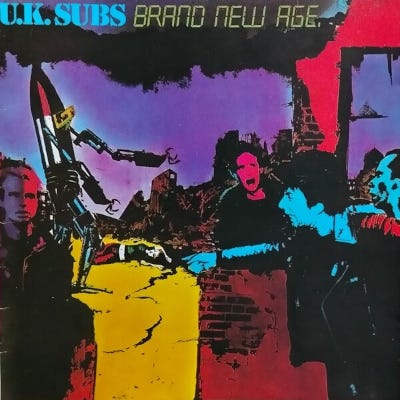
Pretty undistinguished shouty Bri’ish street punk here— not as funny as Cockney Rejects, not as urgent as Stiff Little Fingers, and not as catchy as either. I do like their driving sense of rhythm, though, the way guitarist Nicky Garratt pushes Johnny Ramone’s buzzsaw style towards its slashin’ bashin’ logical endpoint. They’re at their best at their fastest: a few more cuts like “Emotional Blackmail” and I’d be a happy camper, indeed. As it stands, though, it’s really just gone in one ear and out the other.
VERDICT: SKIP
X - Los Angeles
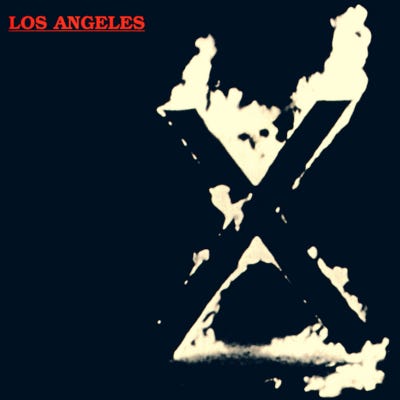
Rip-roaring, all-AmeriKKKan punk R’n’R, like Rockabilly by way of Frank Miller (except, er, not as tedious as that sounds). Produced by famed Doorsman Ray Manzarek, Los Angeles douses the famed, twenty-year rock tradition of X’s hometown with gasoline and burns it in effigy. Their subject matter begins and ends with seedy urban underbellies and the greasy nihilists who fuck, smoke, and murder their way through them, and on a few tracks (“Sugarlight”, the title track, and “Johnny Hit and Run Paulene”) the hook just isn’t quite good enough to swallow the sourness of it all; ya write a song about drugging and raping a woman, I’d better be able to recall the verses! But sheesh, just take a listen to addictive, memorably-titled stuff like “Your Phone’s Off the Hook, But You’re Not”, “The World’s A Mess, It’s In My Kiss”, or “Sex and Dying in High Society”. Manzarek’s contributions on keys are a massive highlight at every point— hell, “The Unheard Music” would be downright useless without him.
VERDICT: NICE
James Brown - People
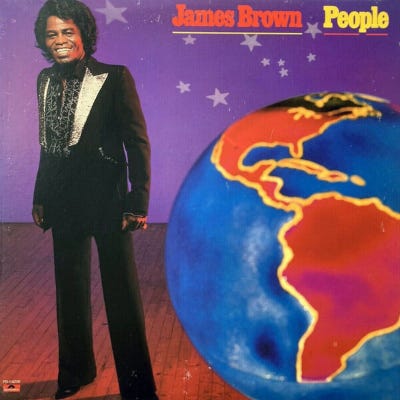
James Brown has already recorded far, far too many albums for his second stab at disco to be essential listening for anybody but the most insatiable super-fan, and besides that it’s awfully hard not to miss the palpable sweat and grime of his prime years, and besides that the whole thing was written by producer Brad Shapiro, so the “not a real James Brown album” epithets practically write themselves. For what it’s worth, I didn’t hate this— Brown is a titanic figure in the world of funk and dance music, and his immaculate sense of rhythm and his commanding voice are still intact, if a bit puffier and more satisfied. This guy’s third-rate autopilot is handily on par with anyone else still unfortunate enough to still be selling disco in the 80s, all he’s really got to do is let the funk flow. Best track: “Let the Funk Flow”, natch.
VERDICT: FINE
So happy to hear you're liking the series!
And yeah I've just in the past year or so gotten acquainted with the Gabriel era and those albums are just so special and thematically rich, they set such a high standard that it's kinda impossible to appreciate duke for being a pretty solid pop rock album
As a diehard fan of the overwrought, twee prog of Gabriel-era Genesis, I'll never forgive Duke (and its descendants) for the crime of existing.
Also just wanted to drop a periodic acknowledgement that even though this realm of music is very much not my wheelhouse, I've been enjoying the series and sampling a track here and there as I follow along. Keep it coming!