

INTERVIEW: otay:onii
Cross-cultural mastermind tells all on her new album, her time onstage in China, Europe and the U.S., Western challenges in understanding China, and her earliest inspirations as an artist.

Best known for her solo output as otay:onii and for fronting the Boston noise/sludge band Elizabeth Colour Wheel, Lane Shi Otayonii has established herself across three continents as one of the most distinctive voices in underground music, blurring the lines between East and West, opera and industrial, and electronic and acoustic in a manner decisively her own. Her solo work captures the mournfulness and menace of a set of Chinese lullabies drifting over a post-industrial wasteland, but she also maintains a close relationship with heavy music, recently playing alongside the likes of Today Is the Day and Primitive Man, and performing with Thou at last year’s Roadburn as the festival’s first ever triennium artist in residence.
I was lucky enough to hear a promo of her new album Love Is in the Shit (out May 8th), which explores bracing new dimensions of her vision and lands among the most impressive things I’ve heard so far this year — so naturally, I had to ask her for the full scoop! Lane was kind enough to give me the lowdown on all things regarding the new record, but also shared her insights on the dialects spoken around her hometown Haining, her relationship with language, her explosive debut in the German opera scene, her work as an installation artist, the underground music scene in China, the challenges the West faces in uncritically other-ing China, and her earliest inspirations as a composer.

Hugh Puddle (GK!): So I’m here today with Lane Shi Otayonii, who’s very kindly taking a break from a busy day at the studio, working on… what are you working on today?
Lane Shi Otayonii: I’m working on some vocals in the studio for a new, exciting, for now, secret band project. More to come later…
Hugh: Well, that’s already really intriguing and I wish I could ask more about it, but! You’ve got a new album coming out in early May: Love Is in the Shit, which I’ve heard and think is absolutely awesome. I’ve been very frustrated that I can’t share it with anyone until the release day, but I have a ton of questions to ask you about it! Before I launch into those, would you like to introduce it for our readers?
Lane: So thank you, Hugh for letting me talk about my album Love Is in the Shit that’s gonna come out on May 8th, on Pelagic Records, and also WV Sorcerer Productions for Mainland China, Hong Kong and Taiwan. This album is one of my journeys to set out to see beauty, no matter where I go, even if it’s in a shit pit. I have reconciled, or am yet on my way to reconcile the past traumas shivering still in my bones to this day, and I like how I can express it in my album with more humour this time, as you can hear throughout the tracks.
The album is very intertwined and further expressed with the two music videos that I am releasing. In one of the music videos, I express our essence of each individual as a little dragon ball.
It was inspired by a book called Journey to the West by Wu Cheng’en. It’s a very classic book from China. And we are Shělìzǐ — we each have a Shělìzǐ. And the Shělìzǐ is the vigour of ourselves, the spirit and the soul, the body and mind all coming together and pushing out this energy that encourages us to do the things we love to do in life. This Shělìzǐ is a little dot that shines, and in this album, I specifically put the action to protect this Shělìzǐ, because we’re very precious beings, and not in an egoistic way, but we are, more or less, all humans that share sensitive emotions and also feel very heartbroken.
Each one of us is broken in some ways, like if people say, Oh, I’m not broken, maybe they’re a psychopath, right? A sociopath more or less. So I kind of pick up the little broken pieces, and try to shine through the sun that’s above us and see the picture, see the beauty, and see the sunshine, a rainbow through this fracture of light. And that’s what I mean: you know, things are broken, it’s shit, but love is indeed in the fracture of this shit.
Hugh: So if I’ve understood that, there’s sense of seeing the essence of people — the essence of people’s energy — as this very pure presence, and looking at it in this very honest way, recognizing how fractured it is, and then being able to embrace it as it is?
Lane: Yes, yes.
Hugh: Wasn’t it the video of “WC” from [your 2023 record] Dream Hacker, where you were exploring similar imagery: intimacy framed through a toilet, using shit? I was wondering if you saw yourself as revisiting the same idea, or changing your approach to it?
Lane: So, I think Dream Hacker is more or less of a different environment, where I was composing everything and producing everything back in China. Love Is in the Shit, first of all, is composed and rearranged and finished in Berlin. But yes, there’s a core of me that will never change. I think you can hear from every production: it’s more or less ‘Lane’s core’. You can hear it, but then [there are] subtle changes — for example this time there’s more humour.
You know, for example, the song “World Class Citizen” is such a humorous approach. I just didn’t give a fuck anymore, you know, the way I did it is I ran through my Ableton and I put my cursor around the session of “No Talent”, and then it produced this nnNNuuUUhhHH sound. I think it’s very funny!
Hugh: So you were just modulating it live?
Lane: Yes, with my mouse, and then, and I think it’s funny, so I re-recorded back into my session. The way I feel about it, is, you know, there’s people who are the top dogs of the world and they think that they’re a ‘world class citizen’. And then I have reflected back on how China is in the geopolitical landscape, and it’s a very sensitive subject because no matter how people think, oh, China is rising up as the new power of the world, it’s still coming from the deep shit and has suffered from famine and hunger not long ago, 50 years ago. So the trace and the scars of trauma had already been engraved in each one of us, even in the genes. And I still need to apply for a visa from everywhere, you know, UK, Europe…
Hugh: Sorry to stop you, but wow, there are so many different things I want to follow up on there at once!
Lane: Amazing.
Hugh: So, first of all, just for people who haven’t heard the album, please check out the music video for “No Talent”, which is out now:
Now, “World Class Citizen” comes on just before “No Talent” as a short remix of it, if you like: a very heavily modulated vocal track from a song that we haven’t heard yet at this point on the tracklist, and it comes just after “Love From Survivors”, which for me is the darkest and most punishing track on the album. It was a real what is this that I’m hearing moment for me!
I feel that in the past, you’ve leaned in a lot to technology and you’ve done really strange dreamlike and creative things with it, but your voice has normally been this really raw, visceral presence, like the one thing that you haven’t touched with modulation. I’m curious to know how that’s going to change your live show: is it something that you’re going to ‘remix’ again live and keep the same kind of fun experience, changing it as you go, or will you try it clean and dry?
Lane: Yes, for this track especially, “World Class Citizen”, I modulate the whole track with my noise machine, which is made out of 3D printed shit on a potentiometer that triggers my sound and soundscapes in my session. So instead of just playing the track or trying to modulate my sound, my vocal, or for the song “No Talent”, I instead used this sound machine to manipulate the sound furthermore. So it’s a re-creational process with the tracks I have already produced, and I think this journey will not stop right there.
With every track I produce, it’s gonna have a new life, for example, leading to “No Talent”, I will also play with my keytar to further manipulate the sounds in the sessions and, of course, in the vocals live. One thing that has been a bit different from Dream Hacker, for example, is that in Dream Hacker all the vocals are very pristine in some way or another, but on “No Talent” or “World Class Citizen”, you can hear how easy peasy I’m trying to take it with my voice this time and more so, you know, with sarcasm and a humorous approach, using more of my talking voice and my laughs. You know, playing with that element in the song — and that will also reflect on the live show.
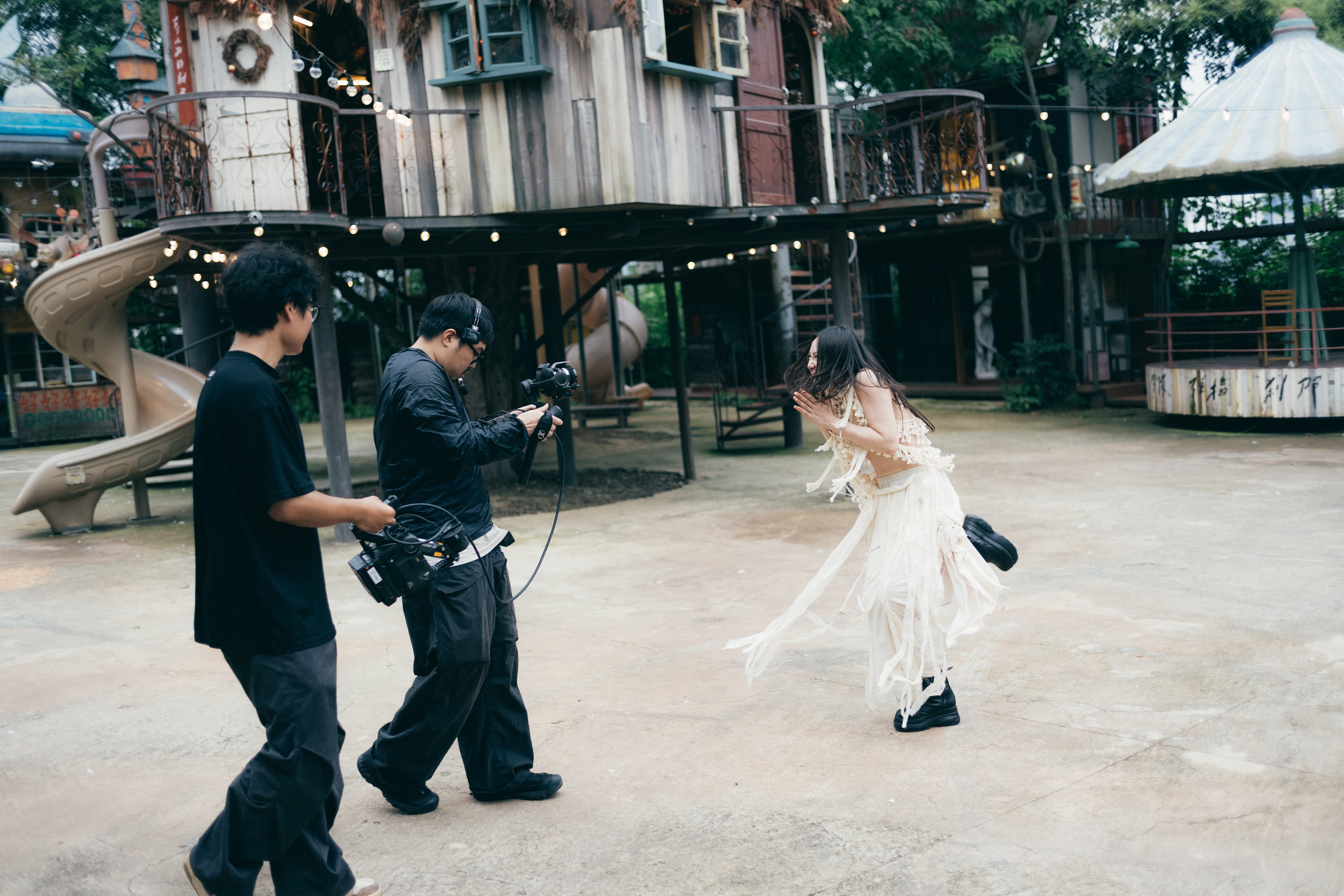
Hugh: That sounds super fun, and I’d love to have a chance to see it! I was going to ask you about sarcasm: I thought there’s something almost clownish, or circus-like, in the [“No Talent”] video, but I also heard something very forceful and caustic beneath it, as there often is with sarcasm. I was struck by one clip in the video where you’re shown handling a visa [1:50-1:54], and I suddenly made all these associations with little bits from past interviews you’d given.
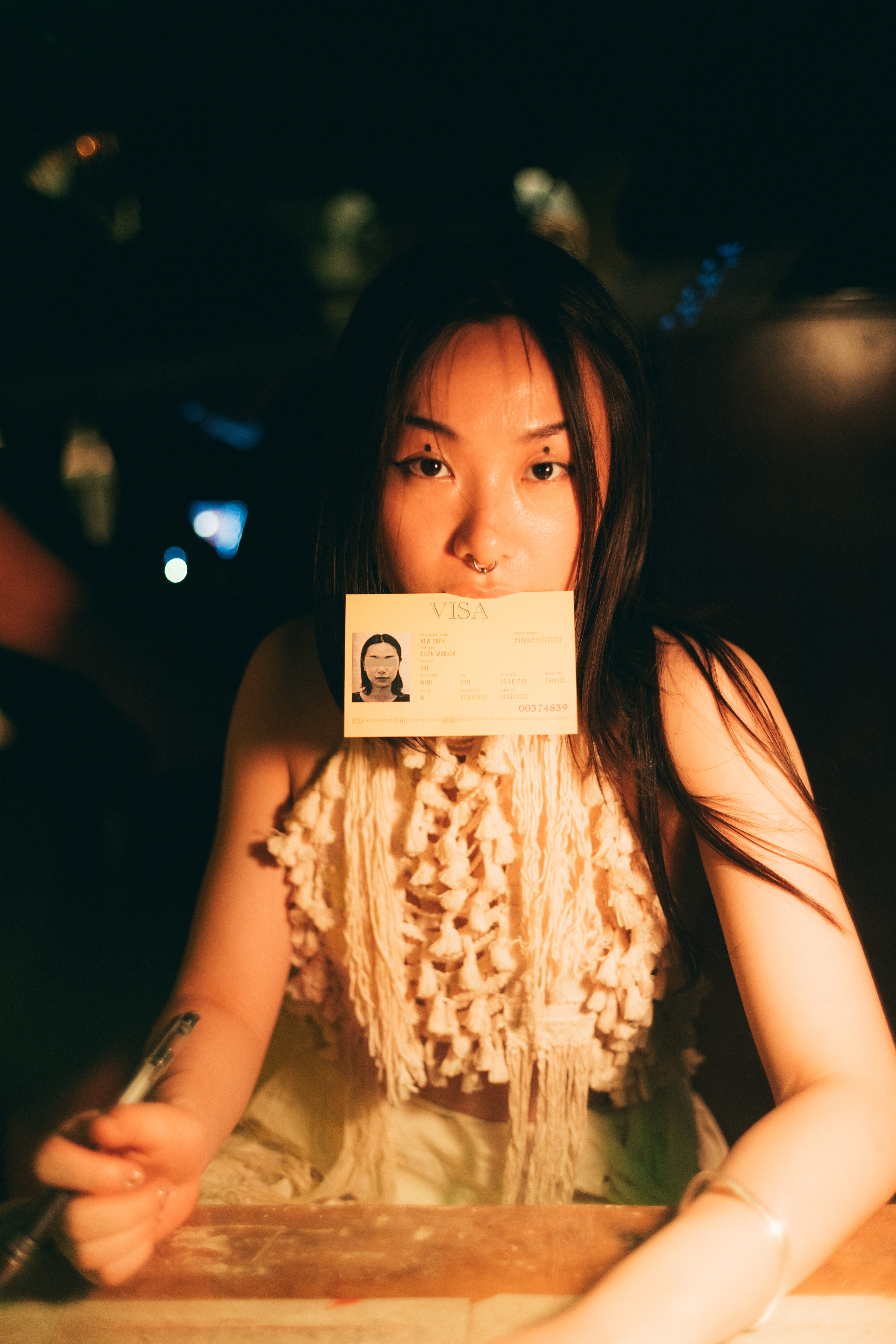
There was one interview where you were describing the alien costume that you wore for your live performances, and how you had this US visa with this absurd name, Aliens of Extraordinary Ability? Like, ‘gifted and talented’ but also so dehumanising. Was that part of what the sarcasm in the song was targeting, or was there another intention behind it?
Lane: I think “No Talent” was a way to protect myself by telling people I have no talent whatsoever: ‘I have nothing that you’re looking for’. But at the same time, in the lyrics, I tend to want to talk about what I feel about talent. I think talent is a memory accumulated to a certain point (everyone’s quite different in the timeline) where wisdom starts to appear. And this wisdom is then running in your veins, you know, it runs like a river with, for example, for a musician, every lyric and every song you write, it starts to be a whole thing, a holistic thing, rather than a template that people can use for later on. For me, writing every song, I just write as it goes. You can hear also in “Love From Survivors”: it does not follow any template because it follows my emotions and it follows the narratives that go somewhere that I don’t even recognize or know beforehand.
Back to “No Talent”, the lyric is saying,
I have no talent, just a story / Out of another story / A fool will gain some wisdom in some relics / The talent that you call / is the long memory after all /
Hugh: / Only getting more interesting /
Lane: / from now on. Yes. And there is a wish that I think that we humans have shared now. This is something that I believe in a philosophical way, that we humans definitely share collective memories. We pass away, but then we also have contributed our memories in this big pool of human experiences and existence.
Hugh: So for you, talent is being able to tap into this idea of an ancestral memory, or what people have earned by experience, and then realize it in your own work, in your own art?
Lane: Um, I think talent is something that you’re born with. And I’m not saying ‘Hey, I have no talent, you have talent’. But I say ‘We all have talent’, but we need to find our own talent. Some have talent in this way, of course, some have talent in writing books, some have talent in writing songs, some have talent in, you know, painting something. Some have talent in seeing the various organizational tactics in the business standpoint, some have talent in building a light. Some have talent in feeling quantum physics without even knowing the equations in the textbook.
We all have our talent, and that talent is more or less born with. And I think more or less people are not honest with what they are talented with. For example, if I said ‘I’m talented with words, I’m talented in writing a textbook, a journal or a novel…’ not yet! No, I’m not talented in that. I have a specific relationship with language, with English, but I’m not talented in expressing it in any way in the length of a novel. To say that I have talent in this is a deceiving process for myself and others, right? So that’s what I’m talking about. But then let’s say, okay, I have a talent in A. Now, this A needs to be described or processed and deciphered as something that is not mysterious. It’s just collective memories that we have accumulated in our human history. That is what I’m talking about.
Hugh: So to draw it back to the song, the humour and saying ‘I know I have no talent’, on the one hand, is the sarcastic, defensive action you were talking about, and on the other hand, it’s like almost a satirical take on people who haven’t recognized that of course, we all have talent and we all have a way of channelling it, who perhaps haven’t recognized that within themselves, or haven’t been promoted to?
Lane: Yes. And if people tell me, oh, you know, this person is so talented in this, and I cheer for that, and I would love to, you know, be happy, and I am happy for the talent aspect, but I know deeply that talent is not special.
Hugh: Like, the fact that you have talent in and of itself is not a special thing, but what you can do with that might become special?
Lane: Yes, the ability to find it, to feel it, and to be connected with your talent and to protect your talent, also in the process of expressing it, to use it, is really something that we all need to find within ourselves, because one can have talent, but one can also use that talent pretty horribly, or, let’s say, be used pretty horribly. Let’s talk about Einstein, for example. You know, one might regret that his talent was used in some history that very much hurt many people out of his own will, or, you know, there’s like a clash of interest. That is what I’m talking about, by protecting your talent.
And then that’s why I say ‘I have no talent’, because I want to tell people to not use anything from me or think that they have the leverage to use it out of my own consent. So that is something that I’m expressing with this song. On one hand, I respect talent and I want everybody to find their talent, but I do not see talent as a special, mysterious portal. I see it as something that you truly need to find yourself and connect it with. On the other hand, by protecting the talent, I would like to make a joke saying ‘Einstein is not talented – he’s not talented!’ – and propose people to reconsider how they use their talent.
Hugh: I love how much depth that is for a single that’s one of your most immediate songs, even though it starts as one of the most catchy, light-spirited things you’ve done! Can we go back into the darkness and talk a bit about “Love from Survivors” where you said that you were finding places for your voice, your spirit, to go, and it surprised you? It surprised me too! It was harrowing, in the best way.
[This track has since been released and you can scroll up to watch the music video], but for people who haven’t heard it’s, it’s build over this very noisy, industrial, chaotic background with these terrifying screams over the top, and then towards the end it, you drop a breakbeat in, and it comes into this very sort of smooth dream, almost like a downtempo track. It’s nightmarish. It’s wonderful!
It reminded me a little bit of Uboa’s Impossible Light from a couple of years ago, and not just because you featured on the final track on that: that whole album, especially the track you were on, opened up these really raw, disturbing places in a brutally honest way, only to find something quite cathartic and cleansing in doing so. Was it a remotely similar experience making “Love from Survivors”?
Lane: Not at all. Because when Xandra from Uboa asked me to do that, I quickly thought of The Secret of the Golden Flower. It’s a textbook that was translated from a very old Chinese alchemy book by Carl Jung and couple of other German academics, and the lyrics that I contributed to Impossible Light were a call-and-response to Xandra sharing her experience in the hospital and all her trauma at that point. We sort of became friends, and it was a really nice experience working with her.
In some sense, “Love from Survivors” also touches upon my personal trauma. I truly believe we were not born with love, we’re born with evilness, but maybe throughout life experiences, we learn how to love. And for people who have gone through trauma, intense trauma, I mean: surviving. We’re talking about so many different levels and layers of surviving events. You know, in my case, is surviving all this visa bullshit and having to pay out of my debt and suffer from all these dehumanizing, humiliating experiences in the embassy to just get a visa that nobody around me at the time needed to even go through. It was just very different from [them] experience-wise. It’s a different thing, all the money that you need to pay and all the burden and heaviness on your shoulder, you know, and I realized humans deeply have experienced different lives from one to another.
And let’s talk about, you know, all the children are losing their parents or children that are sacrificed in wars and brutal genocides right now, even now, in our society. And that’s also surviving, you know, completely different and completely, more traumatized than any of us will even imagine.
Now imagine them coming out and living their life, becoming a more loving person. What does that entail? For me, this song is to imagine a person coming out of a traumatic experience still holding out their love ten times, one hundred times, a thousand times stronger than before. That’s the strength I want to embrace with this song. And this is a wish that I want to come out with within this song, and that’s why you can hear all these screams. I want to scream my lungs out. I want to change my body. I want to reconnect my brain, to get rid of this trauma. I want to live a different experience, without this darkness behind my back.
It’s this intention of throwing up, throwing yourself into the dirt, like you said, cleansing – without destroying yourself with the darkness, you cannot cleanse yourself – and then coming out. The last bit [in “Love from Survivors”] of almost trip-hop is something that I want everybody to dance in this session, to move their body, to feel the air move, to feel the breeze that brings their darkness away. And the last sentence, when I fall off the cliff, I bring only love with me, that’s the final sentence that concluded this wish that I had with this song.
So in some ways, yes, I think I can resonate with Xandra in wishing that this light will come out regardless of all this trauma and illness and sickness and health issues that are constantly devouring her, and in some ways, yeah, we share the same kind of frequency and wishes with these songs.
Hugh: That’s so dark, but also optimistic – if human suffering can do anything, it might as well be this source of light and inspiration. When I first heard that trip-hop part come in, I very much felt I like was moving to it. I felt so solid in my actions when that beat came in, when your voice changed, there was this really morbid sense of confidence that came with it.
There’s a couple more tracks I’d like to ask you about before we talk a bit more about visa stuff and living all over the world. First, for one of the most intense songs on the album and my personal favourite, could you tell us a bit about “The Plaice”?
Lane: Yes, “The Plaice” is a track where I talk about lost relationships and lost friends that I had, and how it hurt me super deeply and left a really, really big scar in my heart. At times I feel like no matter how much I want to speak about it with another soul, the words come up but they’re just rotting away because there’s no elongation of relationships that have been lost. There’s no saving point of the relationship.
And again, I try to look at the bright side with all these lost relationships and all those hurtings and conflicts, maybe there is a lesson to be learned that I will come out stronger. The beginning and the end [of the song], which are very identical, they’re lullabies, more and less, trying to soothe myself, soothe you, soothe everybody who is yearning for that kind of comfort, coming out of a grief-moment. You know, losing relationships, losing friends, losing a loved person is a grieving process.
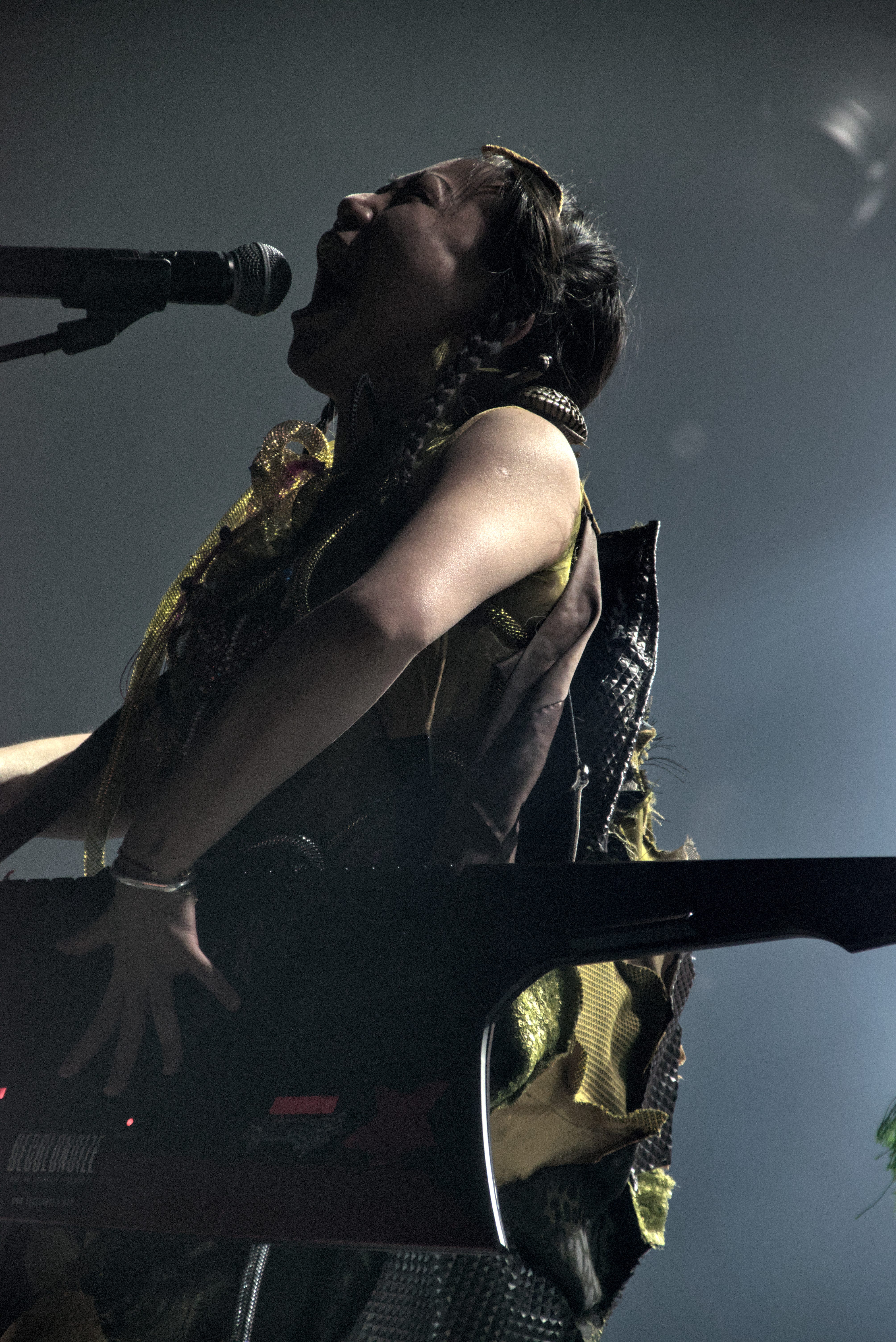
In the middle, I kind of unleashed everything that’s in my emotions, and it becomes chaotic again. I unleashed a scream that’s very much that point of, you know, AAAAH – holy shit! For some people, it’s irritating, and – it is! It is irritating for myself so and in the lyrics, I talked about how I felt about this grieving process. It’s never too helpful to repeat it again and again in my head, but there it is. It exists, and then I soothe myself and seek comfort in this process. And in the live shows, I will also play the lead line on the keytar, and then scream my ass off and sing my ass off also. And if you you know what a plaice is, right?
Hugh: The flatfish?
Lane: Yeah. So “The Plaice” also sounds like, oh, we come to this place. It’s inspired by a place that I’ve been to thousands of times with, where I had this group of people as friends, and when I go to that place, I no longer feel those moments of joy and happiness, not reuniting with these people. So there’s like a juxtaposition with this word, but then a plaice is also a fish. This fish is flat with a very weird face, and the mouth is like this, you know [demonstrates] and it’s mostly eaten by human beings as a delicacy. So my emotion is more or less like this flat fish.
Hugh: So it’s the idea of being warped and crushed and having your feelings flattened out?
Lane: Yes.
Hugh: Well, that explains that! One more question about a song from the new album: you sing in your local dialect from Haining on the bridge of the opener “Have You Ever”. I thought this was a really lovely contrast with the rest of the song, not just linguistically but in what you do with the aesthetics. You have these blaring synthesisers that make a really arresting opening, but then give way to this gentle part – it has the lullaby feel you were describing earlier – and that’s where the dialect comes in.
Could you share what inspired you to sing in dialect, and could you tell us a bit more about the dialect itself?
Lane: I’m so happy that you got my hometown name right, because I definitely have an NPR review where they got my hometown wrong. Thank you so much for the great journalism in this sense. This language is called “土话”(Tǔhuà), it belongs to the category of “吴语”(Jiangsu-Zhejiang Wu) It’s similar to Shanghainese, however, it’s got its own connotations and religious background.
When I talk about religious background, there’s a lot of shamans in this area, and in Chinese history, really, religion is not very much encouraged. There’s a lot of superstitious practices. And one might say, you know, it’s a superstitious practice. So the language very much follows this chanting and linguistic path of talking with riddles and with a lot of interjections. This language is super soft compared to the northern linguistic categories in China. It’s because we are southern people, and if you know southern people, it’s softer and more gentle compared to, you know, a big personality in northern parts of China.
I come from this village… city… it’s mainly a town, but it’s been developed super-fast into a city-like town, I think because the population in China is big, so it’s like exponentially, ten times larger than a village or town in, you know, in Italy, for example. There’s probably about, you know, I wouldn’t say less than a million people speaking it, but that is considered small in China. It’s interesting because I will be hopping into another village just right next to this town, and people speak a totally different dialect, to the point that I have no clue what my friends are talking about. I mainly just talk in this language with my parents, because they speak the same dialect and I have no friends that speak this dialect.
That’s why, when I think about this dialect, I think about the very secretive, the very nitty-gritty [sense] of what a blurry image my birthplace is. The memory of my birthplace had faded so far away. However, by speaking it, it really unleashes a lot of subliminal thoughts of my feelings and my wantings. These lyrics are talking about: when I had a dream, I dreamed about you. Wow, how strange that is, I dreamed about you. And the wind tilted, and I wonder: where are you, where are you? Where are you?
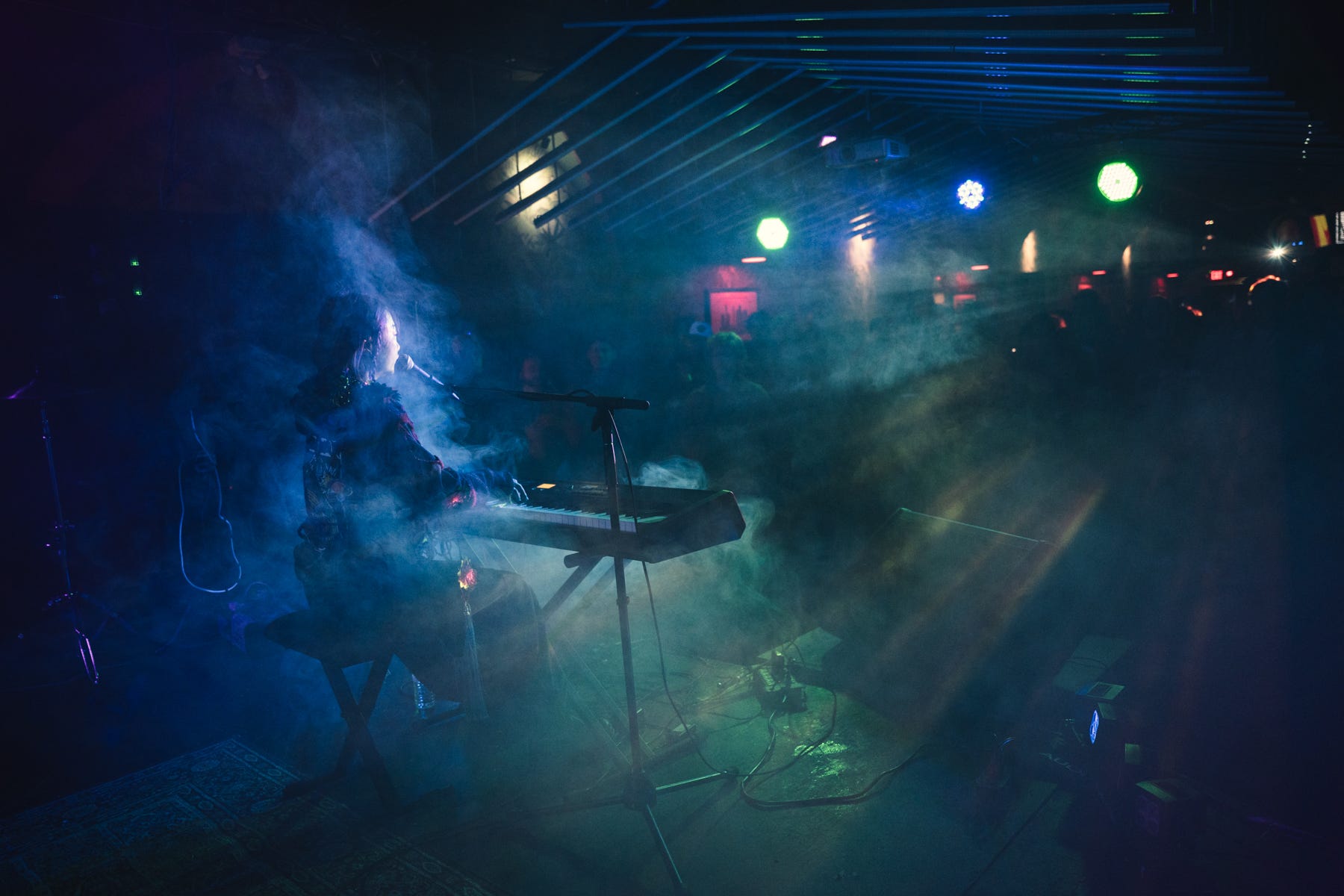
I don’t know, who is ‘you’? It is context. In some ways, it is the missing relationships and all the lost loved ones that I had in my life. In another way, it could be up to interpretation by audiences. But we all have those dreams where we suddenly get thrown into a very familiar setting with people that we know super well, however they had been gone in our lives. I think it is because I speak this language in the dreams that I’m sort of brought back to these people, and that is why I want to compose in this language.
Now I think about it, I can share something really interesting: when I write English, I think all my lyrics are about fighting, about, you know, trying to be strong, trying to like, speak out at the darkness that’s around me. But when I write in Chinese – in Mandarin – it’s one level closer to how I feel as a human being, and when I speak and write in this dialect, now it’s about, like, the underwater of my dreams.
That is an interesting observation I recently just recognised. I don’t easily write in my dialect or in Chinese, but when those thoughts come about, the language just changes like this. It’s really interesting, and that’s why you know, if anybody wants to study a social phenomenon like a group of people, they need to study the language, because the language carries such messages. [The people] can have a lot of things, messages, deciphered within the use of language, like the social contest and the word that they choose to have.
You know, I often joke around. I mean, for example, in French or in German, there’s the female and male binary thing. And by knowing ‘this is a female address’, you can see the hierarchy of the society within this context, with this thing presented. And I like to think about this kind of thing a lot. In my dialect, they, he, she, it do not have a binary binding at all. It’s all pronounced “伊”(yī). Also in Mandarin, but in writing, there’s a difference. So it’s also very, very interesting how language can be so ambiguous in speaking. Maybe it’s designed so because there’s a lot of rules and doctrines and disciplines in presenting speech in this political, social context, that maybe it’s only in writing that these people can present the details, but then, in speaking, it’s all blurry. That is also a really interesting phenomenon for me.
Hugh: That’s really fascinating. Correct me if I’ve misunderstood, but a lot of what you were describing with that feeling of missing someone, of feeling like you’ve lost someone and you’re not sure who – it sounded like a much more, as you said, underwater, subdued version of the really intense feeling of loss that you were describing in “The Plaice”, which is written in really on-the-nose, almost violent English.
With the aesthetics of those two songs, it sounds like you’re expressing a feeling that maybe comes from a similar place in very different literal languages and on very different levels. I would never have put those two parts of the album together by myself, but it makes a whole lot of sense if that’s the case.
Lane: Yes absolutely, and with “Have You Ever”, that song with the part that you’re talking about with my dialect, the instrumentation is also really important for me. For example, I use like, a bended bass to describe this, like, twisty veil that’s constantly being blown by wind, and that’s why it’s got this thing – mmMRROO! – going with the bass. But also, there’s the arpeggiation of this synth that later develops into a polyrhythmic thing: it’s like the departure of the two souls from one single person.
I really love that part, because there is such an accurate depiction of how I feel inside, constantly splitting into two, speaking my dialect, speaking Mandarin, speaking English, and now I need to live and work in a German environment, more or less, and embrace this new reality of multiple cultures in the landscape of Europe. And, yeah, that is a very accurate depiction – so that’s my favourite part in this song, for sure.
Hugh: A stupid, general question, but what’s your favourite part of the album? Or is there not one in particular?
Lane: My favourite part of the album… I definitely love “Love From Survivors”. I unleash my humour more than I have previously in “World Class Citizen” with that beeeeep, that thing that we found in the studio […] there’s an error or something that happened, and there’s this BEEP happening. I’m like, you know what? Let’s capture that, and let’s put it in this song!

I’m looking forward also to the journey of this album and where it can take me because I think people describe this album as still very naïve art. You know, I’m surrounded by a lot of bands, and it’s not as though there’s, like, a full band [on the record].
For me, it is through the dust, like very tiny particles, that we can see the whole world, no? Because the Earth can be just tiny dust in somebody’s desktop. You know, we never know, we never discovered the secret of the whole world, and only imagination can bring us somewhere. So this album is naive, ridiculous, and shit and love are intertwined, I wish it to bring me somewhere full of joy, like the amusement park in the [“No Talent”] music video.
Hugh: So the whole sound palette, all the instruments and everything, is all performed by you?
Lane: Yes.
Hugh: So if it’s like a speck of dust, to use your words, then that speck of dust is you, and it can speak to people [in its own way] and go where it goes?
Lane: Yes.
Hugh: So many of those songs sound like they could be reinterpreted in so many different ways, like parts of “The Plaice” sounds almost like it could be played by a metal band if you wanted to take it there. The album feels so full of these bold ideas that could go in so many other directions.
Lane: And maybe it will happen. I’m thinking about bringing different people to play with me in the future…
Hugh: Well, it’ll be super exciting to hear where that goes! One of the things that struck me, and I went back to it after hearing Love Is in the Shit, just to hear the difference, was the contrast with your last album, True Faith Ain’t Blind. Am I right in saying that’s the only purely acoustic thing you’ve done as a solo artist?
Lane: Yeah, acoustic. Live – acoustic.
Hugh: So, no modulation, no tech, apart from recording technology, like, kind of clean and dry the whole way through. Whereas Love Is in the Shit sounds like perhaps your most tech-heavy or heavily produced album, and it’s so bold in all its decisions that it feels like a massive contrast. Was something that just came to you; did you come out of the True Faith Ain’t Blind cycle and specifically want to go to the opposite extreme?
Lane: I will say True Faith Ain’t Blind is an oddball, for sure, but it is the bare bone of how I started to compose and produce every song. So I left that completely raw to the audience. Then coming back to my habit of producing again, it’s to refine the joy in sound and how sound means so much for me in the music, and True Faith… is me asking myself, ‘what’s the core of me without any producing’? At the time, I wasn’t finding any joy in sound. I was only trying to figure out where I am in this world, coming into a new society and living and working in the new environment.
Hugh: You’d just left America when you made that album, right?
Lane: Yeah, it’s the first album I arrived in Berlin for. So now I have been re-tapping into my rhythm of finding interesting sound that’s around me and that I want to take with me. So that’s a very joyful rebound, let’s say. I would like to keep doing that and explore more and more of the sound around me.
Recently, I visited New York, and my friend had a cat. My favourite cat: it’s a Devon cat, hairless but with curly hair in parts of the body. It looks like a little alien. It reminds me of myself, a little monkey-like character, and it snored at night, like, not super loud, but very cute… and I recorded the snore! So let’s see what that brings me.
Hugh: Aww, cool and cute; more people should make music out of cats! Perhaps? Anyway, I’ve got a few questions about you and the world: America, Berlin and China and other places.
To start with America, which you’ve spoken a lot about in previous interviews – I don’t want to make you talk about all the same points again, but you said you left the US because, because it was complicated to get a new visa, right? If you still lived in the US with a steady visa now, would you want to stay there?
Lane: I miss the US, very much so. I left the US, perhaps, because of my brokenness with the relationships. I don’t talk about it very often because I’m afraid that I will break down and cry. But now, I have healed a little bit with all these broken relationships, not fully, but I’m on my way. I would like to go back to the US, because I have found it very difficult to be in Germany, for that particular reason. You know, China is my home country, but then the US is my second home where I lived for 14 years. I have the luck and am always super, super grateful to be surrounded by all these kind people in Germany. They’re really kind souls and I really appreciate them. However, some things have not been super fulfilling for me and I miss my friends in the US, so maybe I will move back.
Hugh: Why Berlin to begin with? Was it just because you liked the city and had been there previously that you moved?
Lane: Yeah, I like the city. I like my friends here, and now I’ve got to know them even more, which is nice. However, I think Berlin is such a transitory city, meaning that on one hand, if you look at the history of Berlin, the whole city was built on sand. So really, even if you have roots you want to grow deeper, there’s nothing to grip on, like the soil. I have that feeling living and working here, but I still very much appreciate the city, and I think it has offered me so much new inspirations for work.
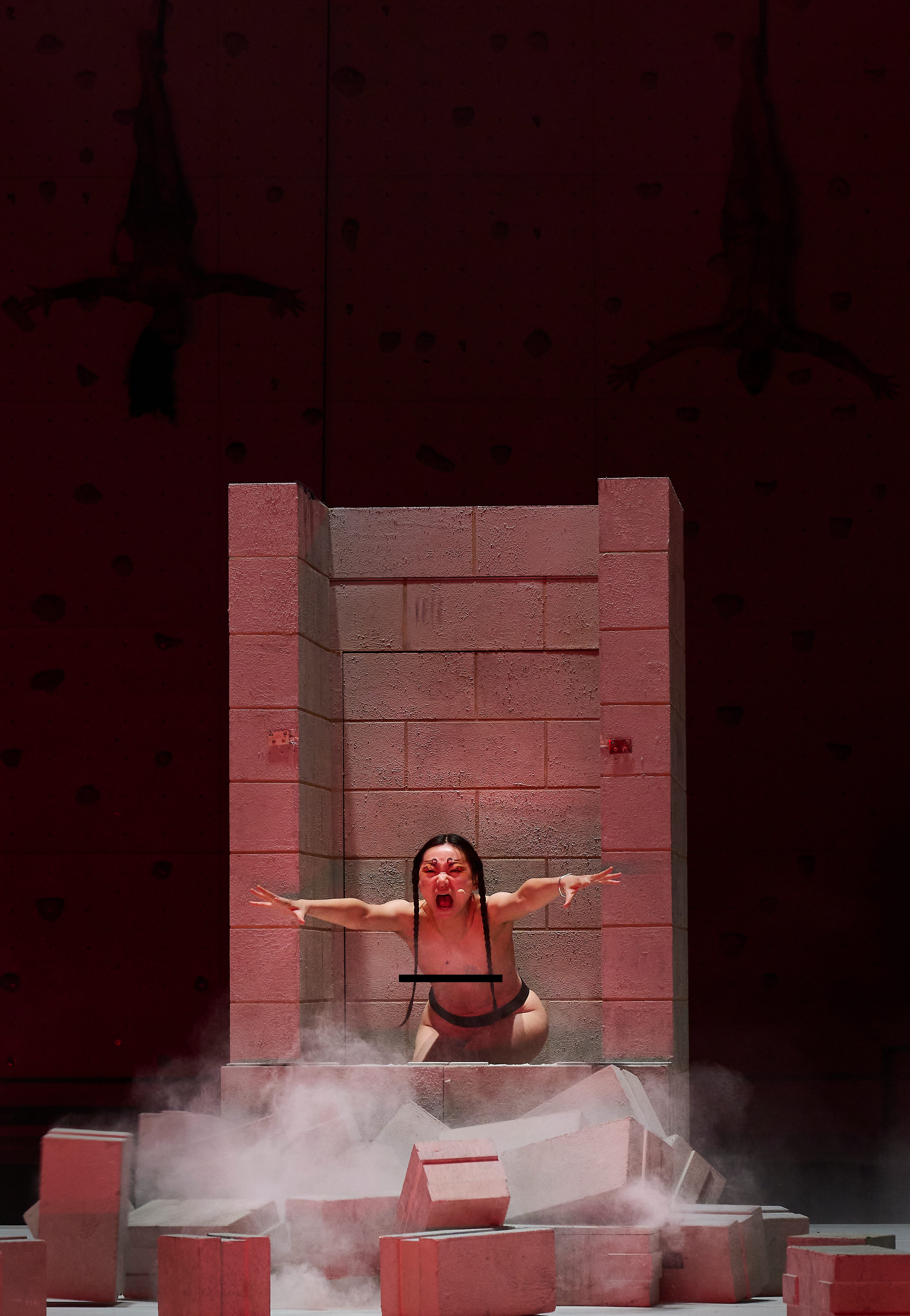
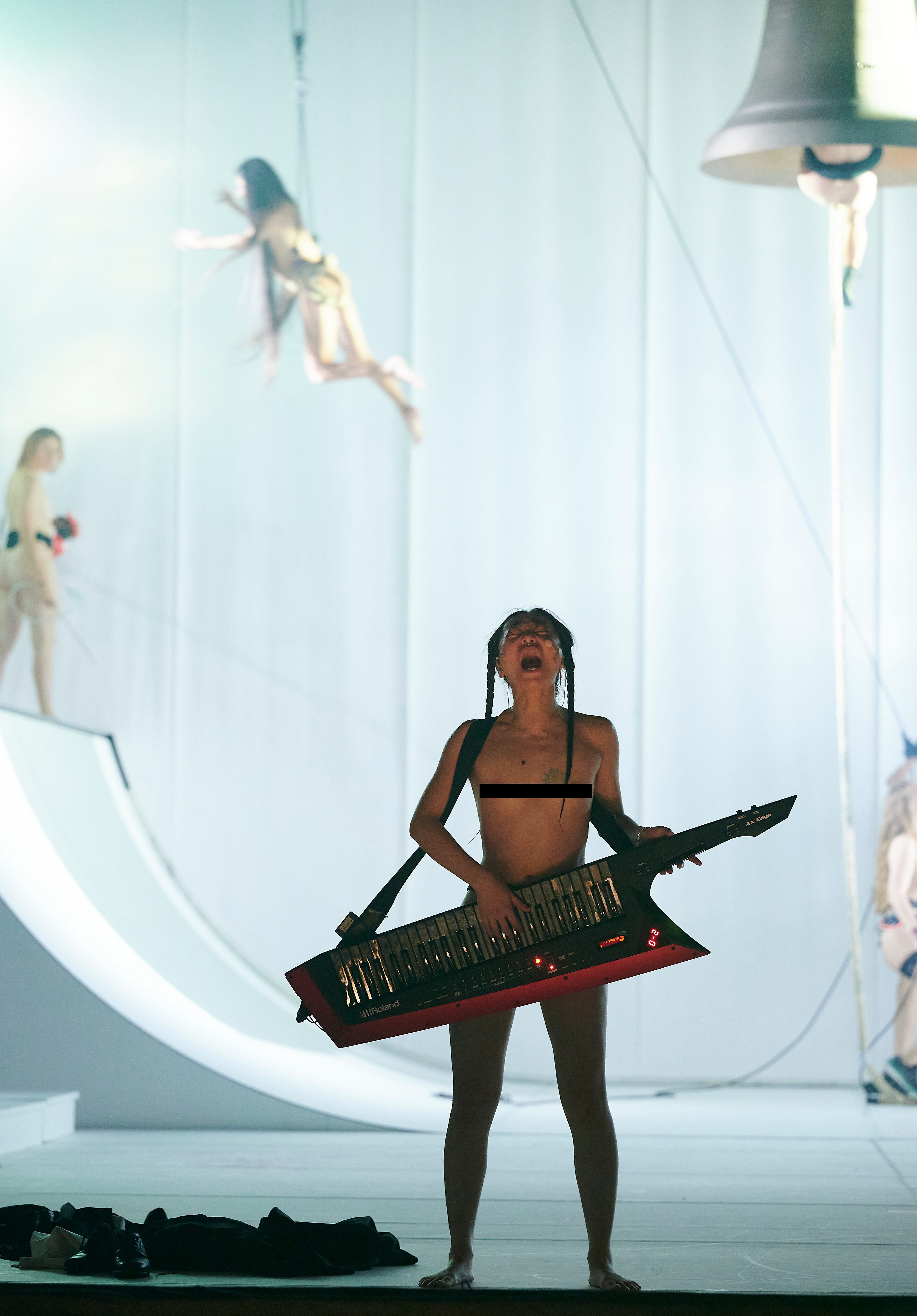
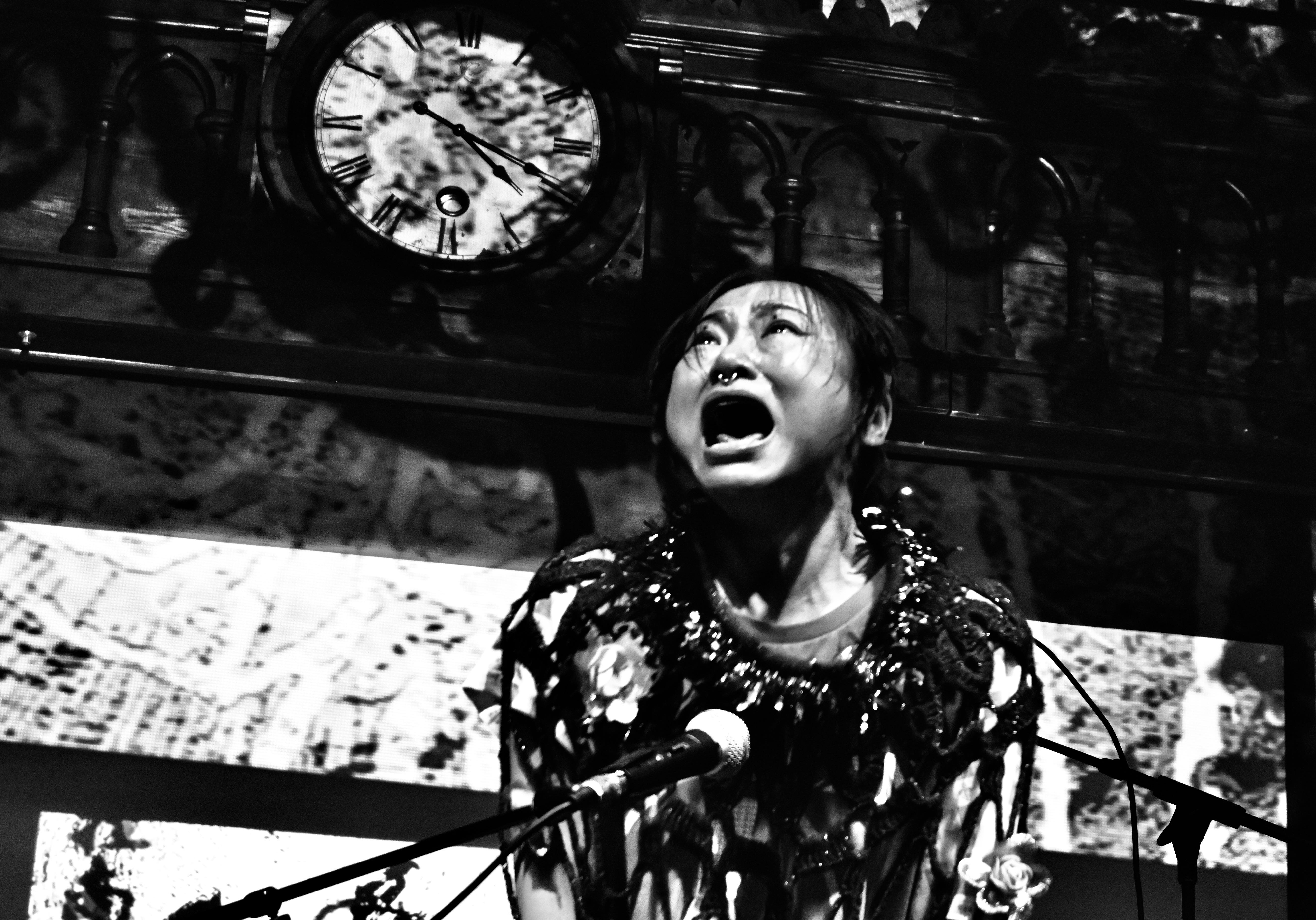
For example, I’m involved in an opera, working with an artist called Florentina Holzinger, and she is one of the most exciting artists I have ever seen. She really, really inspired me: her working method and how kind she is as a person really moved me. I’m still working with her up to this day. We had started an opera together, and my role is to break out of the wall and scream my ass off, and I also do music within the production as well, so performing and composing music with the whole crew.
So, all these experiences… I will never forget them, I will always cherish them, and all these relationships I have gained so far will be living closely to my heart every day. Life itself is a journey, no? People might laugh at me or think this is not healthy. I think there’s some truth to how I look at the world, and it gives me comfort that, yes, no matter how broken people are, how broken I feel all the time, life is a simulation, and the purpose is that you have learned something to bring to the next round. It makes me feel lighter about how heartbroken I am at the moment,
Hugh: Because you’re always gaining and growing and ready for the next step?
Lane: Yes, absolutely. And that’s why I’m becoming more and more humorous, because I want to laugh with people. I want to dance with people in a light-headed space. Yeah, that’s… that’s why!
Hugh: Could you share a bit about what it’s been like going in and out of China. You’ve been performing in underground spaces there, especially in Shanghai and Guangzhou, you mentioned in another interview that a lot of the stuff you do there is much more to do with performance pieces than the focus on music in your Western shows. Could you explain what the difference is and what your performance pieces look like?
Lane: When I was living in China during the pandemic, I did a piece with the Ming Contemporary Art Museum called Unwrap!, and it was my first performance piece where I collaborated with the architect, and he was doing the stage designing. The stage was designed to cast shadows with a big metal plate shedding a light, and the shadow was the portal of my movements. And I assigned five people with five different personalities, and they were all my friends performing. They’re not professional performers, but I love it because of it, because it’s more real. You can see the awkwardness in their body and perhaps they embody this kind of personality, for example, anxiety, anger or sadness even more during a performance. However, I have never really done any performance piece outside of China during all my years, because I have dedicated myself to bands quite a lot and my performance still exists within the framework of band performances.
Hugh: I saw a recent-ish interview where you mentioned that you were bringing a performance piece to the West in 2026. Is that still on the horizon, or has it already happened?
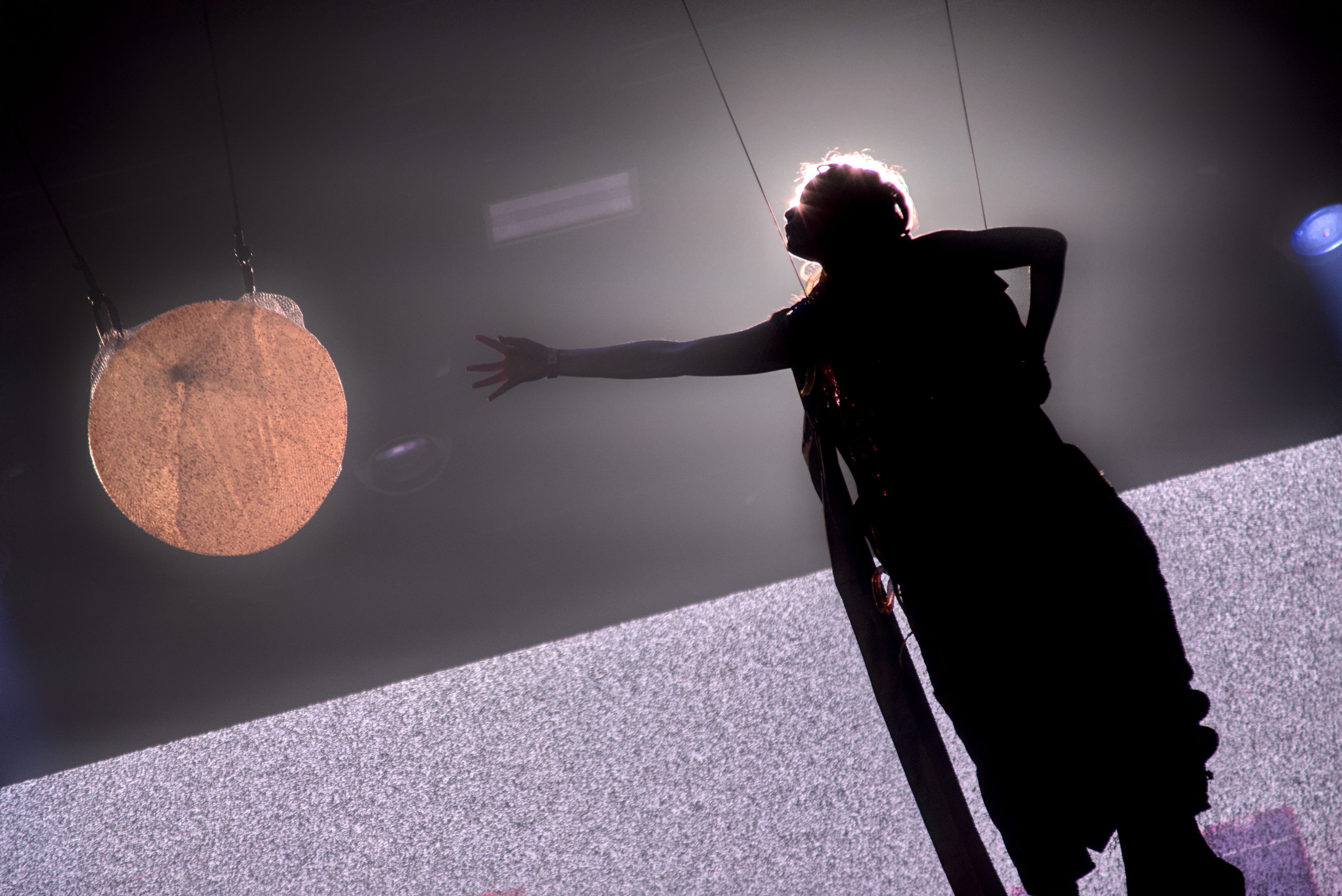
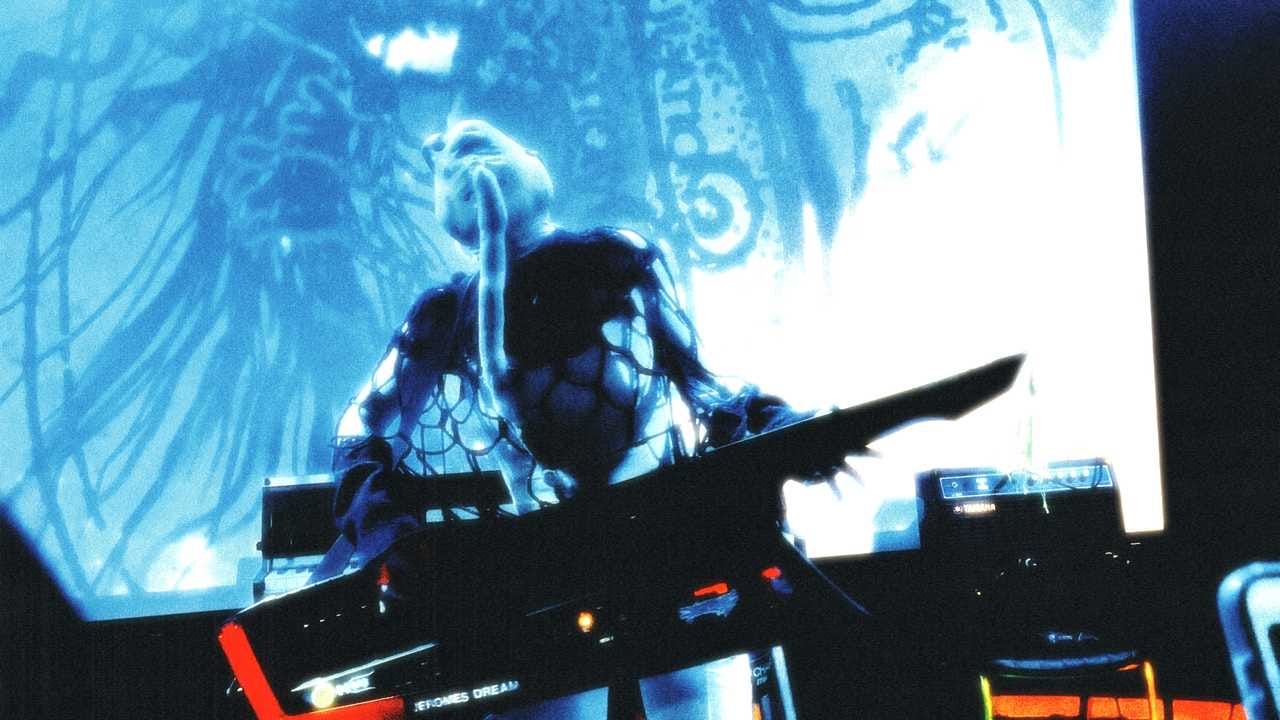
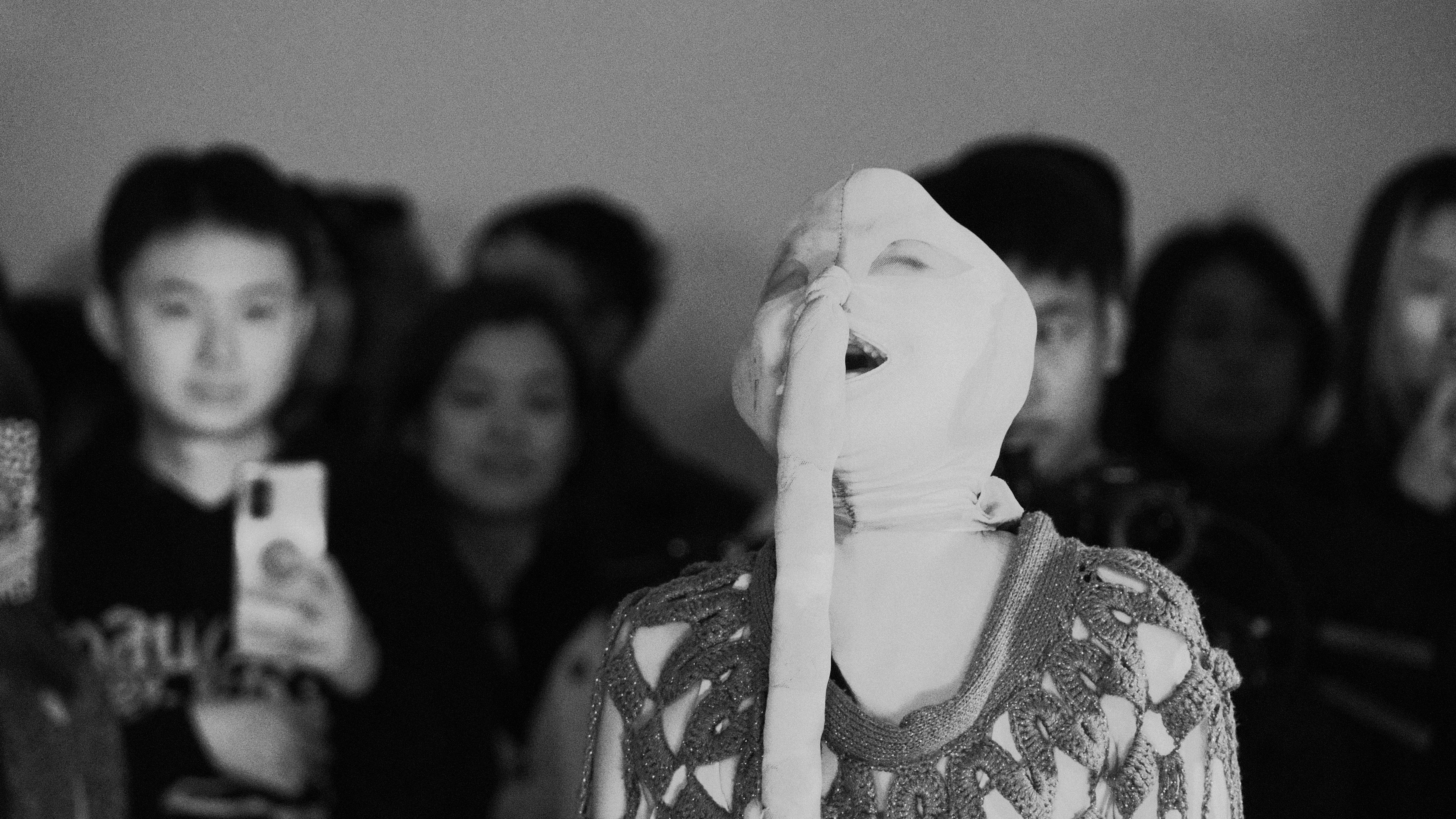
Lane: In April! Roadburn has offered me a great chance of presenting my performance piece, which is happening in April. It’s a commissioned work called Moonstruck Old Tales, where I reimagined six Chinese lullabies and configured them into more of a contemporary sense in my imagination. I also collaborated with a costume designer to design the stage and cast four auspicious beasts as the costume.
It’s highly tied to my faded memories of China and my childhood as the only child in my family. The children born in the 90s, more or less, are under the One Child Policy in China. For me, brothers, sisters, family – they’re not blood-bonded because I don’t have a sibling, but all my friends are my siblings, not in a sense that can be bonded by blood, but bonded by spirit. That influences me a lot. On one hand, I’m quite a shy person, but on the other hand, I tend to find people who I can connect with quite easily, because it’s just a sense I develop that’s quite intuitive. So in this piece I’ll also be doing a big moon made out of sugar.
Hugh: A moon made out of sugar?
Lane: Yes, because sugar drawing is a very cheap snack from my childhood.
Hugh: Like, a single layer of sugar that comprises the moon?
Lane: Yeah! And then also the smell of a particular flower that grows in my hometown called Osmanthus. Now people use it in Boba tea. It’s got such a distinctive smell, and it’s quite intense as well. I want to use those as decorations for textures on this moon. And when we’re performing all these songs at one point I will fly up to release this moon and smash it and give the audience a taste of this candy. More to disclose, but I am sure that the video footage will capture more of the whole process of this performance, rather than bits and scraps.
Hugh: That sounds awesome and I hope it goes super well for you!
Lane: Thank you.
Hugh: I had a few more general questions to ask you about China. There are some underground publications or blogs, but for a lot of Western listeners or people curious about Chinese music or art, the way that stuff gets publicised means that we often feel at least five years or so behind whatever’s happening. Like there has to have already been enough discussion about something for you to eventually hear about it.
(See here for one of Substack’s easier fixes to being behind the curve on Chinese music:)
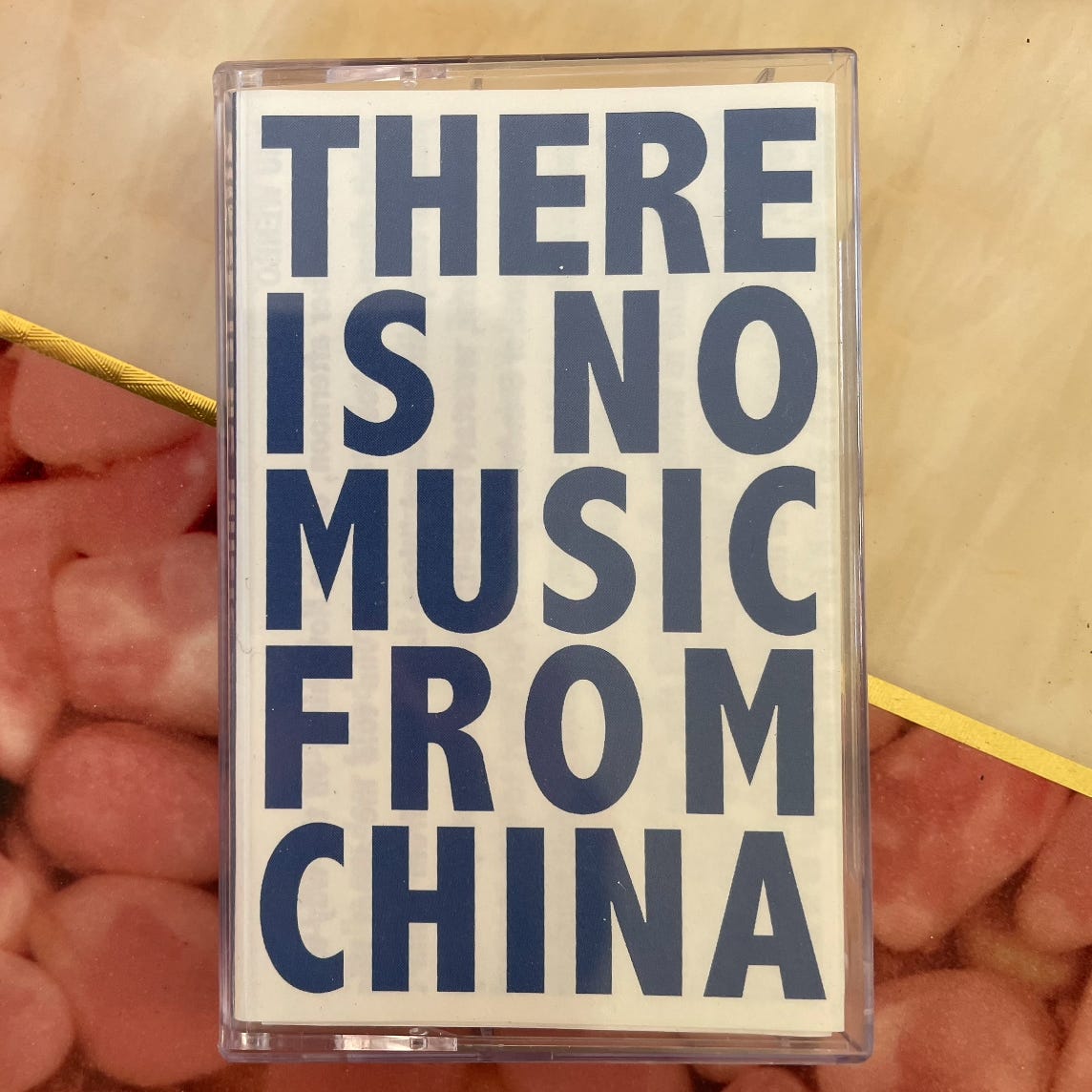
What is the scene in Guangzhou or Shanghai like? How does it operate compared to a Western scene? It’s obviously not localised for the rest of the world, but as someone who has unusually deep experiences either of the great firewall, as it were. could you share a little bit more about that?
Lane: So my friend opened a space called SD Livehouse in Guangzhou, which is a venue, and it got shut down three times because of many noise complaints. It’s got shut down by the government, by the local police, and so the whole experience of playing shows is more difficult, in some sense, in China – but because of how difficult it is, it’s more precious, in a way that people try to throw down as hard as they can, playing in a band.
I think that Guangzhou is a very particular city for it, because you have a lot of bands that also speak different languages, Cantonese, and they compose in Cantonese as well. And people like my friend, who’s tapping into a lot of underground and out-of-mainstream communities, like the Queer communities in China, always love to throw weird parties, you know, with weird experimental scene and weird techno scene that people host and just have fun with their friends.
So that is a huge part of Chinese life for people there, in this generation or even younger. And I would say that touring in China is also very different. Mostly people tour with trains because the trains are faster and, and it’s very convenient. Almost nobody tours with a car, unless you’re a famous band that has tonnes of money to squander. And I think that for a lot of bands, it’s hard to get an outlet to play in China. Like, in China, it’s more reaching out to underground labels and hosting shows from there. I have never started a band in China, all I have observed is the already known bands in China, and we played shows with them before. I wouldn’t say that I know them very much.
Hugh: So, it sounds like the scenes are things that people have to cling very hard onto when they pop up and there’s less infrastructure, or less of a precedent for what happens…
For an elephant-in-the room question, I think many people in the West have a conception of China as a very repressive or dangerous place for independently minded artists. Could you share your insight on that? How fair do you think that is?
Lane: I think it’s fair for the artists in China and to say that, and I think it’s better that they say it rather than the speculative Western point of view, because I think everybody’s got an agenda, and normally those voices do not represent the experiences of the artists living in China, per se. During my two years of living in China, there was tonnes of stuff you cannot say. There’s tonnes of stuff you cannot do, for example, for example, doing drugs. Whether you this is good and bad, it’s just up to the artist and personal aspirations, and how they want to curate their experiences living in one place. I think a lot of artists in other countries also face different kinds of challenges, whether they can do this or that. So I think these experiences are shared. There’s no one place that has absolute freedom, not a single place on earth for any artist like us.
I think there’s always this pull and push struggle of what’s possible and what’s not, and how we navigate through that, and try to pull ourselves up and see what’s possible. But there’s definitely not a singular answer. I hope that a lot of [you], if you really want to seek out the truth, your own truth, and not be swayed by the propaganda that’s thrown out left and right, you should probably go to this place and explore yourself, see it yourself with your own eyes, with your own heart. That’s the only way that you can build your own world without any disdain from other people’s opinions or propaganda or agendas.
Hugh: So, China has its challenges as an artist, but it’s unfair to criticise them unless you’ve faced them yourself and grown from them in your own way?
Lane: Yeah.
Hugh: I was struck earlier by what you said earlier when you were talking about “World Class Citizen” and the idea of what it means to be Chinese, which you described almost as an underdog mentality, this idea of being part of a rising nation. I find it interesting given that the challenges of the past must be so fresh in the minds of many, but there’s also a much more relaxed, sheltered sense that I’ve seen in the younger generations.
For context, part of my career had me teaching English to Chinese kids (ten- eleven- twelve-year-olds), and compared to what I know about 90s kids in China, or further back, these kids often seem like they’ve come out of this little bubble and are almost completely ignorant of the crazy hardships the older generations faced. So I get these impressions of a developing, rising China vs. a developed China that has a very comfy, secure place in the world: is that a generational thing? Because, of course, it’s not – but then, how do you explain that to anyone who hasn’t lived it?
Lane: Through communication with my friends, like sharing what happened to my parents’ generation, for example with people in Europe, it really feels like my parents’ generation are their grandparents’ generation. So it’s one generation gap. So imagine that kids born in 90s in China, or like your parents’ generation, that is the difference, and then the new generation started to have very much abundance, but then their parents are like my generation, which are more open in some ways, and more unconventional in the ways of education. For example, my cousin: when Chinese school remains strict and impossible and kids have tonnes of homework to do, her kids will not do the homework. And the kids’ teacher called my cousin and asked Why? Why is she not doing the homework? And my cousin was like, That’s what she wants to do.
So there’s already a departure of the old consciousness of how education in a school system can change one and another. It’s no longer the only truth. It’s no longer what people imagine to be the only way of improving your life or elevating your consciousness, or whatever.
When I think about my parents, they have been working their ass off their whole life. My mom, from the countryside, didn’t even see the light – like light sources – until she was 18 and then she had many siblings that died of hunger. So for me to talk about her experiences… like I don’t dare, because I never experienced what she had experienced in her life and what that meant for her, and she does not talk about it very often with me. And my grandparents had already passed away.
How much of this memory, or this harshness and diligence will come around in our generation or pass down to the next generation? I have no clue. I think that what China is trying to do is for the youngsters to remember this past – that China has a really hard past that led to whatever prosperity there might be today. However, I think it’s not going to be very successful if you know there’s information that’s missing or, wars that happened that were engraved in everybody’s mind in that generation that will be no longer existent for the youngsters.
I don’t see that as necessarily a bad thing. However, I do think that, because of the family values and how everybody is still very diligent in this generation, it’s kind of conveying a new sense. I see the kids: they’re all super smart and witty, and they use technologies more than I do. I don’t think that what I feel like about my life and what’s good or bad should be their way of believing the whole world is, and I’m very curious to see what this new generation is like in China.
Things have been shifting quite a lot, like I have friends who started to become professors in universities, and they have been, you know, changing a bit of text here and there. You know, teaching people to have independent thinking, very much so. So I’m very inspired by this ecology that the new generation is building up.
However, China is a very complicated country. Globally speaking too, including its own actions of – you know, not using Google, [having] its own research engine. It has its own phone call communication app – not Instagram, but WeChat, which Trump actually tried to ban around 2020, and TikTok. It’s totally different whether you download TikTok in the West or you download TikTok in China.
For me, I think [this] existence is very important. If everybody in this world uses Google and all that backlog of information and data, we’re gonna only believe in one thing and or be fed one propaganda. I’m not saying that China has no propaganda or that the Baidu engine is better than Google – obviously not. But with these two things, we can see the gaps and with all our information we can learn a lot from these two realities, namely: they bash each other.
Something really interesting is the Snowden incident that came about when I was in China, where everybody thought that Snowden was a hero, but then in the US on Wikipedia at that time he was a traitor to his own country. So obviously everybody talked about this with their own opinions and agendas, including me. So at this point, I think it’s really good to see both points and see the trajectory of its course of life and see where it leads to. There’s no good and bad. Like I wouldn’t even say Google is bad in the sense of how people use it for information. I think it serves many people for information, however, everybody should be cautious about anything that’s coming from, you know, the Internet, and really me using Baidu and all those Chinese media.
The difference is, my generation in China, they know the propaganda, like it’s embedded in our brain. We’ve known it since, you know, we’ve had our own opinions about anything. We know the society, and we know how deep the water is. I’m not sure that in the West, people know how deep the water is behind Google…
Hugh: Well, Google’s had its big recent cases, and I think people are waking up to it. But with that idea of having two contrasts and forming a more nuanced understanding of the world from it, you’re saying that from the position of having grown up in China and understanding, as you say, knowing how deep the water is there, and then having an informed view of the West — whereas most of us lack that dual perspective here, being the other side of the Great Firewall, not using Chinese apps and not visiting the country. I think you’re quite right, it’s very hard to form a balanced perspective from that standpoint.
Lane: Yeah, and because of how hard Chinese is, you know, and most apps are mainly in Chinese. It is hard to [understand] the details of how, how everything runs there. And for me, it’s easy to see. I see a lot of nuances in how Chinese apps and companies do things. There’s good things, there’s bad things – and the bad things, of course, are mostly magnified by the West.
For example, the idea of working insane hours as a worker – I do think that there is a huge problem, but I think that, if I would be working in China, I would work insane hours as well. Now that’s changing, like the workers… We have a saying in China, the new generation: if you don’t want to work, you just lay down on your bed at home and call in sick. People like my parents, their generation could never, never do that. It’s also highly tied to the whole history behind China and the relationship between that generation and their homeland. It was a very different time and different sentiment and different environment to grow up in and different values.
You know, for my parents, their biggest value was to provide a home and have no hunger issues whatsoever. Moving forward to the next generation, my aspirations would be very different – of course, to feed myself, but I have got other ideas. I do music, you know, that was out of the question for my parents, and it’s almost like a luxury. I still treat it as one, although I think it’s more so work for me, and something that I feel extremely lucky about.
So I think it’s a very complicated situation when somebody speaks about one’s position with their own background, or describing one history of the West, and using the same words to describe things that they think are parallel in another country. I think there’s a danger lying behind that, and how much this seemingly a good intention becomes actually useless for another country.
I see that a lot right now, also with the war in Iran. While everyone talks about how the US is starting the war, that they don’t have good intentions, I also see the perspective of Iranians feeling like, wow, how else could it happen? Nothing could happen if this new bad people didn’t do anything. So, what is right or wrong? I feel like we always need to listen to each other, to gather more information and perspectives for that, and then have our own view. We all have one, whether we want to talk about it or not, and that is okay. I think that is only healthy, that we all have our own opinions.
Hugh: You reminded me of a story from just before I went to China for the first time that I think sums up what you were saying about criticising it from outside, not understanding the contrasts. I was working as a technical director on a theatre tour, and almost none of us had been to China before or spoke any Mandarin. The rest of us knew very little about it at all. We all downloaded WeChat and made profiles before leaving, and my friend, who was the most uncontroversial, lovely, mild-mannered person in our group – when we had to choose our profile pictures, she used an image from the film Chicken Run as her picture.

Then, immediately, her profile got banned. And we all thought, you know, oh gosh, is this political action? Is Chicken Run another animation China considers subversive? What line has she crossed here? ‘Wow, China is so strict.’
And years later I mention this to a Chinese friend, and he just looks up and is like Yeah, well, that image was under copyright so of course it was banned. End of story! It made me realise how quick we were to jump to a negative conclusion and how little evidence supported it. At least it was a harmless way to learn…
Lane: Yeah, I mean there are so many nuances in this story. People want us to cast our shadow on other things, and it’s like the Tower of Babel where we separate and divide ourselves. I think intention is very important for us to think about whenever we make assumptions.
Hugh: Babel is a great image for it (and I think my friend certainly felt divided trying to get round China for two weeks without WeChat). But anyway, to wrap things up, what have you been reading, watching, listening to recently? Would you like to share anything with us?
Lane: Yes!!! There are several films that I’ve really enjoyed: No Other Choice, a Korean film that’s less about the heroic, typical Hollywood narratives, and more about the inner struggle of somebody providing for family. The sound design is so fucking good. I watched it in the theatre and highly recommend it. It might not be everybody’s cup of tea, but there’s something to it! There’s some really cool cinematography that’s definitely experimental.
Me and my friend watched another film I recommend, called Sirāt. It’s really good for people who are processing grief. At first I thought it was just a hippy movie, but in the end it got really intense. There’s something to it that I really appreciate as well.
In terms of books, my friend gave me this book: Philip K. Dick – Valis. I’m enjoying it so far. My friend Becky also started a zine.
I also watch a lot of Korean drama films. They’re nourishing in the sense that they’re so different to me, it brings me out of my cocoon. I like encountering things that I would normally not be able to encounter. You know, this Korean drama film – if you threw that to me ten years ago, I’d be like no! but now I can see why people love it.
Hugh: Most people I know who watch K-dramas do it to bring it into their comfort zone, to switch off and relax, but I love that that’s boundary-pushing for you in a very different way.
Lane: Yeah, and to be fair, my first song was written because of a Korean drama book. It was like an adolescent book. The writer is called Guiyeoni and there’s a book that was calling for theme songs at the end, and… that was the first time I composed on piano!
Hugh: How old were you at the time?
Lane: I think I was thirteen.
Hugh: And has anyone heard that song since?
Lane: No… but I remember the first line. I was full of emotions because I’d just read the book, and it really effected the little brain of mine! I was young and I was funny, a little bean running around by myself and trying to get all my tests alright, to do masses of homework, so that was my escape: to read a lot of books, Korean books. I got very attached to that book. Before, practising piano was just practising, but after that book I found a purpose of piano for real, for the first time – it was to compose something from my emotions.
Hugh: So it was the first time you felt like you needed the piano to express yourself?
Lane: Yeah.
Hugh: That’s amazing to know!
Lane: I’ll find that book – don’t laugh at me, it’s a silly book from my perspective now!
Several minutes of online searching later…
Lane: So the book I read was called Outsider. The author was never that famous, I guess, but I wish that I could tell her one day how that book influenced me to pick up piano, to compose… Maybe if she can read what you write from this?
Hugh: I hope so! This feels like a message in a bottle now… fingers crossed it’ll make its way to her!
That feels like a great, unexpectedly profound note to end on. Thank you so much for your time! It was amazing to hear your perspective on all these things – sorry for posing you such broad questions!
Lane: No worries, thank you for sharing yours with me. Thank you!
otay:onii’s new album Love Is in the Shit is out May 8th. We’ll be reviewing it on release, but can check out the rest of her discography on Bandcamp meanwhile.
Very pleasant but also in-depth conversation. It's always a treat to get inside the thought processes of the mind-bogglingly creatives of the world. That 3D printed machine sounds amazing.
Looking forward to the new album!