

Gatekeep!'s 2025: #10-1
2025 endgame // Happy New Year

No palaver: this is the final list we’ve all been waiting for, and the last thing tethering us to 2025. Our alphabetically-ordered 50-11 list showed what happens when you spotlight every disparate corner of our individual tastes; this one is what it looks like when firm handfuls of us agree on something, and the ranking does very much reflect that — there’s two or three albums in the alphabetical list that just missed out on this list, but other than those, the aggregation data suggests that this really is a definitive showing of our shared favourites.
…and if it somehow came to pass that its diversity of acts, range of genres and quality of inclusions make for as a strong a contender for the definitive 2025 Top 10 as you’ll get from any publication, well, accidents happen!
(It is perhaps worth noting that there were very narrow margins between entries 10-8 and 5-3, but that the top two sit confidently within their respective ranks, both in their number of points and in the number of writers who voted for them.)
See here if you missed our 50-11 roundup,
and otherwise
in we go:

10. PinkPantheress - Fancy That
20:28 // UK Garage // Warner
What sets PinkPantheress apart from other young trailblazers is her constant drive to improve and refine. It could have been very easy for her to rest on her laurels having already made a substantial impact on the pop music landscape, collaborating with all manner of stars and fellow rising talent and spawning a legion of copycats. And she would be well within her rights to just keep dropping slight edits of “Break It Off” and “Boy’s a Liar Pt. 2” or whatever and I would eat it up like the mindless swine I am, fattening myself on as much nostalgic cutesy garage-pop slop as possible. I’d be here for it. But Fancy That is at the very least evidence that she’s not a two-trick pony, and even more so proof of her superstar-in-waiting credentials.
Rather immediately, Fancy That takes a more elegant and grandiose approach than previous projects. The fanfare of chord stabs on “Illegal” are positively regal, drowning in their own self-proclaimed importance as Pink humorously questions the ‘legality’ of a sordid intimate relationship with a wink-nudge teasing tone. “Tonight” does away with the euphemisms entirely offering promiscuous activities as a reward for communication over a thumping kick and bassline. “Stateside” grooves like a motherfucker as she pines over a long-distance crush, whilst “Noises” bizarrely (and very successfully) samples rapper Nardo Wick, creating an intriguing dichotomy with the decadent violins in the background.
20 minutes isn’t an awful amount of time to leave an impression, but Fancy That does that and more, supercharging the addictive hooks PinkPantheress is known for with punchier production, luxurious string sections and sensual, memorable quotables. My only criticism? Having a track called “Romeo” but then sampling Basement Jaxx’s “Romeo” (classic) on a completely different track (“Girl Like Me”). Cheers for the confusion. - Tom Read
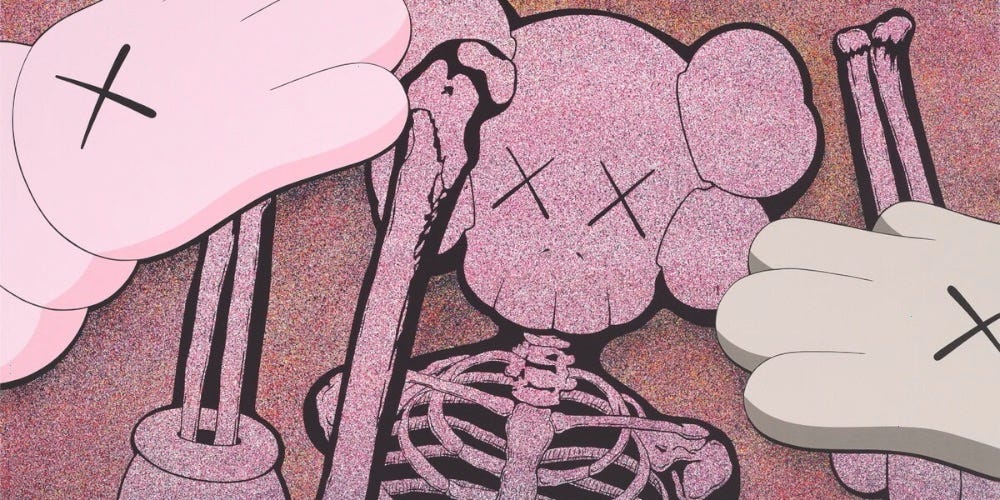
9. Clipse - Let God Sort Em Out
40:49 // Hip Hop // Roc Nation
For all its veneration, Let God Sort Em Out‘s rollout was one of the strangest media frenzies of 2025, a seemingly endless event that dragged GQ out from whatever hole it was dying in to platform two interviews with the MCs of the hour, bestowing upon them the responsibility of saving the world’s second most popular music genre (behind a promising upstart known as “popular music”), and spawning countless headlines about nearly every word they said — Hip-hop ain’t what it used to be! Rappers don’t chart no more! Nobody rhymes words quite like the lads from Virginia! Ye is not a man! Whenst were thou last entertained?
This fleet of paper ships, unmoored alongside the album for good measure, might not be so buoyant (wasn’t last year’s premier hip-hop album released by the genre’s other saviour, who seems to do okay in the charts?), but all was forgiven once the lede was exhumed: Let God Sort Em Out is the most calculated and precise release of the year, from its opening eulogy to the 12 pick-me-up bumps of Bolivian Marching Powder that follow in its wake.
“Birds Don’t Sing” is a sublime opening gambit from the Kings of Coke Rap. Two brothers trading verses about the death of their mother and father respectively is a hefty songwriting conceit, particularly when the connective tissue is an all-time Werner Herzogism chorusified. It’s even Vatican friendly! Frontloading the trauma clears space for the remaining tracks to delve right back into drug trafficking, muckraking, fine dining, finer women, further flashes of vulnerability, and the revelrous rattling of sabres and trunks alike. Pharrell only misses a beat intentionally in order to showcase a lyric or to switch to a better beat to platform the best content; “So Far Ahead” goes as far as making a beat switch the lynchpin of its verse-chorus structure — you don’t exactly need to be the Pope to see how righteous his work here is.
Irreplaceable and instrumental as Pharrell is to the chemistry on display here, the self-imposed grandiose question hangs over the heads of the cats doing the rapping. Can these learned practitioners of extremely economic punchlines (”went from mason jars to crepe tartars“; “the Bezos of the nasal, that’s case closed“), brothers in fact and in flows, save an allegedly ailing genre? The way they share a rhyme scheme all the way through “F.I.C.O.”, defining and enlarging the track’s effectiveness while keeping the constraint as a subtle undercurrent, certainly demonstrates their skills are sharper than most, but what are the stakes here?
For all the posturing to greatness and delivery of slick stylings, for all the deep vulnerability galvanised with the weight of real life experience, there’s significant joy to be found in shaking off grand narratives and engaging with the root of the craft, the simple wordplay, slang, and delivery that makes lines like “dressed in House of Gucci made from sellin Lady Gaga“ so funny. I like to picture our alleged saviours enjoying a meal of lobster basted with caviar when inspiration strikes Pusha T, and he lifts a finger to silence his older brother before delicately patting his lips on a napkin and extracting a hefty ringbinder labeled Coke Puns from a briefcase, finding a clean page on which he can mark the latest nugget of gold: Mike Tyson - Blow to the Face. Hats off to the lad; he’s onto a winner. Similar acts of creativity are all that hip-hop has ever demanded of anybody. Profits come and go, gossip and melodrama abound, beef ends in violence, litigation, or — ideally — bars, stars rise and fall, but every year since the genre’s inception we’ve seen great artists making great art. Let God Sort Em Out marks one such occasion, even if it won’t save what doesn’t need saving. - Milo Ruggles
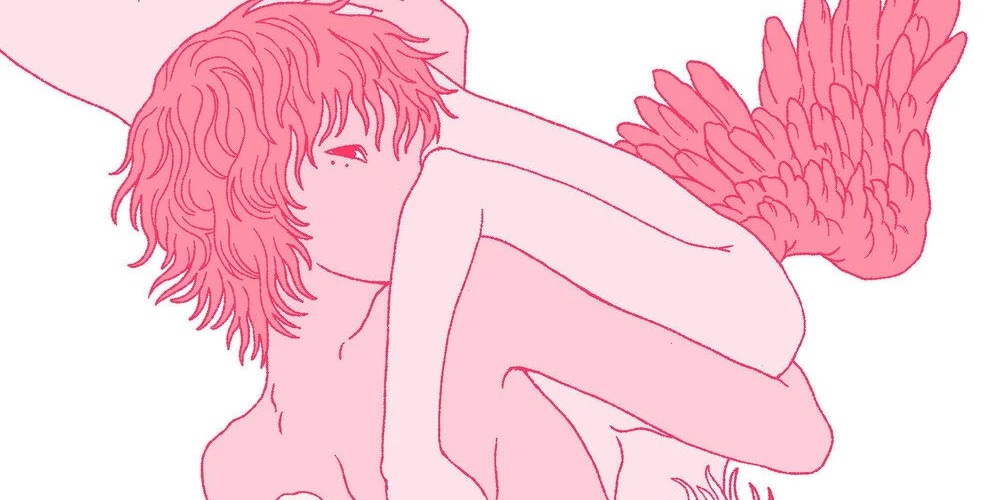
8. BIBI - EVE: Romance
41:40 // R&B // Feel Ghood
Find me another album that conveys half as much humanity as EVE: Romance over such nakedly horny narrations, and, well, my eyes are right up here. Who said that concept albums needed to be cerebral? Who said that sensuality couldn’t be thought-provoking? Who said K-pop couldn’t make you blush? Whoever that was, it sure as shit wasn’t BIBI! BIBI is a rare talent, not just in the unflinchingly bold hustle she holds down in K-Pop’s plasticated smile factory, but in her broader ability to weave together distinct perspectives and aesthetics without making it any harder to intuit her commanding overall thrust.
Said thrust constitutes a nuanced message of individuality and self-acceptance, all wrapped up in sultry R&B stylings over the kind of loose concept that begs to be understood without being overthought, part pillow talk, part sci-fi clone drama, and part delightfully thirsty religious fanfic. Plant an apple tree in my hips purrs our coquettish eponym to Adam barely a minute into the opener, at which point BIBI’s overdubs are mmming and yum-yuming so enthusiastically that we need not picture the way she licks her lips at the end of the line.
EVE proves a sensational flirt across the following tracks, per TikTok swooning over “Scott and Zelda”’s bookish innuendo, but the frivolity does not last. On the aptly-titled “Meat”, EVE prostitutes herself in such bleakly transactional terms that she reduces not only her own body to capital, but also that of her partner. It’s a cynical inverse of free love that views sex as both product and currency, and it’s against this degrading model of subjectivity that EVE-1 (our clone-protagonist) must forge her own path over the album’s backend. Over the course of this, she navigates her own bittersweet romantic ventures, outright pleads to her counterpart during one of her most decadent turns, eventually making peace with the stark differences between herself and her double and learning to treasure her own personhood.
There’s a meaningful message in there, but you’ll find remarkably little sacrificed if you scale it back through however many layers of inscrutable world-building and the Korean language barrier. Unlike many recent viral concept records – one thinks immediately of Magdalena Bay’s overcooked future-chic, or Quadeca’s solipsistic odyssey from one side of his bedroom door to the other – BIBI’s world-building is too full of life to get bogged down in the details or to be betrayed by its moments of vagueness.
Her R&B mastery is key here – any number of these songs could steam up your shower door in seconds – as is her knack for a good showstopper (see “Midnight Cruise”’s endearing lurch into ‘80s-facsimile city pop). That’s not even starting on her tongue-in-cheek flourish: whatever preconceptions you may rightly have of K-pop using painstakingly sanitary food or drink metaphors as a crutch for innuendo, put them on hold until you’ve made it through “Sugar Rush”.
EVE: Romance isn’t one of the very best albums anyone could come up with this year because of its ideas department (neither is anything else here – what a silly criterion!), but because it is effortlessly expressive across every one of BIBI’s distinctive inflections, intimate overtures or emotional denouements. Never mind where one persona ends and another begins, this is a masterfully crafted character work above all for the charisma and human touch the author herself brings to it at every turn — and if she makes her mark as much in spite of as because of her ambitious subject matter, so much the better for her. - Hugh Puddle
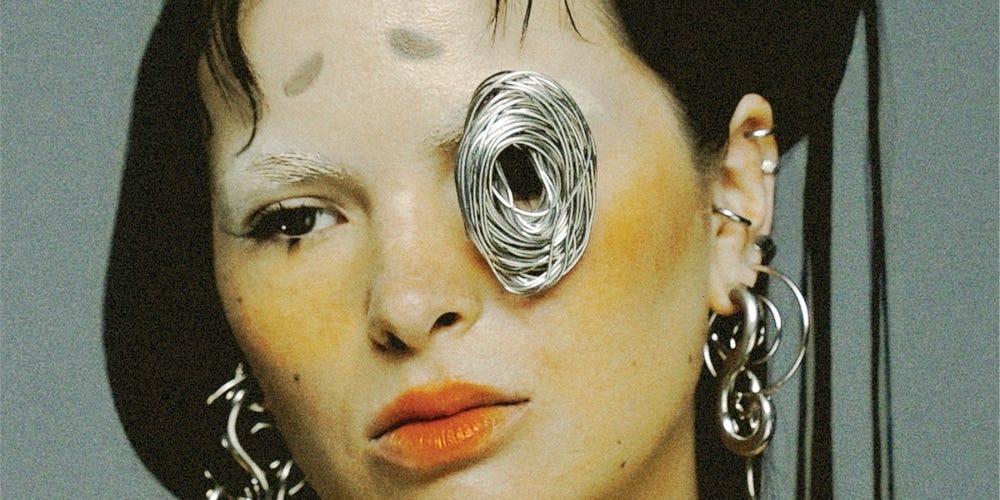
7. Saya Gray - SAYA
39:06 // Indie Pop // Dirty Hit
SAYA cuts Gray’s sound to the bone with such directness and clarity that it’s tempting to call it her proper debut. While her first LP 19 Masters displayed a captivating run of psychedelic folk melodies and textures, and her QWERTY duology frayed that palette into exciting electronic and experimental detours, her latest full-length pares its scope back to support the strongest set of songs she’s written yet.
Laid-back even at its most upbeat, the album opens with a slew of tropical, bouncy tunes that feel almost celebratory despite lyrics packed with regret and reflection. Even the poppiest tracks—take “PUDDLE (OF ME)”—keep their weight on the back foot, shifting effortlessly from moodier verses into hazy steel guitars and Gray’s joyous whoops. At times that restraint can feel obvious, like leading lines, but more often it adds the good kind of weight to each line. The B-side is more overt in its moodiness, and suffers nothing for it. On later tracks like “H.B.W.” and “Exhaust the Topic,” Gray spins killer downtempo grooves and fucking locks in, creating transcendent headphone music that makes you want to strut through the darkest alleys at night with your head held high.
It’s hard to think of a clearer example this year of an artist who scaled their sound down and was all the better for it. And whatever broader generalizations I could make, what really matters is this:
Saya Gray just cracked her formula. - A.R.O.
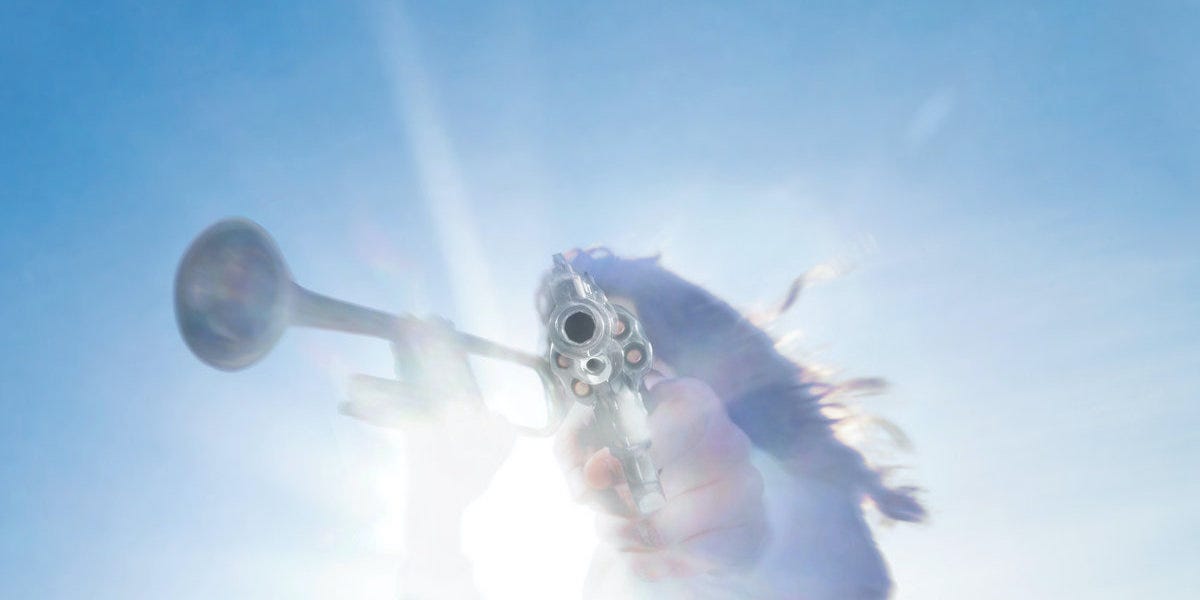
6. Geese - Getting Killed
45:35 // Indie Rock // Partisan
Much digital ink has been spilled to explain and reverse-engineer the meteoric rise of Geese and its frontman in 2025, so I will throw my hat in the ring with a simple theory: they make rock music that isn’t utterly and profoundly embarrassing. Anything made with a guitar that has been worth a damn for the last two decades has shied away from the r-word, choosing instead to lead with qualifiers like “indie” or “alt-country” or “post-punk” while the dinosaurs from yesteryear have done their best to truly make the canon of rock as embarrassing an association as possible. Every time Dave Grohl loses credibility, an angel gets their wings.
Not since The Killers emerged with Hot Fuss has a band made as convincing an argument that rock could (or should!) be saved as Geese have on Getting Killed. The crux of that argument falls on Cameron’s undeniable starpower, rattling off non-sequitors that feel earnest and profound. Yelling “THERE’S A BOMB IN MY CAR” in the album’s opener is hilarious, but it also feels like a vital proclamation (during the performance I saw in Chicago, he peppered in “I don’t have to tell you what the fuck has been going on with this city!” as if he was rallying the crowd to threaten Greg Bovino himself). Just as well, there’s a romantic longing to some of these lines that scan like Modest Mouse at their best (I’m partial to “The Lord has a lot of friends, and in the end/ He’ll probably forget he’s met you before”).
I’ll confess that even I was a tad bit tired of the endless heaps of praise thrust upon the band and its ringleader (the headline of Paul Thomas Anderson and Benny Safdie filming Cameron’s solo Carnegie Hall show reads like a punchline to a bad performative male tweet), but all the extracurriculars fade into the background when you actually sit down and press play. - Dakota West
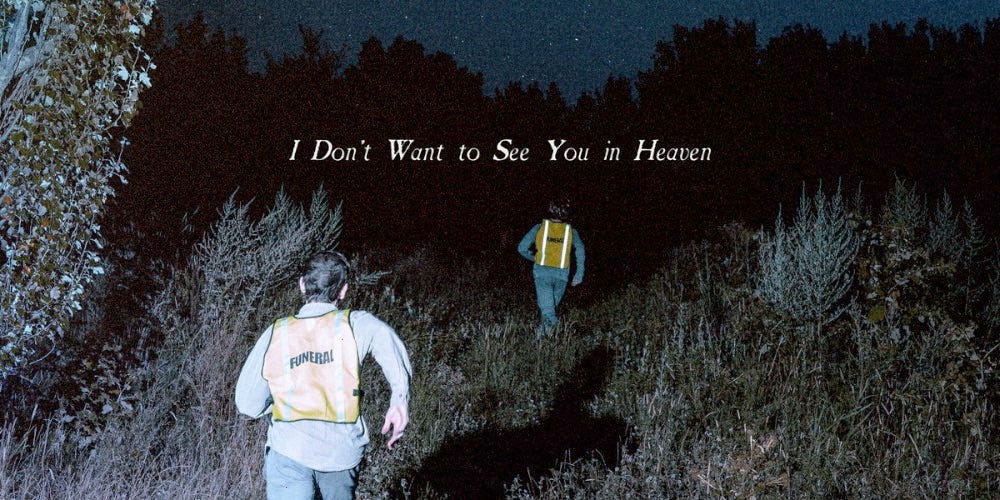
5. The Callous Daoboys - I Don’t Want to See You in Heaven
57:14 // Mathcore // MNRK Heavy
“We do not have to die to get to the gates of Heaven.” -Thich Nhat Hanh
“Aim at heaven and you will get earth thrown in. Aim at earth and you will get neither.” -C.S. Lewis
“Ugg ugga boo, ugga boo boo, ugga.” -Carson Pace
Phenomenal displays of lyrical prowess notwithstanding, The Callous Daoboys’ junior full-length runs perfect circles around its predecessors because of the mathcore coalition’s demonstrable maturation as songwriters. 2022’s Celebrity Therapist, while capable of dropping jaws at the height of its powers, often felt disjointed in a way that even the most esoteric of mathcore shouldn’t, positioning itself as more of a blurry, dizzying highlight reel than an intentional collection of the absolute finest work the band had to offer. Thankfully for audiences, I Don’t Want to See You in Heaven firmly entrenches itself in the latter category, illustrated by everything from the record’s conceptual underpinnings to its calculated sequencing. Every knock-out punch of a track plays its role in making the album flow with the smoothness of a hotel lazy river, with listeners being able to look back and marvel at how the entire record functions as a steady crescendo to the coup de grâce of “Country Song in Reverse”.
This is not to say that The Callous Daoboys have “reined it in” by any means; counterintuitively, it’s quite the contrary. Their previous efforts remind me a bit of the conundrum caused by being able to choose 30 different brands of peanut butter at a grocery store. When an artist is swamped by commitment to various creative choices, they forfeit the opportunity to express true artistic freedom. I Don’t Want to See You in Heaven circumvents this issue by astutely committing to the bit for a song at a time, while simultaneously expanding the horizons of the band’s sound into uncharted territory. It’s how the band’s trademark mathy fury (“Schizophrenia Legacy”, “The Demon of Unreality Limping Like a Dog”, “Idiot Temptation Force”) can coexist alongside more straightforward head-smashers (“Full Moon Guidance”, “Two-Headed Trout”), genuine pop songwriting (“Lemon”, the infectious “Distracted By the Mona Lisa”), bossa nova (“Body Horror for Birds”), and more progressive leanings (“Country Song in Reverse”). The Callous Daoboys didn’t just previously aim at earth; they had no idea how to aim their weapons at all, and their talent as musicians was enough to make up for it. Now that the band find themselves aiming at heaven, they’re lucky enough to also get earth thrown in.
Also this album has a song called “Douchebag Safari”. 10/10 by default. - Jack Mancuso

4. Ethel Cain - Willoughby Tucker, I’ll Always Love You
73:35 // Slowcore // Daughters of Cain
I really wish this wasn’t such a perfect 2025 album. Willoughby Tucker, I’ll Always Love You has put into sound what so many of us have felt this year. It’s devastation, heartbreak, nostalgia, and, above all, disappointment. Everything is getting measurably harder for almost everyone, and the most hopeful path many of us have is that someone smart will be brave and get rid of the problems. Collectively, we continue to retreat into our minds, and into those close ties we might have if we’re lucky. If those bonds don’t work out the way we want them to - and they so often don’t - we get the kinds of dissolutions Willoughby Tucker chronicles. The tale of Ethel and Willoughby is that of two people in love desperately trying to maintain that, ultimately torn apart by the forces of the crushing reality they live in:
“I’ve been picking names for our children,
you’ve been wondering how you’re gonna feed them,
love is not enough in this world.”
As a story, this is effectively tragic and unfortunately timely for many, but it’s not just lyrics like these that make Willoughby so powerful. It also just sounds like hurt, like heavy despondency. The album is 73 minutes long, and feels as slow as its genres would imply, but each song passes quickly, even the ambient-leaning ones. Those might feel the quickest, since they fit so neatly as natural rest points leading listeners from one wave of overwhelming emotion to the next, almost deceptively so. You might think you’re in for quiet sadness by the time you get to the back-to-back soft ambient folk of “A Knock At The Door” and “Radio Towers,” only for the last two songs to build up into something striking beyond measure.
Anhedonia finalized this album shortly after a meet-cute-turned-relationship inspired by a shared love of Grouper, which makes for an optimistic contrast to the feelings and narratives expressed so fully here. There is one moment that might actually match up - the very, very end. At the close of a 15 minute song filled with self-hatred and regret, we are rewarded with a beautiful piano melody, a callback to a previous song about Willoughby. It’s so breathtakingly bittersweet after so much sorrow, a motif of grief that, in this context, is somehow empowering in its memory. It’s like being at a funeral, breaking into tearful laughter as you remember the good times you had. No matter how awful it is right now, when it gets better and when it gets worse, you’ll have those memories forever. - K Bowman
3. Oneohtrix Point Never - Tranquilizer
58:39 // Progressive Electronic // Warp
The rumors are true: with Tranquilizer, for the first time in years, one is graciously held captive through ceaseless shards of weirdo digital detritus by the inimitable musical instincts of Daniel Lopatin. This album is just spectacular, magnificent in great part due to the very nexus of qualities that make it hard to describe in words, and incredibly dense with vaporous sonic details and hairpin structural turns. Yet the album somehow remains consistently evocative of a state of nature, one friendly to poetry and inner balance rather than aggression and babble.
From its very beginning, the album is an unusually easy listen for a glitchy, amorphous piece of 21st-century digital experimentation. Lopatin is a master of structure, shaping his songs here with an entertainment streak based on the gradual rather than tonally demonstrative arrangement of glowing synths and clanking percussive elements and random sonic bric-à-brac. But this is a form of entertainment that only seems glancingly aware of the concept of storytelling—or at least Lopatin has, here, successfully detached individual sounds from any easy sort of emotional or narrative figuration they might assume on other albums. You may get unusually lost, and quickly: on opener “For Residue,” a high-pitched buzz descends until a deep voice saying “for REZ-ih-doo” swallows up the buzz, all of this rustling into an increasingly ear-thrumming pad pattern overlaid with (why not) a sample of a baby crying—then, one of those perfect waiting-room ding! bell tones and a light fadeout on a new, considerably softer synth chord. Describing the sounds doesn’t do much to produce the thrilling journey, but nor do we get much about how the record sounds from relaying the images in our heads: “Bumpy,” the track after “For Residue,” sounds like a little bouncy guy (whose name is Bumpy) getting slung by a time-travel machine into different historical periods of the same magical forest; it too, I suppose, has synth chords.
Tranquilizer’s heart is not defined, however, by a desire for a purer level of structural and sonic abstraction, nor even by the ease and seamlessness with which this desire is brought forth, but by the utter replayability Lopatin’s untethered moodmaking secures, the awe his unbridled creativity engenders in the listener. A profoundly engaging listen from “For Residue” and “Bumpy” all the way through to the stunning penultimate track “Rodl Glide”—first downtempo jam, then ear-curlingly intense saw-synth explosion—and the plasticky-aquatic showstopper of a closer “Waterfalls,” Tranquilizer demonstrates Lopatin’s dedication to exploring the relationship between the manipulation of sound and structure and the calculated rupturing of the listener’s expectations, of their pleasure. Somehow still pulling out wonderful currents of warm energy from his mysterious practice, Oneohtrix Point Never here succeeds by again conjuring up a sense of his always being one step ahead of the listener, even in a medium in which information is given and received at the same pace no matter who’s listening or what they’re listening to. And sure, plenty of albums both obscure and beloved demonstrate to us a sure grasp of controlled chaos on the part of the artists, pursued with as much verve and inventiveness as on this record. But they ain’t as pretty as Tranquilizer. - Alex Robertson
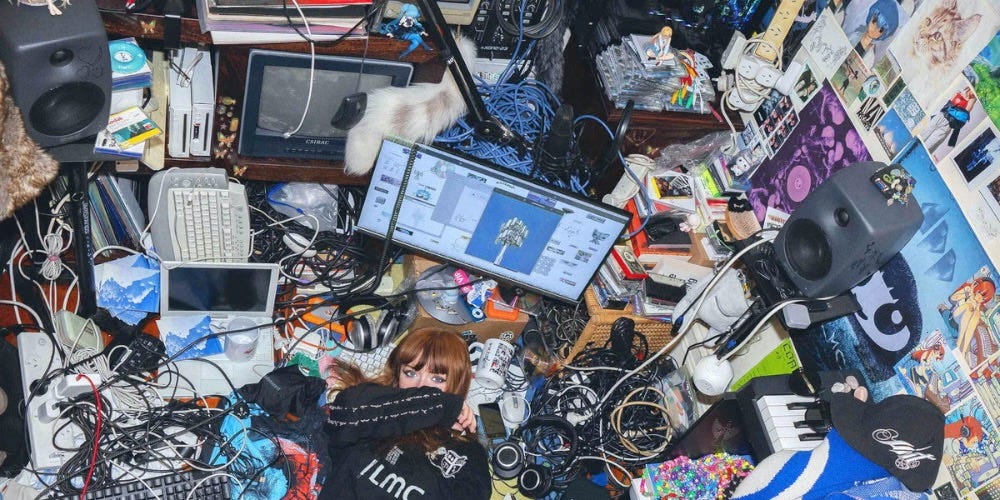
2. Ninajirachi - I Love My Computer
39:43 // Electropop // NLV
It’s safe to say that anyone who was alive and conscious enough during the 2000s to have had access to a computer has thought about, in one way or another, having sex with the device. Even within the universe of electropop, Ninajirachi understands this urge like few other artists. After all, it says my name and it says ǧ̷̜̖̍w̵͊͌̊̿u̵̓͆̀͠h̵̠̼̬͗g̸͌̌̽̏g̸̀̂́̌h.
The logistics of this new horizon of fornication are cold, harsh and potentially even medically hazardous. Think about the sounds. Jarring, overstimulating streams of barely-comprehensible vocal samples, most likely, or perhaps earsplitting mechanical grinding noises like an overstuffed disc drive? Might not sound too appealing at first blush, but hey, it’s always been easy to make sex sound gross on paper— get that mind out of the gutter and think about the romance of it all! Getting all dolled up to impress, staying up late together, making mixtapes, going on vacation, sharing your most cherished memories, your insecurities, your aspirations, and 2025’s most addictive chorus with daine. Isn’t the journey more important than the destination, after all? - jesper and Kerry Renshaw

1. Deafheaven - Lonely People With Power
62:08 // Blackgaze // Roadrunner
Ever since 2013’s illustrious (I can feel the daggers already) Sunbather, San Francisco metal act Deafheaven have been traversing a somewhat wonky path using a roadmap seemingly drawn in pencil on damp tissue paper. Their frothing, rapturous mix of black metal, post metal, and shoegaze shunted them toward abrupt stylistic shifts, resulting in certain elements soaking up the spotlight as others were hurriedly ushered into the wings. While arguments can certainly be made to justify their sonic wayfaring, the drastic palette adjustments yielded records that were technically assured yet lacking the impressively well-judged cohesion and inspired thematic flourishes that made Sunbather especially resonant. They were by no means the first band to try that specific genre blend, but their execution created such a rich, memorable and accessible album that it’s not unfair to suggest that they popularised, and maybe even perfected, the formula.
Lonely People With Power bolts from the blue like a lightning strike a full 12 years after Sunbather, and although time will be the best judge of whether it proves as enduring as its forbear, the band have emerged with renewed confidence, a sensitively handled concept, and some of the tightest songwriting of their career.
Here, the band leans into their black metal influences more aggressively than anything they’ve released since 2015’s New Bermuda, while still incorporating cues from their more delicate genre influences. They leverage this finely handled mixture to explore themes of power (emotional, gendered, inherited, of authority figures etc.), masculinity and self-reflection in a manner that handily mirrors the subject matter, with the sonic tensions echoing the psychological unrest. These shifts between frenetic black metal tumult and sparkling post-rock passages, sprinkled with a dash of shoegazey gentleness, punctuate the concept with richly emphatic accents, repurposing the clarity, restraint and melodic discipline of Infinite Granite within a familiar framework. These dynamic extremes are central to the experience, the work alternating between violence and calmness with intuitive use of negative space, allowing the contrasting breathing room to settle (and denying the listener any prolonged sense of ease). Its production may not be as rich as Sunbather’s, but it strikes a happy medium between that and the softer focus of their interim efforts. The result feels more mature and diverse, but just as nuanced.
The toil and ardour inherent in fully immersing oneself in the LP is at odds with how listenable it is, but is perhaps also the reason it succeeds so well as an experience. It shares Sunbather’s scale and emotional intensity, but is also more controlled — more intentional — less impressionistic but certainly just as hard-hitting. It is a keenly focused reflection of the same blinding light, more personal and less existential, but just as richly wrought and impressively constructed — perhaps even more so. If Sunbather cast loneliness against a grand, borderline cosmic backdrop, LPWP recontextualises it as something more intimate, exploring how power — and its mishandling — isolates those affected by it, psychologically, emotionally and socially. It’s a perfect example of an album’s lineage and genetic makeup being effortlessly traced throughout their prior discography both musically and conceptually, the collection reaping the spoils from all of its ancestors and binding them into a cohesive, intuitively constructed whole that plays to established strengths whilst simultaneously being unafraid to expand upon them.
Where Sunbather focused on the desire, LPWP focuses on the cost and consequence. It’s the shade to that album’s blissful, yearning brightness, and while we’re a ways off from comparing their longevity, it’s difficult to fault the ambition, scale and richness that makes this latest offering feel so goddamn alive. This an album that does something incredibly special — and increasingly rare — in the modern musical landscape: no matter how much you relate to its themes personally, it feels categorically, unavoidably and inevitably human in the truest sense, and in speaking directly to the human condition, it’s almost impossible not to be clotheslined by its power. - Benjamin Jack
…and that’s it!
A huge thank you to all who contributed to this, as well as those who took the time to follow it. So long to 2025 — time to turn the page and do it all again.
We’re beyond excited to cover the following year’s music for you, and we’ve also got a bunch of new features lined up for crate-diggers and mix-hawkers alike, so buckle in.
Make sure you subscribe via email (no further registration required), and we’ll send you a full digest of everything in our weekly newsletter — nothing extra, no spam!
Thrilled as hell to see #2 ranked so highly. It gets praised pretty much everywhere but I connected with it so hard and it's far and away my own AOTY.
Very cool list overall that I will spend lots of time going through over the coming months. Lovely writeups all around!