

An Album A Day... Logo
Well, would you look at that!


What’s up everyone! Sorry for the delay in getting this out, it’s been a busy few days — but we’re back and better than ever! It’s a relatively light week because I’ve been preoccupied with research, but this week has some of my favorite reviews of the series so far, including one that I meant to write two years ago. Moving forward, I will be reducing the series to five entries a week rather than every day… I’ve already been doing that but I’m officially announcing that so I don’t look like flaking. Anyway, enough of that, let’s jump right into the heavy-hitting musings of the past week!
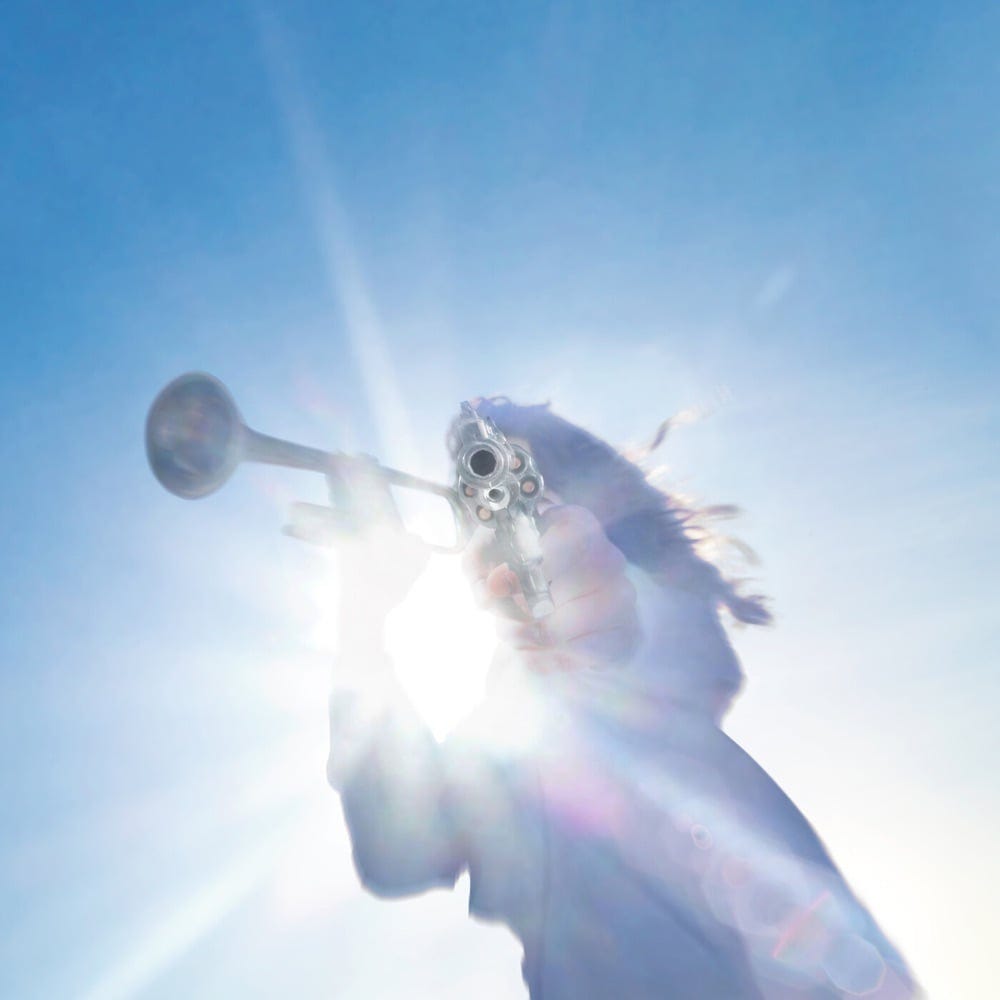
Entry 46 // Geese - Getting Killed
Getting Killed was everywhere last year. It topped the year-end lists of just about every major music publication, garnering so much hype and attention that it just HAD to be the conclusive album of the year. Yet, no matter how many times I listen, that same hyperbolic passion never came to me. Was I just missing something? Did everyone else know better than me what was considered “good music?” Review after review mentions the same things: the compelling experimentation, the impressive vocal performance filled with variety, and the sprawling songwriting capabilities of the band. Truthfully, that is all present, but does that necessarily equate to good?
Let’s begin with the experimentation. From opener “Trinidad,” it’s clear Geese knows how to make music sound weird. While it starts seemingly cohesive and moderate with some jazzy influences and soft melodies, it soon deteriorates into madness with jarring, cacophonous noises and disjointed instrumentation. Although it is the only track that features that abstract experimentation, it leaves a somewhat bitter taste moving forward. Other tracks like “Cobra” and “Bow Down” take the framework of ‘90s alternative pop rock and expand on them with a more modern approach, utilizing urgent and energetic structures to provide a unique spin to the genre. Others like the title track and “Long Island City Here I Come” lean on some pop punk elements that provide a bit more intensity to the mix, blending their softer experimental side with the more poignant moments of their heavier writing. Others like “Husbands” and “100 Horses” grab a bit of jazz and funk and throw them into their sound, adding yet another layer to their web of influences. Others like… okay, enough of this, this is where Getting Killed falters. By implementing so many different sounds and influences, Geese loses their identity. When you bring in a variety of styles, you lose your own — and that is where my biggest issue lies. It all begins to sound like nothing as the band attempts to eat from too many plates… it becomes exhausting.
Now, what about the vocals? Cameron Winter is a very talented performer, and that is quite evident throughout. There isn’t a ton of variety to his range, but he comfortably executes his niche. Much of the album places the vocal delivery further back in the mix, acting as a support for the instrumentation, though some moments like “Half Real” allow him to take center stage and let his vocals drive the track along. However, I run into a slight issue with the vocals after a while. Since the experimentation is all over the place and tries to tackle too many styles, the vocals actually lose their charm and staying power. Since Getting Killed is constantly shifting from sound to sound, Winter’s vocals lose their place in the spotlight, leaving even the most impressive deliveries masked by Geese’s desire to attain shock factor over band chemistry. The opener was so promising, with his vocals moving swiftly from soft hums of a melody to abrasive shouts over the chorus, yet they were never able to attain that same level of prominence as the experimentation took over.
Lastly, the songwriting capabilities. This falls in line with the last thing I mentioned about Winter’s vocal performance: Geese prioritizes abstract over cohesion. From track to track, Getting Killed lacks any sense of flow, often moving from one song that featured jazzy, softer melodies to another that pushes for a jarring post-punk style, as featured in the progression from “Au Pays du Cocaine” to “Bow Down.” Similar to the experimentation, the actual flow of the record creates a disjointed experience rather than an entertaining one. Now, that might be appealing for most, because sometimes that musical shock factor strikes home for many people. However, for me, the blend of sounds and unique songwriting approaches lead to a musical scrapbook rather than a sprawling concept.
I don’t mean to hate on Getting Killed in its entirety. In fact, the title track is an absolute gem of a highlight, featuring the perfect concoction of their more aggressive tonality in the chorus with their quieter, soulful verses all while Winter’s vocals croon smoothly over the instrumentation. It’s frustrating because it proves how much potential there is within the record, yet it comes out more of a mess than a finalized piece. I don’t despise the record by any means, it just falls flat and sounds boring most of the time. Maybe Geese can figure it out in the future, but for now, it just sounds like an experimental version of the Barenaked Ladies.
5.5/10Favorite Track: Getting Killed
Least Favorite Track: Au Pays du Cocaine
Final Thoughts: I have genuinely tried to come back to this album numerous times, and every time I understand the appeal for it even less… the positive reception is such a confusing hivemind of hyperbole.
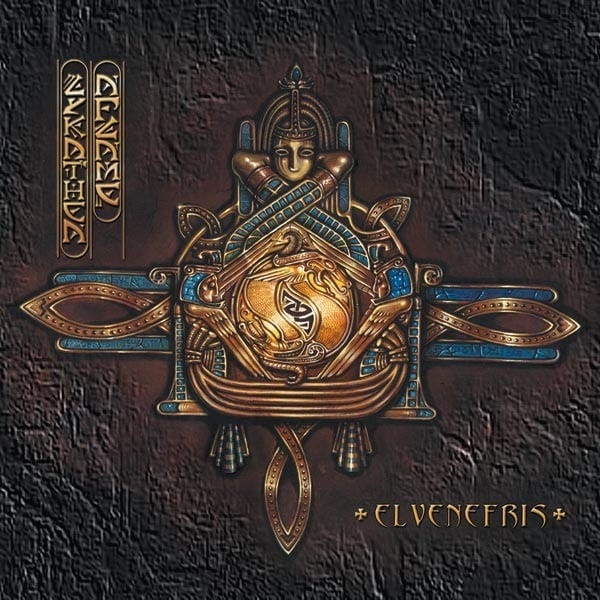
Entry 47 // Lykathea Aflame - Elvenefris
On the surface, Elvenefris is your typical run-of-the-mill tech death record with the occasional influence of progressive metal, black metal, and avant-garde elements sprawled across a 70-minute runtime. Tracks like “To Become Shelter and Salvation” and “Shine of Consolation” are the most exemplary of this style, featuring a range of chugged guitar gallops, double-bass-ridden drum rhythms, and complementary death growls accompanied by softer clean melodies that create a stark contrast and balance between the ferocity and beauty. As the album presses on, these standard tech death sounds run thin and become a chore to get through, each riff losing its unique punch and the grooves blending into tedium. It becomes slightly exhausting as the minutes pass and the instrumentation bleeds together. However, despite all of this, there is something special about Elvenefris.
Throughout the record, Lykathea Aflame shows spurts of unique and innovative songwriting elements that I wish were implemented more throughout. “On the Way Home” features a catchy Middle Eastern, Phrygian focused riff that separates itself from the rest of Elvenefris, leaning into an approach that blends their strengths of tech death with their uplifting delivery, resulting in a riff and guitar lead that remains as the most infectious and easy-to-recall moment on the album. Similarly, the conclusion of “Sadness and Strength” explores those Arabian elements further, with eclectic instrumentation incorporated during the final epic moments, similar to tech death/progressive metal contemporaries like Nile. Lastly, the final stretch of “A Step Closer” shows Lykathea Aflame displaying their true instrumental and songwriting capabilities, with one of the quietest, cleanest sections of Elvenefris allowing the guitar passages and light drum work to breathe and let the melody do the work. The dual guitar work combined with the cymbal chops seamlessly concludes the track and adds even more impact for the ferocity of the penultimate track “An Old Man and a Child.”
Overall, Elvenefris is an entertaining listen, albeit rather long and frustrating at times. After a while, the tech death sound gets old and loses its charm, but the subtle moments of innovation and impressive songwriting make up for the tedium. It’s clear that Lykathea Aflame has an immense amount of talent, and they execute all aspects of their style efficiently and effectively, yet the staying power of the record after 70+ minutes is rather lackluster. Nonetheless, the album is a proper addition to the massive collection of late-90s/early-00s tech death, and it provides unique moments of Middle Eastern influence and a more progressive, avant-garde approach to the delivery.
7.5/10Favorite Track: Sadness and Strength
Least Favorite Track: To Give
Final Thoughts: Although I’m not the biggest fan of tech death style music, this was still really fun to dive into and get a better understanding of.
Entry 48 // Crippling Alcoholism - With Love from a Padded Room
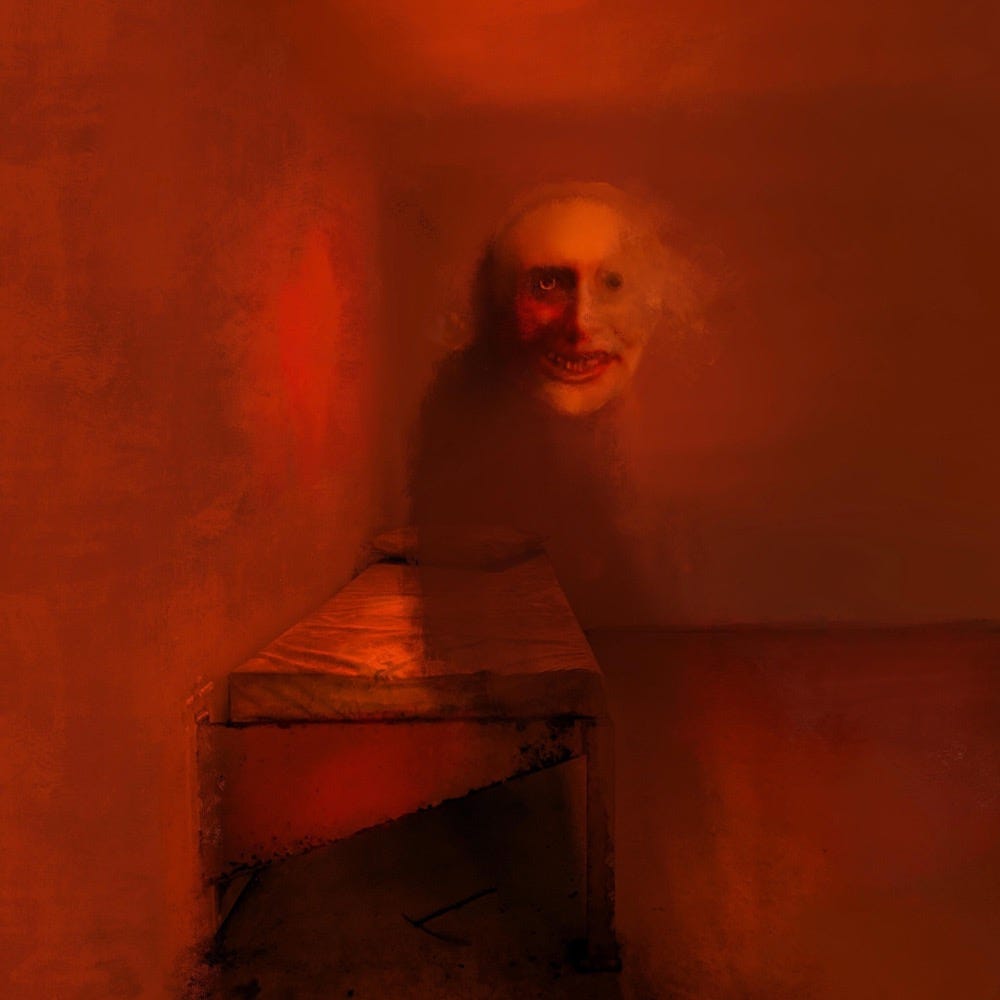
Sometimes a picture is worth a thousand words, and this album cover speaks volumes to the nature of With Love from a Padded Room. From the haunting red hue to the translucent, frightening figure to the barren room, the artwork is the visual embodiment of Crippling Alcoholism’s sophomore release. The room of the art represents solitary confinement, the setting for the numerous individuals presented within the record’s fictional prison, each with their own demented story to tell. With each harrowing tale, With Love from a Padded Room details the reality of imprisonment, both from physical entrapment due to tie-ups with the mafia or addiction and the mental entanglements of tortured thoughts and disturbing imagery. However, as terrifying as each narrative is on their own, the vessel through which they are told elevates it to another level.
The record balances the two thematic forces through music: love and imprisonment. The love is expressed through the beautifully catchy melodies scattered throughout the record within Crippling Alcoholism’s use of dreamy, goth-tinged rock elements through hazy synths and clean guitar pluckings. Even with the disturbing lyricism, tracks like “Liquid Jesus” and “Satan is the One” soar with infectious choruses that feature punchy vocals and lofty chord passages that combat the dreaded narratives woven throughout. On the other end, the pure aggression of With Love from a Padded Room emphasizes the imprisonment facet. Although the album never uses distortion, the intense combination of dissonant clean guitars and frantic synths on cuts like “Red Looks Good On Him” and “Ottessa” scream abrasiveness without resorting to orthodox means of distortion or drive. Even with the subdued instrumentation leaning on reverb and clean effects, Crippling Alcoholism doesn’t shy away from enraged performances, with the strumming attack of the guitars and bass providing that passion and the gritty vocals giving that extra edge to the music.
However, the greatest part of With Love from a Padded Room is the chemistry of the performance among the musicians. The simplicity of the guitar leads and basslines complement the atmospheric synths in a way that nearly intertwines them into a unique instrument altogether. The vocal delivery shifts from soft crooning to strained, rumbling shouts, and it is the perfect performance for this type of record. Lastly, the highlight of the album, the drumming maintains a consistent, smooth groove throughout with the occasional chop that amplifies a track to the next level, as shown by the display featured on “Rough Sleepers.” The chemistry and cohesion of each member here elevates With Love from a Padded Room to the next level, making it a simultaneously beautiful and haunting experience. Although I was late to the party with Crippling Alcoholism, this record has already pushed itself into the realm of being one of the best of the current decade.
9/10Favorite Track: Rough Sleepers
Least Favorite Track: doesn’t exist
Final Thoughts: Bringing up Crippling Alcoholism in a casual music discussion with people who don’t know the band is always an interesting conversation to have.
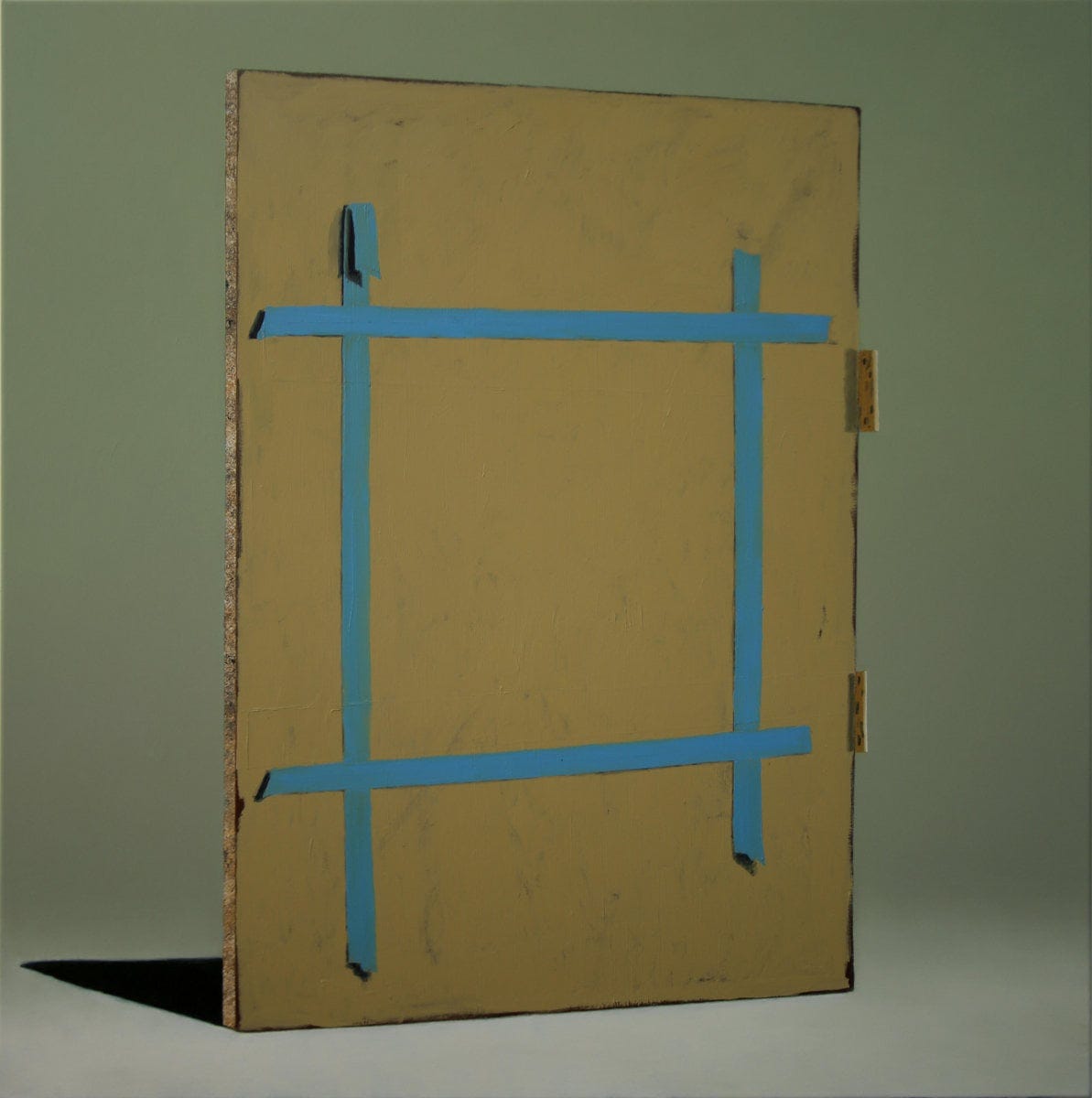
Entry 49 // The Caretaker - Everywhere at the End of Time
Everywhere at the End of Time shares the brutal deterioration of a patient with dementia through music. The musical compositions represent memories that are hazy, distant, and distorted to varying degrees depending on the stage of dementia the patient is at. Each album in the compilation embodies a stage, reflecting how memories gradually slip away and the mental decay sets in. In six and a half hours, The Caretaker manages to transform big band samples and sprawling ambient collections into a compelling and emotional narrative through sound.
Stage 1: the first signs of memory loss
This is the most gorgeous record of the group, described as a “beautiful daydream” by The Caretaker. The big band samples are grandiose and maintain their defining features, with the melodies and progressions still intact. However, there is a haziness to the sound overall. It’s not particularly noticeable or distracting, but the music feels slightly distant as if echoing through the halls of an empty ballroom. Subtle vinyl crackles mark the edges of the tracks, giving the hint that something is off but seemingly benign — just a bit of noise here and there, but the melodies are beautiful as ever. The songs have a bit of cloudiness covering them, but sometimes things are just hard to distinguish.
Stage 2: the self-realization
Everything sounds dimmer. “A losing battle is raging” shows that transition from signs of memory loss to recognizing it. There is an even greater presence of ambiance that muddles the melody in the background, with even more static, as if it was a percussive element of the sample. The tracks are longer and feature less looping elements, yet the actual compositions themselves begin to lose their shape with more intense reverb and less melodic definition. “Glimpses of hope in trying times” even has a dissonant, eerie tonality to it, signifying the melancholic shift as the patient tries harder to remember, leaving them haunted by the reality that memory is fading. The record ends with the darkest presentation yet, with contrasting melodies bleeding together into a blur of sound.
Stage 3: the last coherent memories
The melodies are as distant as ever, peaking through in louder bursts only occasionally like sun rays through a cloudy day. For example, “And heart breaks” is hauntingly atmospheric, with the supporting instrumentation droning in the background as the horns pierce their way through in a crackled and distorted state, resembling memories that retain some of their distinction amidst a foggy mental landscape. At times, the beauty of the first record returns, as on “Sublime beyond loss,” yet some of the composition is choppy, missing some of the key notes of musical run and ultimately being cut short before transitioning into the next track. This record features the most tracks in the entire story, a mixture of longer sprawling pieces that attempt to retain the beauty of the big band samples and shorter ambient haunts, like “Aching cavern without lucidity,” that set the stage for the final moments of dementia.
Post-Awareness Stage 4: the ability to recall singular memories gives way to confusion and horror
This is the most frightful record of the bunch. This marks the turning point in the concept, shifting from shorter compositional samples into long, entangled pieces that rely on ambiance and noise more than the actual music. Brief moments of distinguishable melodies make their way into the forefront before being interrupted by another lead line or cutting out into static entirely. Even when a recognizable passage finds its way through, the fog surrounding it is so thick that it feels horrific. At times, the music is beautiful, especially a quarter of the way through “H1,” before derailing into the horrors of confusion and ambiance as every resemblance of a memory fades away. However, there’s a moment of “temporary bliss” where the shapeless form of memory remnants create a lofty, dreamy soundscape which is for the most part serene with only brief moments of dissonance and intense static — unfortunately this is the new reality.
Post-Awareness Stage 5: the peak of confusion and horror
This is where everything falls apart. The music presented here is a jumbled mess of passages buried under static and fighting for the spotlight. However, there is an odd calming presence about it. Immediately following the moments of chaos from the subdued noise of clashing melodies, the pieces give way to atmospheric soundscapes, characterized by an airy ambiance that feels tranquil when contrasted by the entangled fragments of music. The overlapping samples act as a collection of memories the patient is trying to recall, only for it to descend into formless concepts that lack any distinguishable features. Mental recognition loses all sense of definition, leading to an auditory experience that blends the horror of forgetting the melody/memory with the sea of sound that flows from the confusion of it all.
Post-Awareness Stage 6 is without description.
That statement still stands as one of the most haunting descriptions (or, lack thereof) in art. The void of noise speaks volumes, full of subdued static, washout-out concepts of the big band samples, and broken silence. There are moments of music, yet it sounds so distant like the mind has become a bottomless cavern that leaves the noise echoing endlessly off the walls. Everything has lost focus. There are no melodies left over — until, suddenly, a choir begins singing in the final six minutes of the project. After hours of a jumbled mess of compositions and distraught silence, the choir becomes the most recognizable and distinct sound the patient has heard in the post-awareness stages. It’s beautiful, but it comes at a cost. The defined clarity precedes death, with those hazy, lofty melodies from the choir signaling the end of the road. Then, everything stops. No more static. No more noise. No more music. Silence.
10/10Hope you all enjoyed. I’ll see you all again next week!