

An Album A Day... Gets Weekly
The new and improved weekly format.

Yo yo yo! Welcome to the weekly post of An Album A Day! I swear, I have been writing a review every day if you haven’t been paying attention to my personal Substack (however, I will be delaying today’s album to tomorrow because I have been busy all day, but I will be doubling up tomorrow). This week was full of absolute highs lemme tell ya. Got a wide variety of genres and eras, and I made a switch to a new album generator, and it has massively paid off. But enough of me bantering at the beginning. I know you want to see all of my reviews in one place that you may or may not have seen already before! So feel free to skim, read a review from an album you want, or simply leave because you don’t want to read my words (it’s okay, I won’t feel too hurt).
—
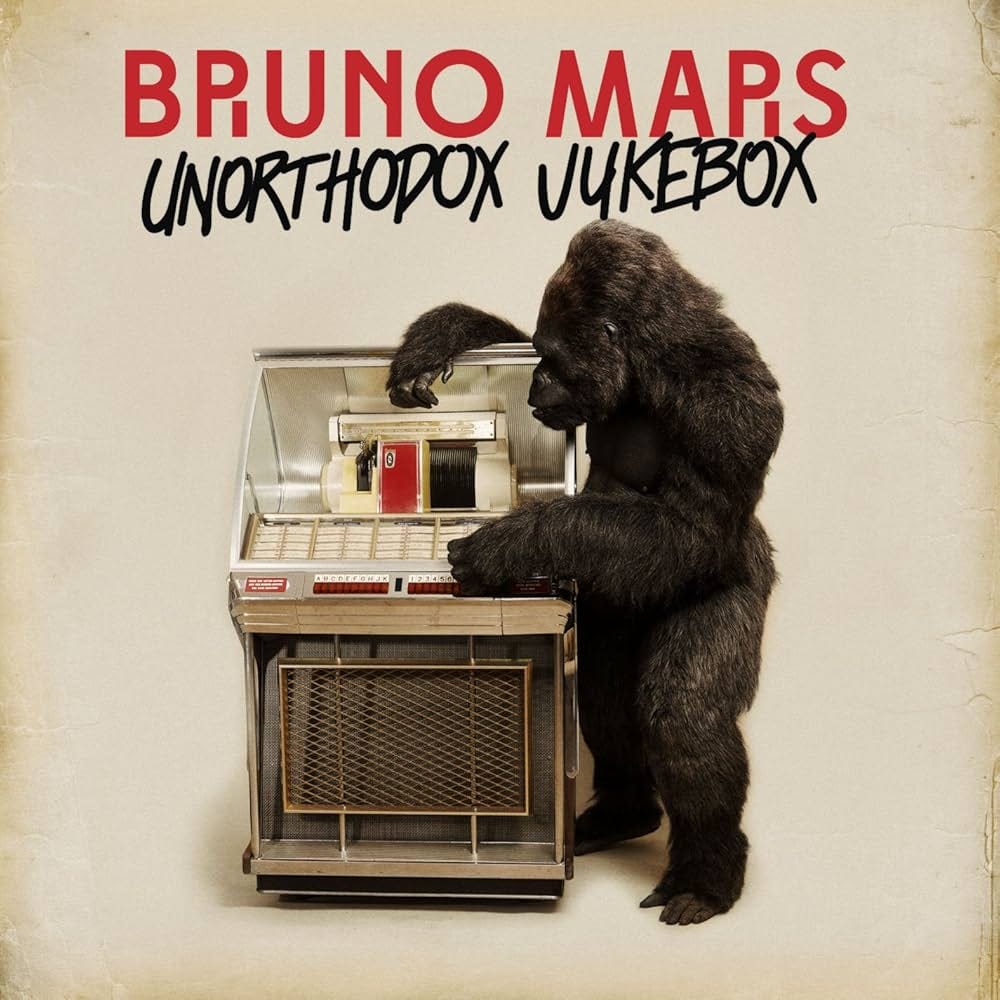
January 5, 2026 // Bruno Mars - Unorthodox Jukebox
Now I know I talked a lot about nostalgia yesterday with Future Nostalgia, but this right here is true and pure nostalgia. While I had never listened to this album all the way through when I was younger (I doubt my parents wanted me hearing about Bruno Mars’ fond memories of makin’ love like gorillas), I very vividly recall jamming out to the three big hits of Unorthodox Jukebox: “Treasure,” “Locked Out of Heaven,” and “When I Was Your Man.” Interestingly enough, these three hits are perfect examples for the reason why this album succeeds so well, so I think it’s only fair to devote time to each one.
Treasure: the nostalgic foundation
This song captures the catchiness of Bruno Mars’ songwriting, with groovy basslines, earwormy guitar licks, and impressive vocal performances. Its focus on the 80s-inspired composition set the foundation for the future of his music, with much of 24K Magic and Silk Sonic relying on a similar style. However, within Unorthodox Jukebox, it stands as a highlight of Bruno Mars’ variety with music within the record. Other songs like “Moonshine” and “Show Me,” although not exactly following that same funky rhythm, rely on groove to create the atmosphere. It isn’t quite perfected here, but this style set up the trajectory of what was to come next for him… but enough about the future albums, what about the rest of this one?
When I Was Your Man: the ballad anomaly
The only piano ballad from Bruno Mars (as far as I can tell, don’t correct me if I’m wrong). This is a true display of his vocal ability. With only a piano supporting him, the song thrives and succeeds on the vocal performance, showcasing his range, power, and emotion. It’s a desperate ballad as a lover loses his girlfriend to someone else because he was unable to show love like he should have — and it makes heartbreak sound beautiful. I kind of wish he would do more of these types of songs, because his song is perfectly fit for it… but instead, he originally opted for the final style of the three.
Locked Out of Heaven: the pop rock anthem
Yes, I know this has some of the funky influences, especially in the verses, but just go along with my breakdown of the album. This one has an unbelievably catchy chorus that is so recognizable and massive sounding. Bruno Mars’ voice floats silkily over the immense composition throughout the chorus, perfectly contrasting the softer vocals — no wonder it was a huge hit. Much of the record follows this same style, each with their own slight twist: “Gorilla” takes a slower approach with (much) raunchier themes, “Natalie” is a clap-a-long jam about a gold digger, and opener “Young Girls” is a beautiful anthem dedicated to a questionable audience that concerns me the more I listen to the lyrics… but I digress. Regardless, this style was found all throughout his debut, and it truly felt like he figured it out on this record.
While it is a step up from Doo-Wops from what I can remember, this isn’t quite the peak of Bruno Mars. I do thoroughly enjoy the album, and the three songs mentioned are some of my favorites from him, but Unorthodox Jukebox doesn’t reach the highs of his next few outputs. But, what this album does have is promise, with that funkier style foreshadowing the successful path Bruno Mars was heading towards. It may not be his best record, but this is surely what led him to where he is today.
7/10Favorite Track: Locked Out of Heaven
Least Favorite Track: Show Me
Final Thoughts: I know I didn’t really talk much about it, but it really is wild just how horny Bruno Mars sounds throughout this.
—
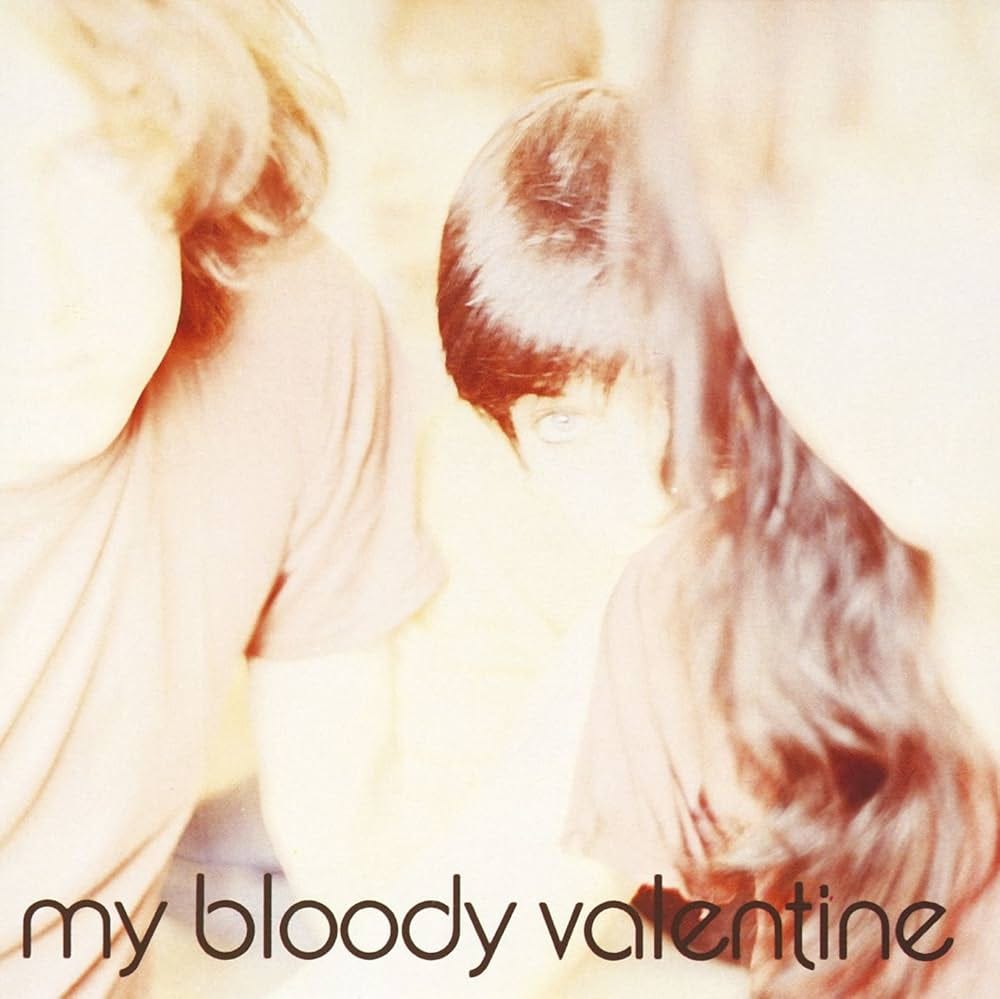
January 6, 2026 // My Bloody Valentine - Isn’t Anything
I cannot explain how excited I was when I saw this band come up on the generator. Although I have minimal experience with the band, I know one thing for sure: Loveless is one of the greatest shoegaze albums out there. I adore that album, and I don’t really know why I never tried to give anything else from them a shot, but here we are!
But let me be real with you, I was worried after the opener.
“Soft As Snow (But Warm Inside)” isn’t necessarily bad, but it is far from what I expected. As I mentioned, my only experience was Loveless, so I was ready for that luscious wall of sound that characterized shoegaze… not an avant-garde sounding noise rock track to kick off Isn’t Anything. The more I’ve listened, the more the track has grown on me, but it was such a jarring and confusing way to start that dread had started to build in the back of my mind. That is, until “Lose My Breath” began.
Now let me tell you why this debut full length is so amazing. It is clearly the foundation for the peak of Loveless, but it isn’t just a blueprint for the future. Isn’t Anything beautifully mixes the lush soundscapes My Bloody Valentine is known for with a bit of a noise/indie rock and alternative tinge. Tracks like “Lose My Breath” and “No More Sorry” rely on unsettling atmospheres and waves of ambiance that make the tracks feel dense. Others like “Feed Me With Your Kiss” and “You Never Should” thrive on grittier energy that pulls from older post-hardcore styles, starkly contrasting their more lush approach.
This variation in styles adds a bit of a unique identity for the record compared to Loveless. Where Loveless succeeded in being a classic of a genre, Isn’t Anything succeeds in experimentation for a young band. The shoegaze legends would soon emerge, for now, they were a band playing with a passion for music. There’s a charm here that is hard to put into words quite honestly, but you can just feel the dedication to the music here. It feels unpolished in the best way possible, with highlights like “(When You Wake) You’re Still in a Dream” and “Nothing Much To Lose” feeling raw and emotional. It almost makes me wish the band dove even deeper into some of these heavier, grittier noise rock riff styles in Loveless…
Even with the shaky start, Isn’t Anything blew me away. It sets the foundation for the shoegaze brilliance of Loveless, yet also revels in its own moody and abrasive sound. I wish I could say more about how this album fits in the music trends of the late 80s, but I unfortunately don’t have a lot of experience with this style or era. Regardless, I don’t need to be well educated about the era to know that this album is insanely good. It’s a shame that I hadn’t checked this out sooner.
8.5/10Favorite Track: Nothing Much To Lose
Least Favorite Track: Soft As Snow (But Warm Inside)
Final Thoughts: I genuinely shouted “FINALLY” in my room when I got an album that wasn’t some 2010s pop record this morning.
—
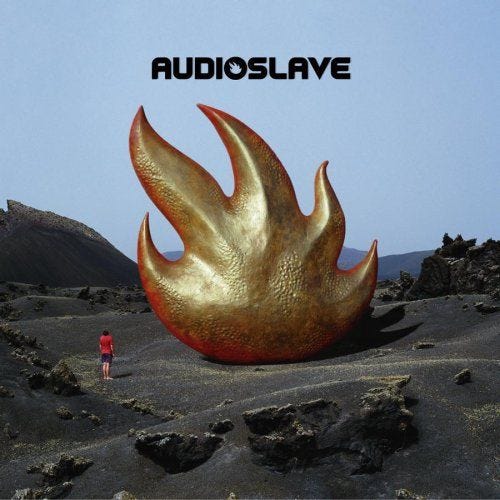
January 7, 2025 // Audioslave - Audioslave
Okay, I promise that I will give more description than that intro… I just couldn’t resist from stating the obvious. If you don’t know, Audioslave is literally as I described — Chris Cornell of Soundgarden backed by Tom Morello, Tim Commerford, and Brad Wilk of Rage Against the Machine. A supergroup that draws on their former bands, but creates its own identity.
Looking through other reviews, I found it surprising just how polarizing this album is. On one end, critics acknowledged that it wasn’t the best release among the bands represented, but one that slotted itself nicely in the legendary rock discographies. On the other end, some shared how uninspired and lifeless the debut was, with Pitchfork even going as far as to call it a result of a trend of has-been comeback performances (what a wild review, I encourage you to read it for a nice laugh if you have the time). Now, while I tend to lean toward the former end, I won’t deny that some of the criticism presented is warranted.
First, let’s talk about the primary positive: the chemistry of the group. The instrumentation is full of groove and funk and it balances that dynamic of softer verses and explosive choruses. The interplay of Morello’s unique guitar riff decisions with Commerford’s silky bass licks are complemented by Wilk’s simplistic drum chops that keep the jams on track. Soaring over top the musicianship is Cornell’s phenomenal vocals, and he doesn’t hold back the versatility here. From the near-shouted choruses of “Exploder” to the brighter melodies of “Getaway Car,” Audioslave is driven by his vocal expertise. So, if the album features some of the best in the genre doing their thing, then what’s the downside?
This thing is bloated. Clocking in at just over an hour, it feels like some of the fat here could’ve been trimmed off. It’s a lot like a buffet: all that food is absolutely amazing, but once you get that plate that pushes you over the edge, everything starts to lose its taste. I easily find myself engrossed with each song here individually, but in the grand scheme of the entire record, it becomes a bit too much. Unfortunately, with how good the instrumentation is, it is quite simplistic in nature, which does get a bit stale after a bit… and Cornell’s vocals can only do so much to assist this.
As I said, it is always a joy to listen to this album all the way through, and there are so many highlights, like “Cochise,” “Like A Stone,” “Shadow on the Sun,” “Light My Way,” and “The Last Remaining Light” to name a few. But as I consider it critically, it is far from a perfect album. While the record doesn’t reach the highs of the respective bands on display, I feel it doesn’t need to be. Audioslave is a mighty fun hard rock album, and that’s exactly the way it should be.
7.5/10Favorite Track: Shadow on the Sun
Least Favorite Track: Bring Em Back Alive
Final Thoughts: Thanks to my dad, I knew most of “Like A Stone” before I even knew who this band or what this album was.
—
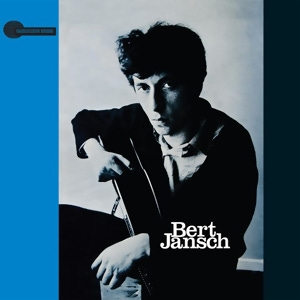
January 8, 2026 // Bert Jansch - Bert Jansch
I apologize to Mr. Jansch (RIP), because before today, I was unfamiliar with his game. After some brief research, he came to prominence in the 1960s as an acoustic singer-songwriter, becoming an influential figure in the British folk revival. Although I know nothing of him outside of this self-titled debut, the concept is simply: just a man with a voice and his guitar.
The record thrives on the acoustic guitar progressions. No layering, no multi-tracks, no special effects, just good ole acoustic strumming and picking. The guitarwork has its moments in the spotlight, with the debut split between instrumental jams and sung tracks. “Smokey River” and “Angie” showcase the energetic strumming of Jansch’s folky tinge, while “Alice’s Wonderland” and “Veronica” display the soft plucking of his melodic songwriting in a beautiful way.
When not isolated, the acoustic lays the foundation for the lyrics. There is so much rawness to Jansch’s vocals that it just fits the stripped down composition throughout the debut. One song in particular that really highlights his voice is “Do You Hear Me Now.” His versatility and strength is shown throughout, with the vocals bouncing between a lower and higher register with ease with power. In fact, there is so much grit and emotion in his delivery that during one of the choruses, his voice breaks, which just goes to show the simplicity and bare composition presented throughout.
Now, I genuinely wish I could’ve spent more than just a day with this album. There is so much to dive into here, and each song has a unique riff or chord progression that gives it its flair, and a lot of the lyrics here are ridden with emotion, like highlight “Needle of Death” that vulnerably tackles Jansch’s grief of a friend’s death. I will definitely be returning to this album more and more and sitting with it, but this is truly a remarkable folk album. As someone who has always enjoyed a stripped back approach to songwriting, Jansch’s debut certainly hits the spot and is well worth the listen.
8.5/10Favorite Track: Angie / Needle of Death
Least Favorite Track: The Casbah
Final Thoughts: Genuinely, there is so much here to digest, but I simply couldn’t find the words to put my feelings into this review… just listen to the album.
—
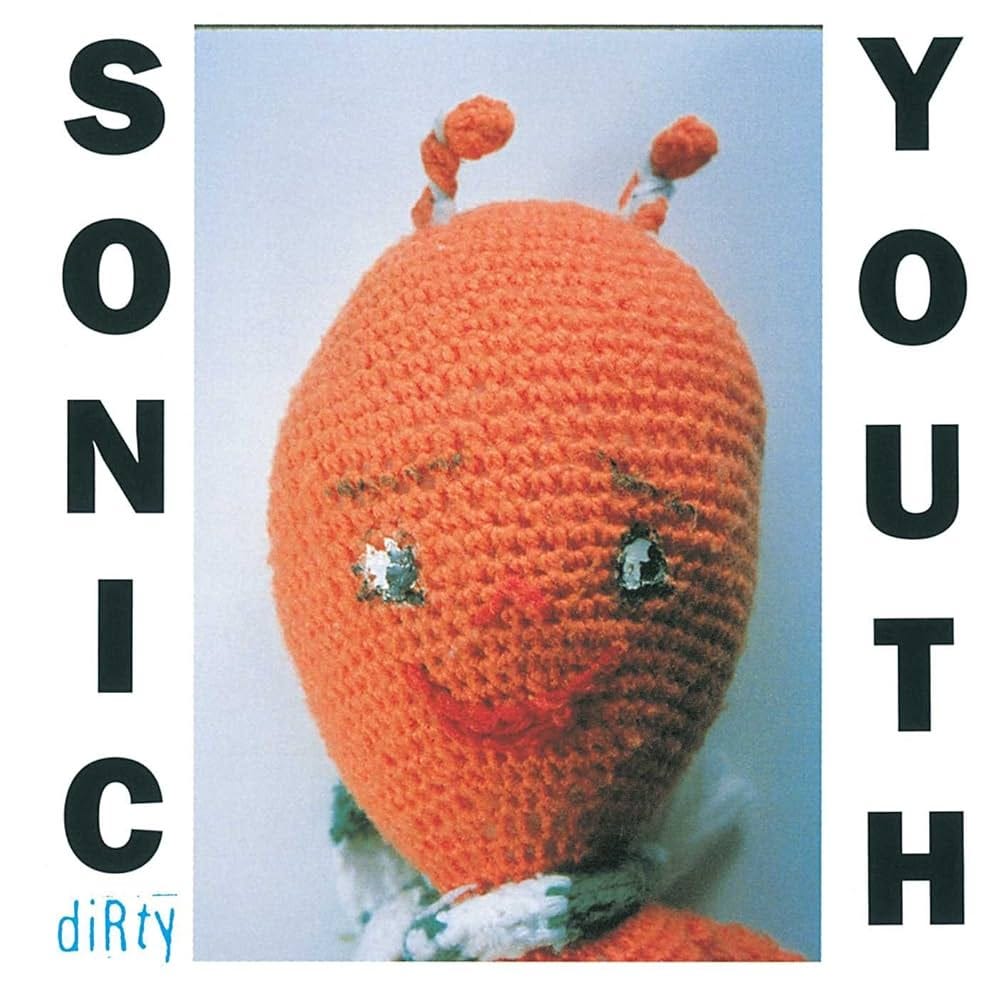
January 9, 2025 // Sonic Youth - Dirty
Now I know this might not be the usual go-to for an introduction to Sonic Youth, but boy does it hit! From the opener “100%,” you’re immediately thrown into the Youth’s noisy rock sound that punches hard… and it doesn’t let up until the very end. You have your more chaotic jams like “Drunken Butterfly” and “Swimsuit Issue,” but there’s also a strong presence of melodic composition in highlights like “Theresa’s Sound-World” and “Wish Fulfillment.” It isn’t just an hour of over the top experimentation or absurdly droned out noise, but it is an intentional record that showcases the diversity of Sonic Youth.
Now, since I don’t really have any sort of framework for how this record sits within the band’s discography, please bear with me as I try to digest their music as an isolated piece. Dirty can be split into two sides, one with Kim Gordon on vocal duties, and the other with Thurston Moore. They sort of play a balancing act, with Gordon’s vocals being a bit more abrasive and unique while Moore’s are a bit softer in timbre, even when shouted throughout some of the chaotic moments. Even though their vocals add different elements to the record, they both play an important role throughout the duration of Dirty. For brevity’s sake, I’ll highlight one track from each.
“Shoot” shows all facets of Gordon’s voice and unique tone. In the softer verses of the track, her hushed delivery sounds gritty and rough, which perfectly complements the darker ambiance of the instrumentation that gives an eerie mood. As the song picks up and she adds emphasis to her projection, it sounds guttural and painful (in the best way possible). At first, it was rather off-putting, but through each song, her performance provided the perfect balance to Moore. On a more vibrant note, “Chapel Hill” showcases Moore’s more energetic and softer delivery, a stark contrast to Gordon’s abrasive approach. His vocals thrive more on melody than projection, giving a more well-rounded and cleaner (ironic) sound to the album. But I couldn’t tell you which vocalist I prefer… and I don’t feel I need to. This album couldn’t exist without one or the other, they are both integral parts to what defines Dirty, and that’s the beauty of their performances.
As I sit here listening to this album on repeat, I’m really questioning why I have never given this band a shot before. Each song has its own unique tinge to it that lets it stand out in the tracklist, but it never feels too far out of the ordinary that the record loses its pacing. Honestly, I’m shocked that Dirty is just under an hour long, because it flows so well that it goes by in an instant. It’s a perfect balance between gritty noise rock and melodic alternative rock that it just hits all the parts of the genre that I love. I’ll definitely be coming back to this, and will absolutely be checking out more Sonic Youth in the near future.
9/10
Favorite Track: Theresa’s Sound-World / Chapel Hill
Least Favorite Track: Nic Fit
Final Thoughts:For the longest time, I used to confuse this band with a Christian worship band Sonicflood. There is actually zero correlation between the two other than the use of “Sonic” in the name… and I never really understood why I constantly confused them.
—
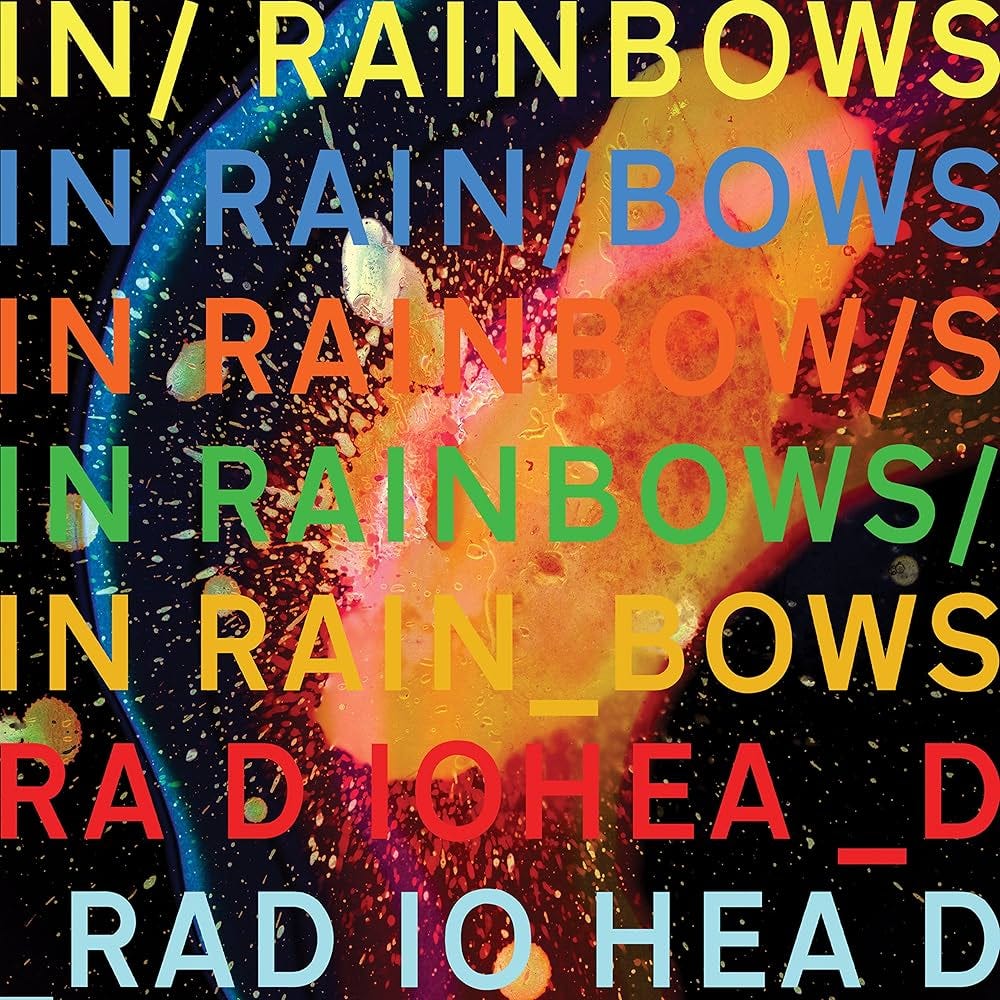
January 10, 2026 // Radiohead - In Rainbows
While I typically say OK Computer is my favorite Radiohead album, In Rainbows has slowly started to take the crown. The band’s 2007 album may be one of the most cohesively beautiful records I’ve ever heard. Driven by simple compositions that leave space for the instruments to breathe, each track within the record is gorgeous and full sounding. From start to finish, I truly believe it is the most well-rounded and breath-taking Radiohead album to date.
There is very little aggression found within the album, aside from the distorted garage rock “Bodysnatchers” and lively conclusion of “Jigsaw Falling Into Place.” Beyond these two, the songs are soft, with the guitars and bass featuring no more than reverb and the drums remaining tight in the pocket. Subtle touches of orchestration in moments of “Nude” and “Reckoner” add a layer of depth to In Rainbows that seeps into cinematic territory, creating an epic masterpiece of a record. Likewise, the electronic elements present on opener “15 Step” and “All I Need” gives that atmospheric feeling of a movie score, making the record feel like a cohesive concept that all flows together with mastery. To complement this, Thom Yorke’s signature falsetto style floats atop the instrumentation, giving an added piece of melody that boosts the overall beauty of the record perfectly.
Truthfully, this album only gets better each and every time I listen to it. With each passing listen, it becomes harder and harder to find any faults with In Rainbows. It’s the type of record you can throw on and either relax to or dive deep into the nuances and intricacies within the production and composition. It is truly a remarkable work of art, and probably sits as one of the most beautiful and ethereal albums I’ve heard in recent memory.
10/10Favorite Track: Weird Fishes / Arpeggi
Least Favorite Track: N/A
Final Thoughts:To put into perspective how much I love this album compared to the rest of their discography, I have about 200 listens to Radiohead on last.fm (listened to them more before I got last.fm), with over 100 of those listens dedicated just to this album.
—
Tune in next week for another lovely edition of An Album A Day!
Oh damn crazy draw
- Yes please to Isn't Anything, so much more exciting than Loveless and imo the better record overall despite being a total hodgepodge. Crazy bait and switch on the opening pairing fr
- Weird that you rolled Sonic Youth when that middle chunk of You Never Should from is basically straight SY worship and maybe my favourite single minute from anything MBV have done. Dirty is defs a weird starting point for SY within their discog, but not necessarily outside it — it's basically their sellout album from when they were rolling under Nirvana's aegis (Kurt was a vocal fan and Kim basically became his adoptive godmother) and pandering to MTV. JC from that one gets me (rly tragic backstory to it too) and sometimes Swimsuit Issue/Drunken Butterfly when I want riot grrl Kim vibes, but otherwise it's v lightweight compared to the five classics that preceded it
- IR is 100% the best Radiohead yep yep no other answer