



I’m not actually burned out from writing. I’m just losing ideas for the title so, might as well make it clickbait! Anyway, welcome back! It was a fun week tackling a variety of things: albums I love, projects I hate, and records that made me contemplate life (and death). Next week I’ll be tackling two recs from the team, but for now, enjoy shorter than usual blurbs of ramblings and random thoughts in this week’s edition of the greatest music series of all time!

Entry 41 // PRESIDENT - King Of Terrors
Sleep Token has done irreparable damage in the metal scene. Suddenly, after their mainstream success, anonymous, masked metal bands that mix heavy riffs with pop decided to pop up everywhere, and PRESIDENT might be the most frustrating of them all. Although their identity remains anonymous, many people have suggested that the lead vocalist is Charlie Simpson, former frontman of Fightstar — and that’s what makes this group so frustrating. If it truly is Simpson, it’s a shame that he’s using his immense talent on such a lifeless, empty-sounding group. Outside of the opener, the debut release King Of Terrors just flat out falls on its face. The heavier moments of the group sound solid, and the vocals are quite strong throughout, but those sections of genuine entertainment are far and few between, often saturated with unnecessary electronic elements and overbearing production decisions. The catchy moments of “Fearless” are ruined by weird, high-pitched vocal chants of the title, “RAGE” is literally quite the opposite, riddled with vocal samples passed off as melodies, and the final three tracks of the project don’t understand how to balance the poppy verses with the pseudo-aggressive, downtuned riffs, creating such a stark contrast between styles that simply doesn’t flow or work together. Now, “In the Name of the Father” is a bit of an outlier here. While it still isn’t a perfect track by any means, it does a great job connecting the more ambient-focused verses with the harder-hitting guitar sections and a soaring chorus that doesn’t try to do too much. However, this singular highlight can’t pull King Of Terrors out of the depths of its failure. Maybe I’m being too harsh, but this project doesn’t go anywhere and feels like such a dead end in the abysmal scene of masked metal.
3/10Favorite Track: In the Name of the Father (I guess if I must choose)
Least Favorite Track: everything else
Final Thoughts: Yes, the opener has grown on me a bit, but this release truly doesn’t make any sense and just lacks any sort of passion or drive.

Entry 42 // Boston Manor - GLUE
GLUE is a mess. One listen through can tell you that. Opener “Everything Is Ordinary” is full of overbearing production elements, jarring electronic effects, and muddied vocals — and that just sets the tone for the entirety of the record. Stark contrasts embed themselves within the tracklist, like the moody, atmospheric “On a High Ledge” positioned just before the explosive, energetic “Only1” without any sense of cohesion. Likewise, piano driven ballad “Stuck in the Mud” is sandwiched between the driving cuts of “Ratking” and “Liquid.” Where is the sequencing? Why does it feel so chaotic?
Yet, there is a charm about it.
When Boston Manor goes pure energy here, they master those immense, wide-sounding choruses with ease. Tracks like “1’s & 0’s” and “Monolith” thrive on aggressive delivery, full of anthemic shouted lyrics and catchy instrumentation that find a home in your head for days. Others like “Playing God” and “Terrible Love” feed off of softer verses that explode into a massive chorus, both containing the best vocal performances on the entirety of GLUE. When not focusing on the energetic performances, the record executes the lighter, airy tracks with perfection, with the dreamy “Plasticine Dreams” and the hazy “On a High Ledge” featuring vibrant, reverb-driven guitars and soaring vocals. No matter the track, Boston Manor excels at crafting a gem full of passion that constantly brings you back to the record, taking in every subtlety and nuance that it has to offer.
Yes, GLUE is all over the place, but I think that’s what makes it so good. The lack of cohesion, in a weird way, adds to the beauty of the record. Without a flow, each track is surprising and unique in its own way. It’s certainly not for everyone, and it may even come across as too jarring for most. However, with repeated listens, the infectious, earwormy choruses slowly creep their way in as the simple yet powerful guitar/bass riffs pull you right back in. GLUE is flawed, but maybe that’s what makes it so captivating. It is far from perfect, and that’s what’s so perfect about it.
9.5/10Favorite Track: Playing God
Least Favorite Track: N/A
Final Thoughts: I completely understand why people either dislike this album or find it just “good.” All of the arguments I’ve seen about it are completely justified, and I really can’t seem to understand why I absolutely adore this album. It’s hard to put into words what it is, but this is up there as one of my favorite listens of all time.
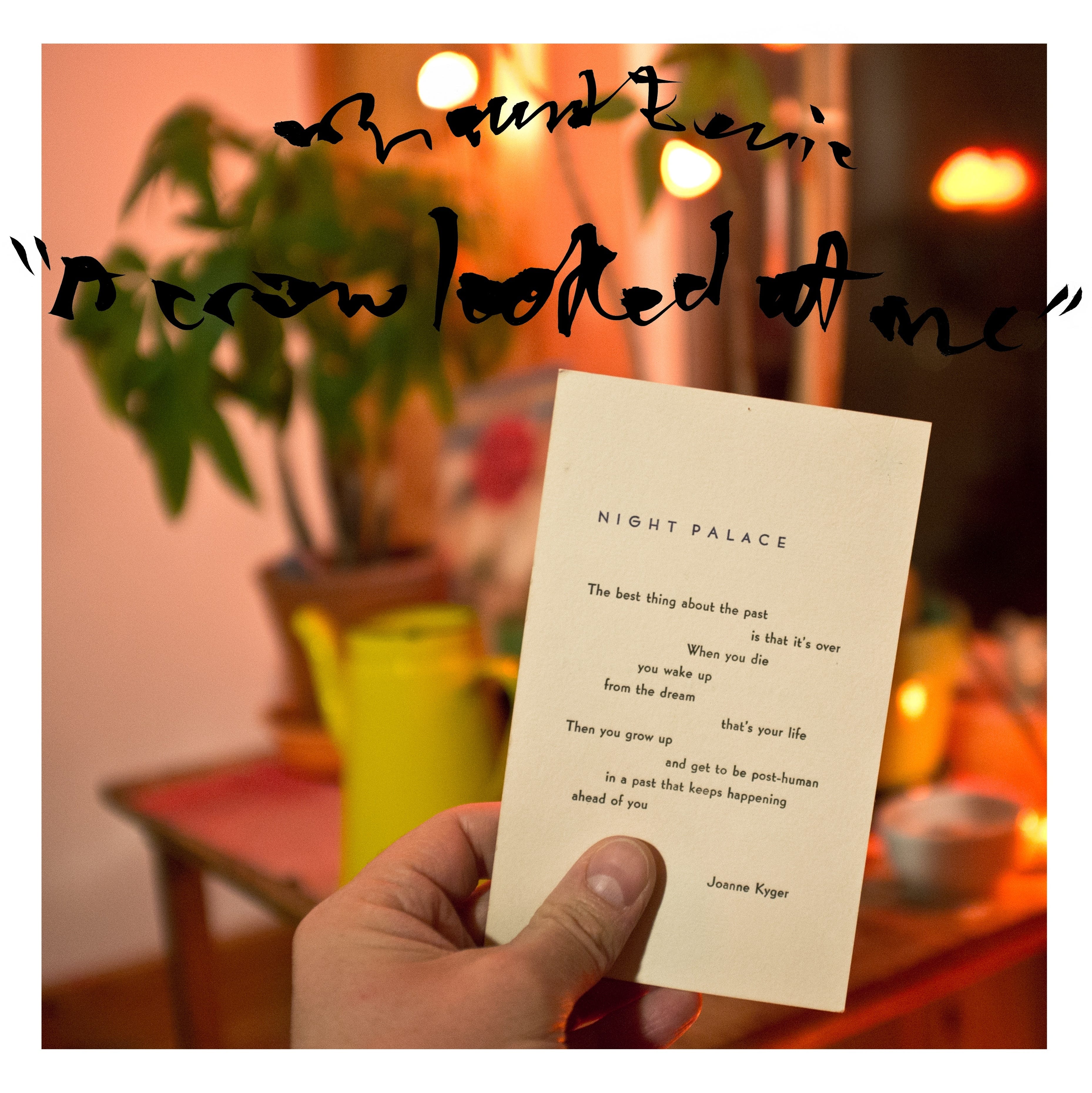
Entry 43 // Mount Errie - A Crow Looked at Me
“You were thinking ahead to a future you must have known deep down would not include you.”
This line broke me, and A Crow Looked at Me hadn’t even been on for two minutes yet. It’s so matter-of-fact, looking grief and death right in the eyes and addressing it. From the opening utterances of “Real Death,” Phil Elverum tackles the loss of his wife in a brutally honest manner, putting his mind and heart within the record open for all of us to see. The blunt lyricism is accompanied by stripped down instrumentation, the compositions containing no more than lo-fi-style beats, acoustic strummings, and the soft passages of a piano. On the surface, it’s a beautiful, casual listen with subtle melodies and simple songwriting that allows the vocals to float along the gentle instrumentation. While this would typically be the perfect equation for an easy, background jam, that isn’t the purpose of A Crow Looked at Me. Instead, the stripped back composition acts as a vessel for Elverum’s thoughts of coming to terms with reality.
“I finally took out the upstairs bathroom garbage that was sitting there forgotten since you were here.”
This is music in its truest form: an expression of emotion; art that evokes the feeling of the artist. It is far from an entertaining listen, and it shouldn’t ever be viewed as such. In fact, it almost feels wrong listening to the record as it feels like stumbling on the journal of a struggling mind. Elverum’s lyrics address the days since his wife’s passing, the weather outside, the view from where he’s sitting in their room, it all feels so real, placing us not only into the physical setting, but in the darkest places of his mind. There are no choruses, there are no refrains, it is him letting out all of his grief in the weeks following his loss. As such, it’s hard to critique this as an album. A Crow Look at Me is so deeply personal that it sounds like it was created for an audience of one: the one who created it. It’s stunning and remarkable, but it is beyond difficult to address it as a piece of music. Music is certainly the medium, but the result is a window into the emotions of death.
“And I asked, ‘Are you dreaming about a crow?’ / And there she was”
9/10Favorite Tracks: Can there be such a thing as a favorite track with something like this?
Final Thoughts: After listening through this numerous times for this review, I don’t think I’ll be able to return to it for a while.
get a nice paragraph about an album I love. So, let’s jump into…
Entry 44 // Greyhaven - Empty Black
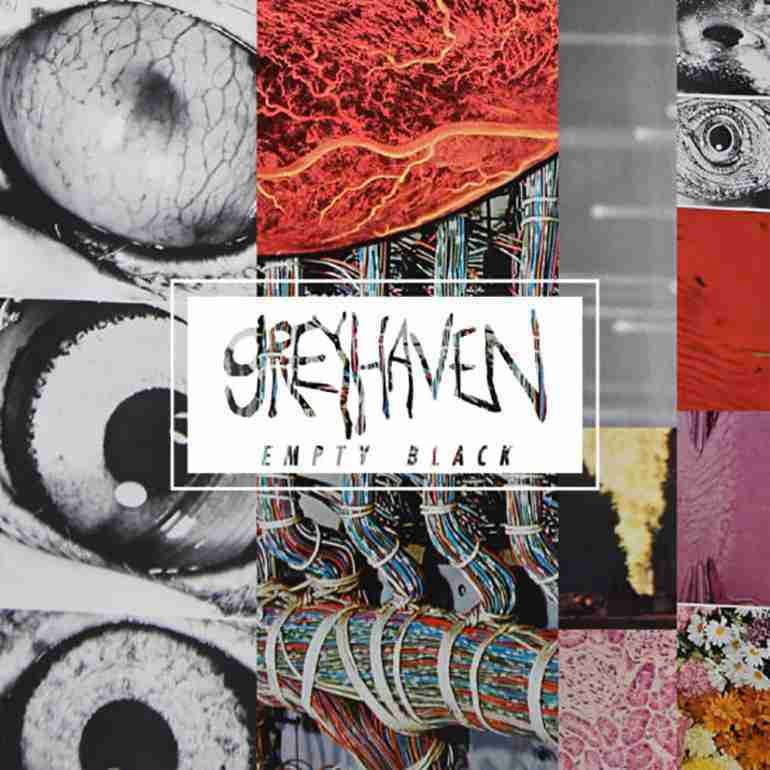
Greyhaven is currently one of the best in the metalcore scene. With the successes of their recent outputs Stereo Grief and Keep It Quiet, the band has proven their consistency and talent to create top-tier metalcore. However, their breakthrough began nearly eight years ago with the release of Empty Black. From opener “Sweet Machine,” their style of core with a southern tinge is on full display, filled with high-energy riffs and impressive vocal dynamics shifting between belted cleans and abrasive harshes. The momentum rolls its way through into “Blemish,” the highlight of the record, with blistering intensity contained within the dissonant riffs and barrage of drum chops. This same ferocity is captured in tracks like “Mortality Rate” and the one-two punch of “Kappa (River Child)” and “Day is Gone,” all steeped in aggressive songwriting subtly reined in by an infectious hook or groove. Yet the album doesn’t just settle into chaos for the entire duration. “White Lighters” and “Echo and Dust Pt. II” bring an air of tranquility to Empty Black, the former remaining as one of the most beautifully crafted ballads of the band’s discography full of reverb-washed guitars and atmosphere, and the latter balancing their moodier sound with moments of core heaviness. As someone who is rather critical of modern metalcore at times, I don’t hesitate to consider this one of the greatest records in the current scene. Every guitar riff is an earworm and unique to its song, the drumming is tasteful by not overplaying its moments and allowing the instrumentation to breathe, the bass sounds immensely full and crushing throughout the record, and the vocal performance is top-notch and varied. With each repeated listen, the Empty Black cements itself further and further as a classic in metalcore.
10/10Favorite Track: Blemish (their best song)
Least Favorite Track: yeah, sure
Final Thoughts: This is one of the only albums that I have learned on guitar in its entirety, and it is an insanely fun one to play.
Entry 45 // Bōlají - Bōlají
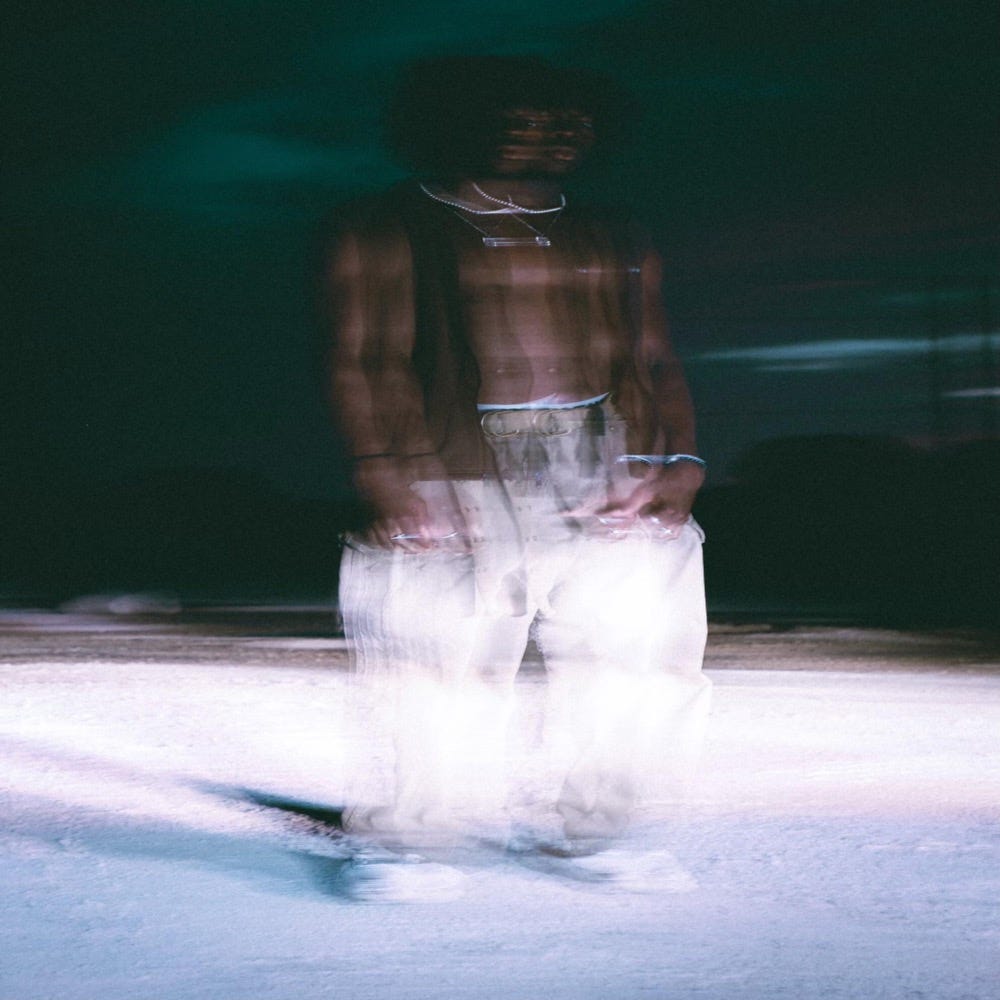
Bōlají is short, sweet, and smooth. Clocking in at just under 16 minutes, Bōlají’s self-titled debut fluidly transitions from track to track with relaxed, chill R&B beats and soft melodies. The first half of the record plays out like a cohesive song, mixing the vibrant harmonies of “Time Away” and the darker undertones of “Lost” with the simplistic guitar passages of “Sunshine” and groovy basslines of “Love Trance.” It all floats so silkily in a dreamlike haze, with plenty of atmosphere and ambiance with a bit of a Frank Ocean air to it. Where the release truly excels lies in the final two tracks “Lavish(Bolaji)” and “Messiah.” The latter stands as one of the more uplifting cuts of Bōlají, with beautiful vocal passages that blend effortlessly with the simple piano melody and infectious beat complemented by a walking bassline that cements itself as one of the grooviest of the project. However, the former, is the clear cut highlight of the release as it perfectly encapsulates Bolaji’s intention with his music, providing a blueprint for his future releases. The jazzy saxophone runs mixed with the trap-influenced beat against the classic, smooth R&B melodies emphasizes his strengths perfectly, showcasing both his soft delivery and versatility in his songwriting and composition — a sound that is further refined in his successive outputs. Although it is a brief effort, Bōlají is packed full of talent and potential from a young artist. Despite being a debut, Bōlají already sounds like a seasoned veteran, both in understanding and defining his own sound and executing the delivery concisely.
8/10Favorite Track: Lavish(Bolaji)
Least Favorite Track: Lost
Final Thoughts: It really was a great time talking to him when he first started. He was so humble about his work, and he has continuously shown his dedication to his craft.
Hope you all have enjoyed this series as much as I have. See you all next week!
One of the things about "In the Name of the Father" that will always piss me off to no end is how they felt the need to mask Charlie Simpson's voice beneath layers of vocal effects. He has such a wonderful voice, but the verses of that song are just ear piercingly rough to listen to, and it's STILL the best song on that EP